Do You Deserve to be Healthy?

struggling woman

Do you deserve to be healthy? I recently had occasion to observe someone repeatedly making choices that hurt him. I mentioned that nothing he was doing or saying was hurting anyone but him. At first, he thanked me for caring. He followed that with a drunken phone call in which he had twisted the entire conversation wrong-side out and turned himself into a victim of some great conspiracy that will never end.

There’s some basis for him to lean toward that point-of-view. But he has taken a painful short-term situation in which he was a victim, made it chronic through his choices, and weaponized it against himself. This has cost him a marriage, contact with his children, a lasting career in his field, and the opulent life he craves, not to mention a decline in health.

Does he do this on purpose? This is tough to answer. And in the end, it probably doesn’t matter. What he, and many of us, must find is a way to move past the point around which we circle with no seeming ability to move in a different direction.

We may consciously know we can do better for ourselves, but still maneuver in a way that allows us to avoid the accountability of owning the choices we make that aren’t good for us. There are a million different patterns for doing this. Most are subconsciously designed to help us avoid embarrassment, fear, shame, vulnerability, and potential loss. We have a deeply felt need to save face.

What’s weird about being in this position is the sort of blinders that come with it. It becomes easy to adopt a view of ourselves that doesn’t match others’ experience of us or our actions. When we hit a point in which other people can see we’re making decisions that aren’t helpful and we defend those decisions by twisting indisputable facts they themselves observed, we lose credibility.

Once that credibility is lost, we may also lose their support. Why should someone else spend time struggling to figure out what part of our story is valid so that they can then figure out how best to help us when it’s clear we are not in a position to accept help. We are too busy clinging to a position in which we are unwilling to help ourselves and would lose face accepting help from others.

What sometimes happens at that point is the person making poor choices will sense support is waning and begin to lean even further into stories of victimization to try to manipulate us back into what may feel like connection. And it is connection, but not the healthiest sort.

So when the person making bad choices is us, what can we do?

Obviously, it’s easy to tell someone else they deserve better and to stop making bad choices. But it’s not that easy. Many of us have a skewed self-image from injury or abuse we have suffered at the hand of others. We are subconsciously choosing what feels normal. That normal may be to treat ourselves badly.

Others are attempting to avoid a deep sense of shame. We may believe we have done something unforgiveable. Or maybe someone has told use we’ve done something unforgiveable. Or maybe we have done something we have criticized others for doing.

No matter what we’re attempting to avoid or cover up, we must be able to make conscious choices to improve our lives. That begins with being able to own the choices we’re making. And not just own them but own our choices while granting ourselves grace when we could have done better. And we have to be able to let go of shame.

Brené Brown has written volumes on shame and vulnerability that are worth exploring. Daring Greatly begins with a quote from Theodore Roosevelt’s speech “Citizenship in a Republic:”

It is not the critic who counts; not the man who points out how the strong man stumbles, or where the doer of deeds could have done them better. The credit belongs to the man who is actually in the arena, whose face is marred by dust and sweat and blood; who strives valiantly; who errs, who comes short again and again, because there is no effort without error and shortcoming; but who does actually strive to do the deeds; who knows great enthusiasms, the great devotions; who spends himself in a worthy cause; who at the best knows in the end the triumph of high achievement, and who at the worst, if he fails, at least fails while daring greatly….

This is a great passage to keep in mind before asking yourself if you deserve to be healthy. Then, instead of asking that question, first ask yourself:

What is the worst thing I’ve ever done? Name it. Feel it. Say it out loud to yourself. (No need to tell anyone else.)

If someone else did that (whatever you answered), could I forgive them? Could someone forgive them?

When you can forgive yourself your worst wrong, you will be able to hold yourself accountable. When you can hold yourself accountable, you will have no problem owning your choices. They may not all be good choices, but you’ll be able to learn from each one and avoid blaming someone else.

Forgiving yourself your worst wrong will also allow you to shift how you view yourself. What other people think will become less important. This paves the way for recognizing you deserve, we all deserve, to be healthy!

Coda: Mere hours after I posted this, I watch an introductory video for therapists (I am not one) regarding the diagnosis and treatment of moral injury. While it didn’t change anything I previously wrote, it made me recognize I should expand a bit rather than stopping here.

Anyone who has committed acts or made decisions that violate their own moral code may need assistance in achieving self-forgiveness. It doesn’t matter whether those decisions or acts were a result of force, coercion, danger, leverage, direct order, dissociation, freezing, or a desperate need for comfort, we may subsequently view ourselves as irredeemable or contemptable.

Trauma therapy that provides a compassionate response, helps realign actions with internal moral code, and allows us to retain necessary guilt without shame can help to process through events and put them in the past. This will put us in a position to recognize we do not deserve eternal suffering and punishment. We can find ways to follow a path that doesn’t create internal dissonance.

We can change. We can grant ourselves grace. We can feel appropriate guilt and make necessary amends. We are imperfectly human and perfectly deserving of the opportunity to grow, improve, and face our demons. Doing so is difficult, but leads to a healthier existence.

And we all deserve to be healthy!

Author’s note:Some disease and injury are unavoidable. It does not matter who you are or whether you make perfect decisions, you may not be able to be as healthy as someone else who does not suffer the same unavoidable condition. That reality does not change the fact that you deserve to be healthy and can make the best choices possible within the limitations you are given.

Skipping Steps

It’s always tempting to skip steps. If it feels like doing so will move an event forward more quickly…why not?

Why not? In reality, you may be right. It could work out fine. But in a well-organized, well-thought system, there is a reason for each step. You may not recognize the consequence of skipping one until it is too late.

Plane crashes, construction disasters, and medical errors often begin with skipping a step. Cross-contact food contamination, chemical disasters, wildfires, and the spread of infectious disease often involve skipping steps. Why is that choice so tempting?

It’s fun to feel a bit rebellious at times. And if we don’t put on a seat belt and don’t have a wreck, it’s easier to skip that step next time.

Some of us are defiant. Following a particular protocol feels like someone telling us what to do so we choose to ignore it.

Some of us are arrogant. We believe we know better without a full understanding of the ins and outs of how and why each step exists.

Sometimes experience teaches us why skipping steps is foolhardy. An experienced mechanic understands the order of operations that will make his job easier. An accomplished chef understands the best order in which to add ingredients to achieve the desired layers of flavor or perfect rise. A seasoned electrician knows the risks if he fails to disconnect the power before starting a line repair.

Given that many families have experienced the distraction of escalating stress the past several years, now is not the time to skip steps. Stress is distracting in a way that can cause us to be blind to is effects in the moment. We think we’re functioning well until we have the perspective of hindsight. By then, the damage may be done.

I know this is sounding like I’m a stickler for the rules or someone who doesn’t want progress. That’s not true. I love progress and I’m happy to flaunt a few rules here and there. But I’m not going to make the choice to skip steps when I’m doing preflight on a plane or handling raw chicken in my kitchen.

Everything in life has a hierarchy of some sort. We have to prioritize. But before we skip steps, it’s important to be fully versed in the reason for each of those steps. If we choose to ignore this, it can have funny results or disastrous ones.

We may not know which we are choosing.

There is no Permanent Record

Life is a process and there is no permanent record. This year has shined a bright light on the US culture. One of the things I’ve noticed is that we seem to view what happens right this minute as determinative of everything that follows. This is hobbling our thinking at a time when pivoting needs to be swift and nimble.

It is absolutely responsible and important to carefully consider decisions. But if we don’t empty our mind of expectations, assumptions, conventional wisdom, and trending topics first, we both limit ourselves and create undue pressure at a time when we need less.

Rather than recognizing that uncertainty is always with us, some have responded to this year of swift change by further entrenching themselves in ideas or behaviors that do not serve well. Many times, it comes down to the idea that if we do something unconventional, or different than our family or friends, and it doesn’t turn out well, it will go on our permanent record.

There is no permanent record. If someone holds a long-time grudge, that’s on them, not you. If someone continues to judge you for a mistake you have acknowledged in spite of it being a one-time error, that’s on them. If your parents disagree with your decision, but you’re okay with the consequences, it’s their problem, not yours. If everyone in your Facebook group disagrees with you, it doesn’t mean you’re misguided.

I understand it doesn’t always feel good to stand alone. I left high school a year early. My dad thought that was a mistake. I had the credits to graduate and went to straight to college with a scholarship in hand. In spite of this, and the fact that I received my high school diploma the following year along with my class, he still believed it was a mistake.

Ten years later, although I had no regrets about the decision, he scored it as an error on his version of my permanent record. I could have accepted his view and let it create doubt or I could feel confident that I had researched my options and was willing to continue to move toward my goals.

Were there failures along the way? Of course. But failing in an endeavor does not make me a failure because I know I don’t have to become mired in that glitch. I can view it as a chance for improvement. To remain inspired, I keep these words from a 1910 speech by Theodore Roosevelt in my head at all times:

“It is not the critic who counts; not the man who points out how the strong man stumbles, or where the doer of deeds could have done them better. The credit belongs to the man who is actually in the arena, whose face is marred by dust and sweat and blood; who strives valiantly; who errs, who comes short again and again, because there is no effort without error and shortcoming; but who does actually strive to do the deeds; who knows great enthusiasms, the great devotions; who spends himself in a worthy cause; who at the best knows in the end the triumph of high achievement, and who at the worst, if he fails, at least fails while daring greatly, so that his place shall never be with those cold and timid souls who neither know victory nor defeat.”

If there were a permanent record, I would want it to reflect me as a contender in the arena rather than someone who always towed a line drawn by others. I’d want it to show that my decisions were well thought and carefully made. I’d want to be seen as a problem solver who moved past obstacles. And I would hope to be judged on more than appearance or net worth.

If you are a student whose grades are suffering during the pandemic, it is not a life ruining experience. Learn the life lessons in front of you. Those are more valuable than any letter grade.

If you are a parent struggling to be productive while also minding the kids, cut yourself some slack when you don’t perform at your 2019 level. Not all productivity can be measured in immediate output. Ask any strategic planner.

If you are a child who cannot visit an elderly parent in long-term care, just do what you can to stay connected. The separation does not mean your relationship has ended. It just means it has had to shift.

If you are feeling frustrated, sad, and angry because you cannot safely attend a wedding, funeral, graduation, performance, or family reunion, those feelings are normal. You may need to designate some time for self-care to grieve the loss.

If you are having to ask for help, it doesn’t mean you aren’t capable. We all need assistance under certain circumstances.

If you are a frontline or essential worker, thank you! Collectively, we have placed an undue burden on you. It will take a toll. That is not because you are weak. It is because you are a human tasked with superhuman expectations.

There’s lots of catastrophizing going on right now. The news and social media are filled with hyperbole. It’s easy to get caught up in the idea that our lives are falling apart. Some are suffering devastating pain and loss. Others are suffering a change in routine. Many of us fall somewhere in between.

But before we decide that we can’t bounce back from the setbacks of 2020 and 2021, let’s remember that we can adapt when needed. We can see ourselves as the man in the arena and use challenges as motivation to be better. We can shift priorities and make better choices. And we can evaluate, reevaluate, and leave our mistakes in the past because there is no permanent record.

What We Eat Reflects Our Priorities

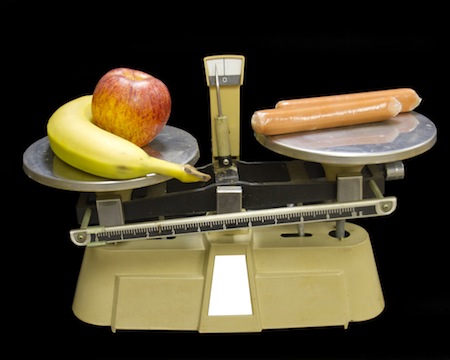
scaleLooking back at the horrific events of the past week reminds me that our actions always reflect our priorities – even what we eat reflects our priorities. No matter what we tell the world, what we do sometimes belies our words. Not only can this sometimes confuse those around us, it can hinder us from reaching our goals. No change can come until we have the courage to stare the facts in the face.

There are millions of choices when it comes to food and health. What works for one person may be detrimental to another. We each have a unique ecosystem within our bodies. The only way to know what works for you is to become aware of your body’s signals and educated about the foods you choose to eat.

Keep a food journal for a month and you’ll learn a lot about yourself and your priorities. Sometimes when we express a priority, what we really mean is we feel we “should” focus on a particular thing because of peer pressure or a doctor’s recommendation. It often turns out to mean much less as far as our everyday behavior. Not only does this make us feel bad, it becomes an impediment to making positive change. For example:

If your stated top priority is to limit the sodium in your diet, but you don’t take the time to read the labels on your salad dressing, sandwich meat, cheese, packaged soup, and whole wheat bread, then you will not be able to achieve your goal because you won’t know whether you’re within your limit.

It could be that limiting sodium is not a top priority, but instead falls below work, screen time, working out, or whatever it is that keeps you too busy to read labels. That’s okay. Once you recognize the facts, you are in a great position to make the best choice for you.

muffinsIf your stated priority is to avoid sugar and you continue to eat bread, breakfast cereal, frozen pizza, muffins, ketchup, barbecue potato chips and Ranch dressing, you are choosing foods that contain sugar. Once you recognize this you can decide to: 1)Eliminate these foods and all others that contain sugar, 2)Limit sugar by not eating dessert or “sweets”, but stop trying to avoid it 3)Eat as much sugar as you want.

Any of these choices is okay. Only you can decide what’s right for you. Once you look at the facts, you’ll be able to see how to achieve your personal goals more easily.

If your stated priority is to avoid processed food, but you eat at fast food or fast casual restaurants every day at lunch, then a revision of your stated priority or a change in venue may be appropriate.

If your stated priority is to avoid carbs, but you eat potato chips, drink beer, consume commercial smoothies, or coffee drinks, eat bagels or yogurt with fruit on the bottom, then it’s time to review your priority. It could be that research must take precedence while you learn more about carbs or it could be that you decide you don’t want to avoid carbs other than those from added sugars.

asparagusIf your stated priority is to feed your children real, unprocessed food, but you grab the Lunchables®, packaged mac & cheese, or fruit roll-ups more often than the broccoli, black beans, sugar snap peas, carrots, cauliflower, squash, green beans, and asparagus then perhaps it’s just a goal and not a priority or maybe you believe education, sports, or dance are more essential building blocks for a good life and have prioritized those over real unprocessed food. If so, that’s okay and only your stated priority needs to change.

This flight of fancy may seem unimportant to you, but choosing and owning our choices is the only real power we have in life. You cannot control other people. You cannot control nature. You cannot control what foods make you feel bad. You cannot control all public policy. You cannot control feelings that come rushing from a subconscious trigger. You can control when and how you act on your feelings and you can seek help if prior trauma leaves you doubting your perceptions.

Ultimately, it is our choices that allow us to create the best possible life we can have no matter what uncontrollable or tragic circumstances we encounter. This is true when it comes to diet and health. It is also true in relationships, finances, on the highway, and in a job situation. Changing our lives for the better is always within our power, but it will not happen until we have the courage to observe the facts and tell ourselves the truth no matter how ugly or difficult that truth is. It is at that point that it becomes possible to give up excuses and blame in order to craft the lives we desire.

When I can embrace and accept the things about me about which I feel the most shame, I begin to treat myself as though I matter, my priorities matter, my health matters, and my heart matters. While I hope that this will be valued by everyone I encounter, I know it will not. When my values run counter to yours, I can make a choice to argue with you, bully you, harm you, dismiss you or hear you, inspire you, and have compassion for you. I will not always make the ideal choice. It is then you can have compassion for me.

I wish us all the courage to become our best selves.