Do You Deserve to be Healthy?

struggling woman

Do you deserve to be healthy? I recently had occasion to observe someone repeatedly making choices that hurt him. I mentioned that nothing he was doing or saying was hurting anyone but him. At first, he thanked me for caring. He followed that with a drunken phone call in which he had twisted the entire conversation wrong-side out and turned himself into a victim of some great conspiracy that will never end.

There’s some basis for him to lean toward that point-of-view. But he has taken a painful short-term situation in which he was a victim, made it chronic through his choices, and weaponized it against himself. This has cost him a marriage, contact with his children, a lasting career in his field, and the opulent life he craves, not to mention a decline in health.

Does he do this on purpose? This is tough to answer. And in the end, it probably doesn’t matter. What he, and many of us, must find is a way to move past the point around which we circle with no seeming ability to move in a different direction.

We may consciously know we can do better for ourselves, but still maneuver in a way that allows us to avoid the accountability of owning the choices we make that aren’t good for us. There are a million different patterns for doing this. Most are subconsciously designed to help us avoid embarrassment, fear, shame, vulnerability, and potential loss. We have a deeply felt need to save face.

What’s weird about being in this position is the sort of blinders that come with it. It becomes easy to adopt a view of ourselves that doesn’t match others’ experience of us or our actions. When we hit a point in which other people can see we’re making decisions that aren’t helpful and we defend those decisions by twisting indisputable facts they themselves observed, we lose credibility.

Once that credibility is lost, we may also lose their support. Why should someone else spend time struggling to figure out what part of our story is valid so that they can then figure out how best to help us when it’s clear we are not in a position to accept help. We are too busy clinging to a position in which we are unwilling to help ourselves and would lose face accepting help from others.

What sometimes happens at that point is the person making poor choices will sense support is waning and begin to lean even further into stories of victimization to try to manipulate us back into what may feel like connection. And it is connection, but not the healthiest sort.

So when the person making bad choices is us, what can we do?

Obviously, it’s easy to tell someone else they deserve better and to stop making bad choices. But it’s not that easy. Many of us have a skewed self-image from injury or abuse we have suffered at the hand of others. We are subconsciously choosing what feels normal. That normal may be to treat ourselves badly.

Others are attempting to avoid a deep sense of shame. We may believe we have done something unforgiveable. Or maybe someone has told use we’ve done something unforgiveable. Or maybe we have done something we have criticized others for doing.

No matter what we’re attempting to avoid or cover up, we must be able to make conscious choices to improve our lives. That begins with being able to own the choices we’re making. And not just own them but own our choices while granting ourselves grace when we could have done better. And we have to be able to let go of shame.

Brené Brown has written volumes on shame and vulnerability that are worth exploring. Daring Greatly begins with a quote from Theodore Roosevelt’s speech “Citizenship in a Republic:”

It is not the critic who counts; not the man who points out how the strong man stumbles, or where the doer of deeds could have done them better. The credit belongs to the man who is actually in the arena, whose face is marred by dust and sweat and blood; who strives valiantly; who errs, who comes short again and again, because there is no effort without error and shortcoming; but who does actually strive to do the deeds; who knows great enthusiasms, the great devotions; who spends himself in a worthy cause; who at the best knows in the end the triumph of high achievement, and who at the worst, if he fails, at least fails while daring greatly….

This is a great passage to keep in mind before asking yourself if you deserve to be healthy. Then, instead of asking that question, first ask yourself:

What is the worst thing I’ve ever done? Name it. Feel it. Say it out loud to yourself. (No need to tell anyone else.)

If someone else did that (whatever you answered), could I forgive them? Could someone forgive them?

When you can forgive yourself your worst wrong, you will be able to hold yourself accountable. When you can hold yourself accountable, you will have no problem owning your choices. They may not all be good choices, but you’ll be able to learn from each one and avoid blaming someone else.

Forgiving yourself your worst wrong will also allow you to shift how you view yourself. What other people think will become less important. This paves the way for recognizing you deserve, we all deserve, to be healthy!

Coda: Mere hours after I posted this, I watch an introductory video for therapists (I am not one) regarding the diagnosis and treatment of moral injury. While it didn’t change anything I previously wrote, it made me recognize I should expand a bit rather than stopping here.

Anyone who has committed acts or made decisions that violate their own moral code may need assistance in achieving self-forgiveness. It doesn’t matter whether those decisions or acts were a result of force, coercion, danger, leverage, direct order, dissociation, freezing, or a desperate need for comfort, we may subsequently view ourselves as irredeemable or contemptable.

Trauma therapy that provides a compassionate response, helps realign actions with internal moral code, and allows us to retain necessary guilt without shame can help to process through events and put them in the past. This will put us in a position to recognize we do not deserve eternal suffering and punishment. We can find ways to follow a path that doesn’t create internal dissonance.

We can change. We can grant ourselves grace. We can feel appropriate guilt and make necessary amends. We are imperfectly human and perfectly deserving of the opportunity to grow, improve, and face our demons. Doing so is difficult, but leads to a healthier existence.

And we all deserve to be healthy!

Author’s note:Some disease and injury are unavoidable. It does not matter who you are or whether you make perfect decisions, you may not be able to be as healthy as someone else who does not suffer the same unavoidable condition. That reality does not change the fact that you deserve to be healthy and can make the best choices possible within the limitations you are given.

What Lies Beneath

Everything can look good on the surface, but what lies beneath can be the key to improvement. I grew up in a small town. Everyone knew everyone’s business. At least everyone knew how to keep up appearances. It was clear then, and is clear now, keeping up appearances can interfere with building healthier lives.

surface

More and more of us are getting caught in this trap because social media functions much like a small town. You can put your best face forward, control the narrative, and avoid the need to make any substantial change to your real life.

We all want to present ourselves in the best possible light. That’s human nature and good marketing. And there’s nothing wrong with that…to a point. But the temptation is to become so married to a particular narrative that we stop telling ourselves the truth. This is especially true when the warped version of the truth is gaining us positive attention or accolades.

The opposite can also be true. If we are accustomed to being treated as though our accomplishments don’t matter, we may become married to a story that doesn’t allow us to recognize and celebrate real achievement. Or we may repeatedly take on the role of the victim or downtrodden.

I know from years of interviewing job candidates, most of us are either terrible self-assessors or remarkable fibbers. And it seems like we’ve become more thin-skinned. Knowing this, it’s difficult to get reliable, balanced feedback. This in turn feeds our skewed vision of ourselves.

So what, you may ask. If I want to see myself as perfect, isn’t that a reflection of good self-esteem? Uh no, no one is perfect. If I don’t take credit, isn’t that a reflection of my humility? Uh, maybe. But it could also be that you don’t take credit because you might be asked to perform at a higher level next time and you don’t want to put out any more effort.

Honest assessment of ourselves and our environment, situation, values, limits, and abilities are key to maximizing health. Without it, improvement programs will not work other than for a short period of time. Or we’ll never embark on a journey toward betterment because we simply won’t see the need.

What can we do to support honest evaluation of what lies beneath?

Learn about our relationship to shame. If shame is getting in the way, learn techniques for bypassing this obstacle. Dr. Brené Brown is a great resource for this exploration.

Flip the script. Challenge yourself to answer questions with answers opposite to your normal response then sit with the reverse answer and see how it feels. We know the truth deep down. If the opposite feels like there’s some truth to it, begin further investigation. You don’t have to do this in an environment that would threaten your job or family. Use online personality assessments, interest surveys, dating sites, etc. for this purpose (read privacy policies carefully).

Listen to friends who aren’t afraid to deliver bad news. The friend who tells you your shoes don’t smell bad when you know you just stepped in dog poop is not a reliable resource. They can still be your friends, just don’t include them when you need reliable feedback. Skips the opinion of friends who specialize in bad news as well. Their bias is unhelpful as well.

Practice self-care. Hearing the truth will sometimes be hard and temporarily painful. Regular self-care practices will create some insulation that makes be pain feel less intense.

Remember the benefit. Like GI Joe said, “Now you know. And knowing is half the battle.” There’s a lot of wisdom in that. Once we clearly understand who we are and where we are in our journey, we can move forward efficiently and effectively. Think of honest assessment as removing half the obstacles. Whew! Who wouldn’t want to do that?

I know that realistic self-assessment is easier said than done when we dig deep into those things we’ve never spoken out loud. At one point, I just stood in the mirror and asked myself to name the worst thing I’d ever done. Once I did that, I asked myself whether I could forgive a friend who had done the same thing. The answer felt freeing.

I followed that by asking myself if there was any way I could begin to view the moment in which I experienced the worst thing ever done to me as one in which the universe was as it was meant to be. This one is really hard. But when bad things happen to other people, we often take this view. Why not try on how it might feel from the inside? Again, the answer felt freeing. It didn’t immediately change anything, but it did take away some of the feeling of being personally targeted.

The success of many projects is determined by the preparation that precedes it. Exploring what lies beneath the appearance we project can be the key to achieving better health.

What’s Worth Preserving?

In the kitchen and in life it’s important to consider what’s worth preserving. After recovering from a severe stomach virus in December, my system has been slowly readjusting to raw vegetables and meat proteins. I’ve cooked a number of dishes that I ultimately couldn’t tolerate. I feel a bit wasteful throwing those away, so I’m constantly faced with a decision about what’s worth preserving.
jars
I don’t have a canner, so preserving food is primarily limited to freezing. I have to confess that I’m really bad at freezing anything other than baked goods. Actually, I’m really bad at remembering to thaw the food.

Of course I open my freezer every day. I get ice out of the ice maker. I grab a handful of almonds I store there. I sometimes grab flour out of it to bake. But those things can be used immediately. A muffin can be microwaved for a few seconds. On the other hand, a roast, Cornish hen, or chicken thighs take time to thaw. That’s where the problem comes in.

I plan when I’m creating or testing recipes. When I’m cooking for myself, I fly by the seat of my pants most of the time. Thawing and last minute cooking don’t mesh well. And I haven’t been pleased with the results I get from microwave thawing. Knowing myself as I do, I work around this weakness by rarely preserving in the freezer.
beef
Instead, I ask the following questions when I’m deciding what to keep:

How much longer will it last?
What I can’t tolerate today, I may be able to in 3 or 4 days. If it will last 3 or 4 days it still has usefulness and I will keep it.

Can I freeze it, then give it away?
My sister falls on the opposite end of the freezing spectrum. It’s her favorite way to store food. Sometimes it makes sense for me to freeze something, then give it to her.

If I cook it, will I eat it?
The answer to this question may lead me to cook the food, but give it away. If I have a friend who is overly busy or has been ill, I can do us both a favor by preparing the food then delivering it to them.

Can I donate it?
A local food bank or food closet may be able to accept fresh food. We have a new local organization that only serves veterans and disseminates quickly so perishables are acceptable. Churches may also be able to use the food to feed members of a congregation.

Should I throw it away?
Sometimes throwing something away is the best decision. If you were raised to conserve, reduce, reuse, and recycle, this may be a difficult concept to absorb.

When I was small, we had very little money. I don’t like wastefulness. It makes me feel anxious and insecure. What’s gone can’t be gotten back and I internalized the idea that I might not be able to afford to replace it. Most of the time, this serves to make me more efficient and less wasteful, but it can also cause me to want to hold onto too many things.

This is the point at which questions about food preservation begin to intersect with questions about what’s worth preserving in life. Should I hold onto every piece of furniture or knick-knack that I remember from my grandmother’s house? Should I keep every blurry photo of my family? Should I hang onto grudges against my aunts and uncles that originated before I was born?

Our experiences and families leave a legacy often left unexamined. But in life it’s valuable to ask what’s worth preserving. Sometimes what we retain is limiting us from having the life we desire. We accept a version of reality that may not have to apply.

When deciding what’s worth preserving in life, I often begin a question with – Can I know for sure that…

Can I know for sure that I won’t have funds to replace my mom’s dresser that has outlived its usefulness?

Can I know for sure I’ll forget the warm feeling I had in my grandmother’s kitchen if I get rid of her cookie jar?

Can I know for sure I won’t see that same smile on my cousin’s face in a different photo that’s not blurry?

Can I know for sure that Uncle John is as rotten as my dad said if I don’t get to know him myself?

Can I know for sure that I won’t find love again if I let go of this relationship that makes me feel really bad about myself?

Can I know for sure that I won’t get that dream job even though I’m only 80% qualified? Should I just stick here where I’m miserable, but secure?

If I can’t know beyond a shadow of a doubt that something is true, then I turn the question around and ask – Is it possible that…

Is it possible that I will find a dresser that’s cherry like my bed instead of a mismatched maple one with a drawer that sticks?

Is it possible that the smell of peanut butter cookies baking in my oven will remind me of the warm feeling I had in my grandmother’s kitchen?

Is it possible that I have 15 pictures of my cousin’s smile in the 5 boxes of photos I haven’t organized because there’s so many to go through?

Is it possible that Uncle John tried to apologize to my dad, but my dad wouldn’t listen and he’d actually love to have a relationship with me and my sister?

Is it possible that I don’t believe I deserve to feel good about myself in a relationship?

Is it possible that a fear of being inadequate is standing between me and the job I want?

If I can’t know for sure and it’s possible that exactly the opposite is true, what am I preventing by holding onto my current belief? Am I cluttering my house with so much stuff that has to be cleaned that I don’t have time to enjoy my family? Am I cluttering my collections with so many extraneous things that the best aren’t easily visible? Am I missing out on a positive, supportive relationship because of someone else’s beef? Am I missing out on a loving partnership that makes me feel I am being my best because I keep trying to make a bad one work? Am I missing out on my dream job by letting doubt keep me from applying?

It could be that some of the things I’m holding on to are costing me dearly. By asking a question and then turning that question around, I can quickly identify things in my life that are not worth preserving. Sometimes they seem so obvious, I wonder how I could have been so blind.

One thing I know to let go of is guilt; another is shame. I will make mistakes. I will make decisions of which I’m ashamed. I will fail. I can hold onto guilt, shame, and failure and in the process lose my best self or I can let them go in order to learn, improve, and shine in my life. I choose to let them go. Some things just aren’t worth preserving!

What We Eat Reflects Our Priorities

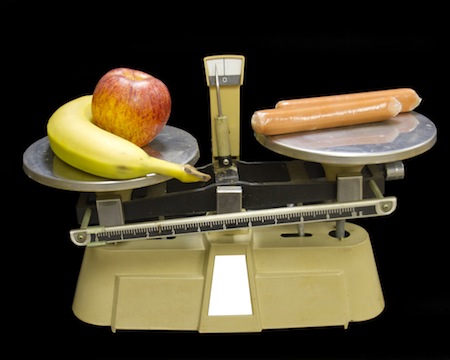
scaleLooking back at the horrific events of the past week reminds me that our actions always reflect our priorities – even what we eat reflects our priorities. No matter what we tell the world, what we do sometimes belies our words. Not only can this sometimes confuse those around us, it can hinder us from reaching our goals. No change can come until we have the courage to stare the facts in the face.

There are millions of choices when it comes to food and health. What works for one person may be detrimental to another. We each have a unique ecosystem within our bodies. The only way to know what works for you is to become aware of your body’s signals and educated about the foods you choose to eat.

Keep a food journal for a month and you’ll learn a lot about yourself and your priorities. Sometimes when we express a priority, what we really mean is we feel we “should” focus on a particular thing because of peer pressure or a doctor’s recommendation. It often turns out to mean much less as far as our everyday behavior. Not only does this make us feel bad, it becomes an impediment to making positive change. For example:

If your stated top priority is to limit the sodium in your diet, but you don’t take the time to read the labels on your salad dressing, sandwich meat, cheese, packaged soup, and whole wheat bread, then you will not be able to achieve your goal because you won’t know whether you’re within your limit.

It could be that limiting sodium is not a top priority, but instead falls below work, screen time, working out, or whatever it is that keeps you too busy to read labels. That’s okay. Once you recognize the facts, you are in a great position to make the best choice for you.

muffinsIf your stated priority is to avoid sugar and you continue to eat bread, breakfast cereal, frozen pizza, muffins, ketchup, barbecue potato chips and Ranch dressing, you are choosing foods that contain sugar. Once you recognize this you can decide to: 1)Eliminate these foods and all others that contain sugar, 2)Limit sugar by not eating dessert or “sweets”, but stop trying to avoid it 3)Eat as much sugar as you want.

Any of these choices is okay. Only you can decide what’s right for you. Once you look at the facts, you’ll be able to see how to achieve your personal goals more easily.

If your stated priority is to avoid processed food, but you eat at fast food or fast casual restaurants every day at lunch, then a revision of your stated priority or a change in venue may be appropriate.

If your stated priority is to avoid carbs, but you eat potato chips, drink beer, consume commercial smoothies, or coffee drinks, eat bagels or yogurt with fruit on the bottom, then it’s time to review your priority. It could be that research must take precedence while you learn more about carbs or it could be that you decide you don’t want to avoid carbs other than those from added sugars.

asparagusIf your stated priority is to feed your children real, unprocessed food, but you grab the Lunchables®, packaged mac & cheese, or fruit roll-ups more often than the broccoli, black beans, sugar snap peas, carrots, cauliflower, squash, green beans, and asparagus then perhaps it’s just a goal and not a priority or maybe you believe education, sports, or dance are more essential building blocks for a good life and have prioritized those over real unprocessed food. If so, that’s okay and only your stated priority needs to change.

This flight of fancy may seem unimportant to you, but choosing and owning our choices is the only real power we have in life. You cannot control other people. You cannot control nature. You cannot control what foods make you feel bad. You cannot control all public policy. You cannot control feelings that come rushing from a subconscious trigger. You can control when and how you act on your feelings and you can seek help if prior trauma leaves you doubting your perceptions.

Ultimately, it is our choices that allow us to create the best possible life we can have no matter what uncontrollable or tragic circumstances we encounter. This is true when it comes to diet and health. It is also true in relationships, finances, on the highway, and in a job situation. Changing our lives for the better is always within our power, but it will not happen until we have the courage to observe the facts and tell ourselves the truth no matter how ugly or difficult that truth is. It is at that point that it becomes possible to give up excuses and blame in order to craft the lives we desire.

When I can embrace and accept the things about me about which I feel the most shame, I begin to treat myself as though I matter, my priorities matter, my health matters, and my heart matters. While I hope that this will be valued by everyone I encounter, I know it will not. When my values run counter to yours, I can make a choice to argue with you, bully you, harm you, dismiss you or hear you, inspire you, and have compassion for you. I will not always make the ideal choice. It is then you can have compassion for me.

I wish us all the courage to become our best selves.