SOME THINGS TAKE TIME and require patience, perseverance and adherence to process before progress is made. Yes, I’m probably yelling. Expectations of immediate results for any and everything have reached the absurd. This is detrimental to progress in many areas.
I understand that words have lost much of their meaning. Literally is used to mean things that aren’t literal. Makeupless can mean wearing bright red lipstick. It can be effortful and difficult to sift, sort, and absorb enough information to get a plan together. Why not opt for whatever proposed solution promises immediate results?
Taking the easy sounding option is a choice that’s frequently made and sometimes works for the long-term. But more often, the fast, easy, effortless solution means having to start over again and again when it turns out not to be the panacea we’d hoped.
If we invest too much in the solution of the moment, we may not be able to let it go, even when it’s not working or leaves us with painful side effects. This is how many of us end up trudging down a path that does not benefit us.
Whether we’re setting work goals, life goals, or health goals, a more successful approach is to develop or summon the patience required to pursue a well-researched, well-developed, long-term plan and the perseverance to stick to it. We still may not find success, but we’ll stand a better chance of making lasting progress. We’ll also have the opportunity to benefit from the process.
Every step we take, every failure we endure, every push past fear offers us a chance to learn, ground, and breathe into new levels of understanding and confidence. When success comes without difficulty, it has less significance.
And removing difficulty doesn’t prepare us for hard times that will ultimately appear. We need adversity to develop resilience and build courage.
Taking focus off the destination and placing it on the process will get you through a lot of tough things. It may also be more productive than rushing. I have seen this over and over in my life.
Process is somewhat like working a jigsaw puzzle. Placement reveals itself slowly with each piece building on the last until the whole picture takes shape. Beginning with edge pieces creates both limiters and structure. And looking at a difficult puzzle too long in one sitting can blind you to the next move. Slow, methodical effort with breaks may bring a faster solution than rushing.
Patience doesn’t mean no action or movement forward. Perseverance doesn’t take extra-human fortitude. Progress is incremental and sometimes looks like a zigzag line with dips as well as peaks.
The bottom line is that it’s impossible to avoid the trying seasons of life. We all experience them and sometimes there’s no magic pill, quick solution, or hero to rescue us. We simply have to strap in, be patient, take one step at a time, and persevere.
Slow and steady wins the race. When you’re slow, it’s hard to even get picked for a team much less win. And yet so much in life requires slow, steady progress. Knowledge builds on knowledge. Strength is gained incrementally. Health builds from good habits over time.
We used to value the lesson of the tortoise and the hare. Then came fast everything – fast food, fast casual dining, speed dating, and immediate news posts. Fast channels currently top activity in the streaming world.
As a result, expectations changed. Tolerance changed. And yet, the effectiveness of slow, steady progress didn’t change. For some reason, anything that’s not immediate is now considered too difficult to attempt so we mold reality to our will by denying it. We demand immediate action and immediate results. Rarely is there a good long-term outcome to this behavior.
It is within our power to make different choices even when they’re hard. We just need to practice a few things.
What do slow and steady require?
Patience. Talk about a commodity in short supply. We are not a patient people. We want complete and immediate results. Unrealistic expectations lead us to view small bits of progress as no progress, lessening pain as inadequate relief, and grief as a process to be avoided. Impatience presents problems in many areas.
When it comes to health, impatience may lead some to abandon healthy habits before results are visible. It can lead to demands for medication when other approaches would be effective but take longer. A lack of patience may lead to impulsive behavior or riskier choices.
Dedication. Commitment to a particular course of action is required to stay on course over time.
Perseverance. Adhering to a course of action over time is inherently required for slow and steady improvement.
Open-mindedness. Not all standards, protocols, or methods are based on solid science or unimpeachable knowledge, yet they persist as “the right way.” As new peer-reviewed, rigorous scientific information becomes available, we must be willing to learn and adapt without being thrown off course.
Desire. None of the above is worth the effort if we don’t have a desire for improvement. And maybe that’s why all of this is hard. Maybe we would rather skate through life than put out the effort required because we just don’t have the desire to do better for ourselves.
It could be we feel like we’ve done our best despite not having put in much effort. Maybe someone has treated us in a way that causes us to doubt our worth. Perhaps we were taught everyone else is more important and using energy on ourselves is selfish. If these, or similar, beliefs hamper our desire to get better, or be better, we’ve identified a starting point for improvement.
Beginning a healthier path doesn’t require a large production. It doesn’t necessarily require an immediate reversal of every habit in your life. Small changes can lead to slow, steady progress and slow and steady can still win the race!
While I was pulling weeds yesterday, I began reflecting on
lessons from the garden. Beyond healthy food, fresh air, sunshine, and closeness
to the Earth, gardening brings other positives. And time in the garden when
your hands are busy, but your mind is free is time that can be spent exploring
them.
I’m not a landscape-pretty raised-bed gardener. Even though
I live in the city, I garden like we did on the farm. I have a wire fence
enclosure and plant seeds directly in the ground. I’m not as haphazard as my
stepfather who just throws a few seeds in a patch of weeds and lets them all
grow together. I have rows and I weed in between them as well as in between the
plants.
My watering schedule is observational and instinctive. I try
to mimic nature. Sometimes I spray with the hand sprayer to impersonate a hard
rain that removes larvae from leaves. Other times I use a sprinkler to mimic a
slow, soaking rain. If an afternoon is hot, sunny, and bright, I don’t water.
Nature would rarely combine heat, bright sun, and rain. So far, I’ve been
rewarded with good harvests.
That brings me right back to lessons from the garden:
Finding Balance
Balance is key to my health as well as the health of my
garden. Finding balance is part instinct and part effort. My senses tell me
when I haven’t had enough water to drink or enough sleep. If I’m a careful
observer, I know when I need to say no to that one small obligation that will
rob me of needed down time. I know when I need to seek something that stimulates
my mind or comforts me physically.
While it sounds like a simple planning issue, a schedule
doesn’t work perfectly for keeping balance. Unexpected weather rolls in and
everything changes.
Yield to the Weather
And so the garden teaches me that I must yield to the weather.
Think how much time we spend attempting to anticipate the weather. Newscasts
feature forecasts multiple times an hour. A phone app or website tells us what’s
happening 10 days out. We discuss it with friends and look out the window and
still sometimes we’re left in a house with no food and no power because a
tropical storm turns out to be a Category 2 hurricane or a tornado roars
through.
Obviously, not all sudden shifts are from the weather, but
the principle applies. With any sudden change that I can’t control, my options
are to be flexible and adapt to my new situation or be stuck with a plan that
no longer fits.
Patience
While my spring garden had a few weeds, my fall garden was overrun with them by the time I finished forming rows to plant. I weeded and within a day or two the weeds were back. Swift weed removal became my focus. Then I walked down the row of mâche and realized I couldn’t tell the seedlings from the weeds. In order to protect the mâche, I had to let both grow for awhile.
I’m not much for waiting when I know a task is at hand, but the garden teaches patience. Sure enough, a couple of weeks later the wait paid off and there was no question which plants should be removed.
Estimations Can be Wrong
It’s hard to gauge the size of a harvest the first year. You can estimate. You can follow the guidance of experienced gardeners, but your particular garden plot will be unique. Greens may do well and carrots may not. Two of your rows may get more shade than you realized. Having a contingency plan when estimates don’t pan out is always a good idea.
Small Wounds Can Yield Big Pain
My garden has ants. If you’ve ever had an ant bite, you already know the kind of pain they can inflict. It seems wrong. They’re so small. And their bites are so tiny. In fact, they’re so small you may ignore a bite at first. But soon it itches. Then it hurts. A blister forms. By the next day, your whole finger or hand may be swollen. You can’t think about anything besides the bite (especially if there are multiples). All the while, your brain is telling you this is silly. It’s only a tiny ant bite. Get a grip.
Like the physical response to an ant bite, an emotional response may seem disproportionate to a situation. When that response is yours, you may immediately understand that you’re responding to much more than anyone else sees. This is just the straw or it triggered an emotional flashback of sorts. Other times, you may witness someone else experience a large pain that appears to come from a small wound. This can be disconcerting.
Maintaining a connection and holding space for each other to work things out is a soothing compress. The swelling must subside before the pain is gone and that takes a minute. Thank goodness the garden already taught us patience!
For lunch I enjoyed a spinach salad fresh with lessons from the garden. Yum!
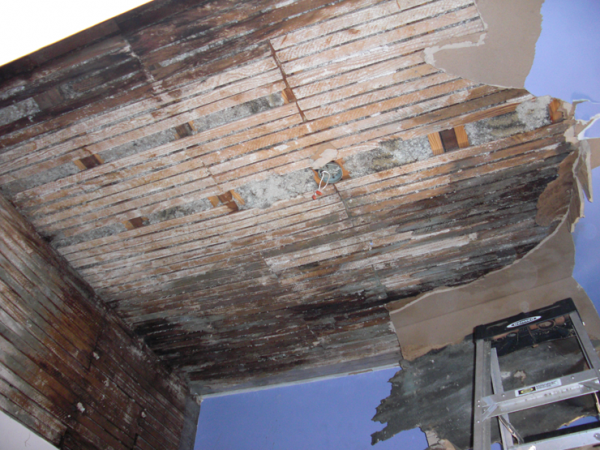
It’s Saturday afternoon and this weekend I have no water at my house. My pipes developed a leak that was running even with the faucets off. Already, I know I’ll have to replace the entire ceiling of my downstairs bathroom and part of the office ceiling. There may be more. Rather than pay a plumber’s emergency rate, I decided to dry out the environment with a dehumidifier over the weekend and have the plumber come next week. The earliest appointment I could get is late Tuesday afternoon.
On Thursday, I had all sorts of goals for this weekend punctuated by a wedding shower I’m attending on Sunday afternoon. My running list included proofreading some recipes, working on the website, designing some new packaging for an upcoming product, and testing some recipes. I was focused on what I felt I needed to accomplish.
I also felt an edge of foreboding and dread knowing that I wasn’t exactly feeling up to tackling such an extensive list right then so I’d have to drag myself kicking and screaming (internally so as not to scare the neighbors) toward those goals. Bummer, but I’m in this spot more than I’d like to admit and I know I can push myself and accomplish any goal I set. So, I jerked my bootstraps a bit tighter and set forth.
But there was a problem. Really, problemS. Trickle, gush, slosh – everything changed! My list no longer mattered because there were immediate practical needs that superceded my well-laid plans.
Before the leak, this was a periwinkle blue ceiling.
My first thoughts in the moment were to mobilize and start a new plan. My mind began to churn: I’ve had some recent unexpected expenses. How can I avoid going to a hotel? I can shower at the office, except I have no clean towels. I have a key to my neighbor’s house while she’s gone, so I can borrow some water for tooth brushing and toilet flushing. Of course, as soon as I have that thought, I get a text telling me to give the key to the dog sitter.
Finally, I stop pushing forward. I shift my focus. Breathe. Take a moment. Think about what’s really important. Oddly, I notice that the moment I shift, I feel more grateful than annoyed. Thank goodness I know how bad the leak is before I head off to work out of town for the day. I even begin to smile as I recognize how quickly the importance of my weekend goals pale in comparison to figuring out how to manage the basic tasks of life (Where will I shower? How can I brush my teeth? How much water will I have to pour down the toilet for it to flush? Do I have a clean dress for the wedding shower?). I notice I feel relieved by the chance to ditch my original list and start over.
Thank goodness for the occasional curve ball life throws us! When a sudden change gets our attention, and we stop planning the next moment and lean into this one, we may realize that our brains are headed down a totally different path than our hearts.
Okay, trickle, gush, slosh, I’m paying attention. How can I best take care of myself through a weekend without water and still not break the bank? What are my intentions and priorities? How will I feel if I don’t accomplish a single item on my original list? Will I be able to sit still knowing a renovation is imminent? Can I avoid revving back up and pushing myself?
Through the generosity of friends, I have the key to an apartment across town where I can shower and do laundry. I hauled some water for today, so I’ve been able to make coffee, wash my hands, brush my teeth, and water the plants. I’ve even gotten the toilet flushing figured out, although it took more water pouring than I remembered to make it work.
The funny thing is, I keep feeling like everything is broken and I can’t do anything – watch TV, use the microwave, cook on the stove, dry clothes in the dryer, sweep the floor, wash the dishes. That’s silly. The gas and electricity work. There’s no reason at all to stay at Heather’s to dry the clothes. I can bring them home wet and use my dryer. I can heat leftovers in the microwave, and if I heat some water on the stove, I can wash the dishes by hand. Admittedly, it makes more sense to use paper plates, but I’m fascinated by the fact that I feel limited in other areas when only one thing has changed.
Yes, it’s one thing that affects many everyday tasks, but it’s only one thing. I feel like it’s EVERYTHING. I can’t seem to find a comfortable rhythm for the day. What felt like plenty of water yesterday seems like way too little today, although in reality I still have an adequate supply. Somewhere down there, I think I feel scared. Of what? I don’t know. Just uneasy like if one thing shifted something else could too.
I tell you this because I recognize that this may be how some of you feel when you find out you will be healthier without gluten. One thing has changed, but it feels like EVERYTHING. And that feels scary.
As I explore how to best take care of myself on this off-kilter, scary day, perhaps you’ll find some inspiration for moving through your fear.
First, I’ll take inventory. Am I missing anything I need to eat, sleep, bathe, dress, work, or socialize comfortably? At this moment, I have enough water to drink and make coffee tomorrow plus some for tooth brushing, etc. If I should need more, I have retrieved the keys to my neighbor’s house or I can go to the office. There’s no real chance of running out. I have precooked food on hand. I have paper plates. I have washed the dress I want to wear to the wedding shower. I have purchased the cards and the gifts for the shower. I have books, TV, and internet for entertainment, or I can go for a walk. If I want to shower later, it’s a short drive to the apartment. I have everything I need.
Next, I will take the time to notice that I feel grateful for how little effort it has taken to procure what I need. I will sit with that gratitude for a moment. I may even get out a piece of paper and make a very specific and detailed list of things for which I feel grateful.
If I feel too restless to be still, or like I’m speeding up into a frenzy, I will plant my feet firmly on the ground and look around. I may grab a pillow and hold it while I do this. I will look at the colors or objects around me focusing on the tiniest details. Once I can be still, I will explore where in my body I feel the fear that is causing me to feel restless. When I feel the fear localize, I will allow myself to feel it for as long as I can at this moment. I know that I can trust my body to support me and I know that the longer I can sit with this fear, the less likely it is to be triggered by a similar event in the future. I will exercise the courage to face my fear, but I will choose patience and kindness toward myself. I will stop when I have reached my limit. Then, if I need personal contact, I will call a friend. If I need distraction, I will watch a comedy. I will acknowledge how proud I am of myself for leaning into fear rather than running from it. If this process lasts for hours or for days, I will be patient with myself and know that eventually it will end. There is no reason to panic.
If I pay attention, I will be presented with an opportunity to shift my point of view and move toward feeling good. At that moment, if I choose to let go of fear, anticipation and excitement will replace it and I will be prepared to embrace joy. Momentary happiness requires no preparation, but joy requires us to embrace our fear and let it go. I know this because sometimes I manage to do just that. I intend to practice this more often. This weekend is the perfect opportunity for me.
I am grateful for my increasing courage. Are you prepared to join me?