Another Lesson from the Garden

Today, I’m pondering another lesson from the garden. While I was traveling, my garden was taken over by grass and weeds. Since then, downpours have given them the perfect amount of moisture and they are thriving!

When I first returned, I took a weeding fork and pulled the weeds up and left them to die. That is not what happened. Today, it looked like they had rerooted themselves and doubled in volume and size. Obviously, I needed to remove the grass and weeds by the roots and remove them from the garden.

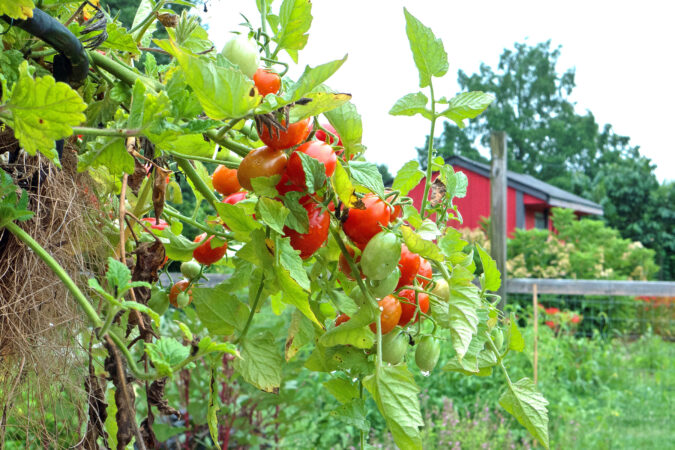
red barn in background weeds and tomato vines

Because of recent rains, the soil was holding together well. I tried to shake dirt clumps from the weed’s roots, but much of that dark, rich, moist soil traveled over the fence with them. It was painful to see soil I’d recently added to the space fly out of the environment.

My choices were to leave the weeds in the garden, spend an extra hour reclaiming the soil, or feel the sting of watching it leave the garden. Yes, I could have put it in the bucket to reclaim later, but if I had that time available any time soon, I’d have done it right then.

I tossed weeds, grass, and clinging soil into the yard. Once I’d made that decision, I could focus on the loss of fertile soil to the garden or view it as good food for the yard.

This process reminded me of a conversation I had with a 5-year-old last week about telling the truth. They insisted they hadn’t kicked someone. I saw the kick. I told them I saw the kick so that story wasn’t going to fly. There was some screaming, stomping, and tears which led to blaming the person they kicked for making them do it. Once things calmed down, we discussed why it’s important to tell the truth.

As we noted, telling a lie may be faster and less complicated than telling the truth. It’s like my first stab at weeding. The problem is, I ended up with a more difficult job this time around.

Lying is the same. The temporary effects are rarely worth the long-term consequences of eroding trust, undermining goals, and preventing progress. We get ourselves lost in the weeds.

Turning perceived failures, relationship difficulties, and workplace conflicts around in our minds until we’re lying to ourselves is a common adult manifestation of the 5-year-old’s behavior. It serves the purpose of diminishing pain, keeping us out of trouble temporarily, and providing the option of convincing ourselves someone else is to blame.

But the ultimate result will be no different than that in my garden. The entanglements will grow, multiply, and thrive. In the long run that is detrimental.

Finding the courage and strength to face pain, difficulty, and loss directly is the equivalent of me facing reality and tossing grass back into the yard where it belongs without removing garden soil because I know I can’t allot the time to do it. Is it annoying? Yes. Does it pain me? Yes. Is it the best way to avoid the same problem in the future? Yes. Can I do it? Yes.

Obviously, garden soil doesn’t carry as much emotional impact as other things. But I recently had the experience of participating in a conversation in which the other person, let’s call him Bob, turned a situation entirely around in his mind from what we had both experienced, discussed, and agreed about two weeks before.

The incident was a business negotiation between Bob and a potential client. There was nothing egregious in the original transaction. Annoying? Yes. But immoral, illegal, or unheard of? No.

Two weeks ago, Bob was clear he had provided less than clear communication to the potential client leaving her guessing and also implying she was doing something wrong without stating any specific objection.

In our more recent conversation, Bob believed he had been crystal clear and the potential client had treated him terribly. Because of this, he did not believe she deserved to have her phone calls returned. In addition, he had poisoned the water with other colleagues she could have hired.

Bob has revised the story into something I don’t recognize, and I was there for the initial negotiations. I don’t know if he does this often, but it makes me view his stories in a whole new light. Will I ever take them at face value again? I’m not sure.

His credibility with me is damaged because I saw him kick (figuratively) the potential client and then say it was her fault. It’s the same behavior I observed with the 5-year-old.

To repeat because it bears repeating, the ultimate result of taking the easy way out and avoiding painful truths will be no different than using the easy way to weed my garden. The entanglements will grow, multiply, and thrive. In the long run that is detrimental.

ad

Why Isn’t Okra a Star?

Why isn’t okra a star ingredient? I mean, it’s even shaped like a star. What gives?

This summer, I planted okra in my garden. It’s still going strong. The plants haven’t required much other than an occasional watering to become taller than I and they are prolific producers. One acre yields 4 to 6 tons.

In spite of that, I rarely see okra at the farmers market and it’s not often available at the supermarket. This left me curious what drives the minimal availability and whether accessibility limits its inclusion in recipes. I started clicking around.

Okra is grown commercially for both the fresh and frozen food markets. Some varieties have round pods. Those preferred for the fresh market have star-shaped pods. That’s what I grow.

Since pods for the fresh market require harvesting with a knife, picking can be time-consuming. And the window for perfect-sized pods is narrow. No need to click around to discover that. I’ve learned the lesson in person many times over. Picking a single acre of okra takes between 10 and 20 man-hours.

Machine harvesting has been attempted with varying degrees of success. Given its labor-intensive nature, okra may never be available on the scale of potatoes, corn, or spinach.

But does that mean okra shouldn’t star in more dishes than gumbo, succotash, okra & tomatoes, and fried or pickled okra? Many of you may be imagining its slimy texture and thinking, nah, that’s plenty of dishes– maybe more than enough.

It’s true okra can be slimy. Pairing it with citrus or adding vinegar will reduce this. You can also cook at high heat to minimize sliminess. For example: sautéing, grill charring, or breading and frying result in delicious flavor and texture sans slime.

I sometimes slice a few pods and throw them in with fresh green beans I’m sautéing. The other day, I added some sautéed slices to pasta. It took the dish from a solid, everyday flavor into the slightly exotic category.

I love using large pods, lemon juice, lemongrass, chicken stock, water, and seasoning to create a broth for cooking fish and rice. It creates a pleasing base that can be taken to another level with the addition of saffron or topped with fresh pico de gallo for an extra pop of flavor.

Okra will grow in zones 2 – 11 but it’s traditionally considered a southern food. That association may contribute to it being a role player rather than a star ingredient.

And while many people may hear the word slime and assume they won’t like it, anyone who has had fried okra done right will fight you for it at the store. It was always the star of my grandmother’s summer table.

Tomorrow, it will be the star of mine. I have some sliced and breaded and waiting in the refrigerator. Once I pull out a cast iron skillet and heat some oil, I’ll be minutes away from a mix of soft and crunchy texture that tastes like nothing else!

I even have vine-ripened tomatoes from the garden to go with. It doesn’t get any better than that!

Make Lemon Gumbo

When life gives you okra, make lemon gumbo. Life didn’t give me lemons last week, but it gave me some HUGE okra pods. A mere two days away from the garden and tiny pods grew so big my grandmother would have disinherited me for not picking them sooner.

The pods weren’t really hard or dry, but they were large and slightly tougher than anything I would want to fry. After the planting, weeding, and watering, I don’t like to throw away anything I’ve grown unless I must. I decided to use the pods in a stew.

Actually, I decided to use the pods in a stew made from ingredients I had on hand. That turned out to be a lemon, some boneless/skinless chicken breasts, chicken stock, brown rice, and seasonings.

While gumbo may technically be a stew thickened with okra, no one I know would call a dish gumbo unless it began with a roux. This did not. Maybe I should call it Coulda-Been-Gumbo.

Anyway, I began with a 32 oz box of ImagineR Organic Free Range Chicken Broth and 2 quarts of water. Into that, I squeezed one fresh lemon.

I removed the ends of each okra pod and sliced them about 1/8” thick. I added the slices to the stock along with one shishito pepper with the non-stem end removed. Then I chopped a small carrot and threw it in. While this mixture was heating, I sprinkled salt and a few grinds of fresh black pepper over the mixture.  

I wanted to add a little more flavor to the broth, so I dug around in the spice cabinet opening jars and smelling spices. I like to do this while standing close enough to the boiling pot that I can smell the spice jar and the broth in the same breath. Then I pick the best combination of aromas.

This time, I chose a blend from Penzeys Spices called Ruth Ann’s Muskego Ave Seasoning. The aroma reminds me a little of the chicken bullion cubes my mother used. It’s a blend of salt, black pepper, garlic, lemon peel, and onion. I sprinkled in about a half teaspoon.

Unlike when I test recipes, when I cook like this I rarely measure. That means I can’t tell you precisely how much I added. I can tell you it smelled right after I stirred everything together.

By now, the mixture was boiling. I reduced the heat and allowed it to simmer for 30 minutes. Then I removed the pepper.

Turning the heat back up, I added a cup of parboiled brown rice and 4 thin sliced chicken breasts. I sprinkled the chicken breasts and rice with salt, pepper, garlic powder and onion powder. I put on a lid, reduced the heat to medium low, and set a timer for 25 minutes.

Once the timer alerted me, I turned off the heat and allowed the gumbo to sit for about 5 minutes before I spooned some into a bowl. After a little cooling, I was ready to sample.

The flavors were scrumptious and the texture was pleasing. The lemon juice prevented the okra from making the broth slimy. The extra cooking time caused the slices to break apart into tender pieces of green pod and loose seeds. The chicken was moist and tender.

I was pleased enough that I want to try this again. Perhaps next time, I’ll use tilapia instead of chicken. And maybe I’ll add some lemongrass for added citrus zing.

I’m pretty sure the opportunity will present itself soon. Okra grows FAST!

Lessons from the Garden

While I was pulling weeds yesterday, I began reflecting on lessons from the garden. Beyond healthy food, fresh air, sunshine, and closeness to the Earth, gardening brings other positives. And time in the garden when your hands are busy, but your mind is free is time that can be spent exploring them.

I’m not a landscape-pretty raised-bed gardener. Even though I live in the city, I garden like we did on the farm. I have a wire fence enclosure and plant seeds directly in the ground. I’m not as haphazard as my stepfather who just throws a few seeds in a patch of weeds and lets them all grow together. I have rows and I weed in between them as well as in between the plants.

My watering schedule is observational and instinctive. I try to mimic nature. Sometimes I spray with the hand sprayer to impersonate a hard rain that removes larvae from leaves. Other times I use a sprinkler to mimic a slow, soaking rain. If an afternoon is hot, sunny, and bright, I don’t water. Nature would rarely combine heat, bright sun, and rain. So far, I’ve been rewarded with good harvests.

That brings me right back to lessons from the garden:

Finding Balance

Balance is key to my health as well as the health of my garden. Finding balance is part instinct and part effort. My senses tell me when I haven’t had enough water to drink or enough sleep. If I’m a careful observer, I know when I need to say no to that one small obligation that will rob me of needed down time. I know when I need to seek something that stimulates my mind or comforts me physically.

While it sounds like a simple planning issue, a schedule doesn’t work perfectly for keeping balance. Unexpected weather rolls in and everything changes.

Yield to the Weather

And so the garden teaches me that I must yield to the weather. Think how much time we spend attempting to anticipate the weather. Newscasts feature forecasts multiple times an hour. A phone app or website tells us what’s happening 10 days out. We discuss it with friends and look out the window and still sometimes we’re left in a house with no food and no power because a tropical storm turns out to be a Category 2 hurricane or a tornado roars through.

Obviously, not all sudden shifts are from the weather, but the principle applies. With any sudden change that I can’t control, my options are to be flexible and adapt to my new situation or be stuck with a plan that no longer fits.

Patience

While my spring garden had a few weeds, my fall garden was overrun with them by the time I finished forming rows to plant. I weeded and within a day or two the weeds were back. Swift weed removal became my focus. Then I walked down the row of mâche and realized I couldn’t tell the seedlings from the weeds. In order to protect the mâche, I had to let both grow for awhile.

I’m not much for waiting when I know a task is at hand, but the garden teaches patience. Sure enough, a couple of weeks later the wait paid off and there was no question which plants should be removed.

Estimations Can be Wrong

It’s hard to gauge the size of a harvest the first year. You can estimate. You can follow the guidance of experienced gardeners, but your particular garden plot will be unique. Greens may do well and carrots may not. Two of your rows may get more shade than you realized. Having a contingency plan when estimates don’t pan out is always a good idea.

Small Wounds Can Yield Big Pain

My garden has ants. If you’ve ever had an ant bite, you already know the kind of pain they can inflict. It seems wrong. They’re so small. And their bites are so tiny. In fact, they’re so small you may ignore a bite at first. But soon it itches. Then it hurts. A blister forms. By the next day, your whole finger or hand may be swollen. You can’t think about anything besides the bite (especially if there are multiples). All the while, your brain is telling you this is silly. It’s only a tiny ant bite. Get a grip.

Like the physical response to an ant bite, an emotional response may seem disproportionate to a situation. When that response is yours, you may immediately understand that you’re responding to much more than anyone else sees. This is just the straw or it triggered an emotional flashback of sorts. Other times, you may witness someone else experience a large pain that appears to come from a small wound. This can be disconcerting.

Maintaining a connection and holding space for each other to work things out is a soothing compress. The swelling must subside before the pain is gone and that takes a minute. Thank goodness the garden already taught us patience!

For lunch I enjoyed a spinach salad fresh with lessons from the garden. Yum!

Ant Bites