Container Vegetables

With continuing recalls of food due to cyclospora cayetanensis and salmonella, now’s a great time to consider container vegetables. You don’t have to be an avid gardener or have tons of space to grow vegetables. If you have a patio, porch, deck, yard, flowerbed, or sunny room in your home, you can grow a number of herbs and vegetables. Growing your own gives you the ability to make sure contaminants don’t reach your food.
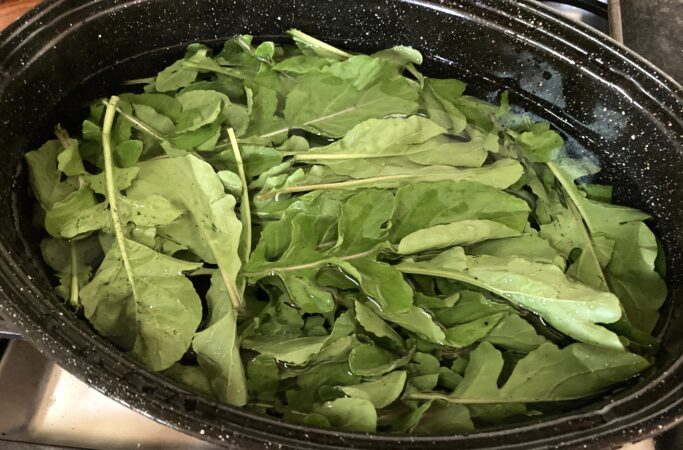
arugula in water in a black speckled roaster

All you need are pots or planters, soil, and plants or seeds. Pots and planters are often available for free through community gifting groups or at low cost from thrift stores and flea markets. Soil can be purchased from dollar stores, hardware stores, big box retailers, and garden centers. Many of these will deliver to your porch allowing you to avoid carrying heavy bags up steps.

Plants or seeds may be available from gifting groups, neighbors, hardware stores, big box retailers, and garden centers. To choose the most appropriate plants for your space, time of year, and growing zone, visit a seed company website and search by container vegetables then look for recommendations for your growing zone.

If you think you’ll be limited to tomatoes, peppers, and herbs, you’ll be pleasantly surprised. You can grow those in containers, but you can also grow lettuce, kale, arugula, celery, scallions, squash, cucumbers, eggplant, green beans, baby okra, strawberries, blueberries, blackberries, raspberries, and corn. And that’s not all, radishes, potatoes, and garlic are possible, even inside.

I gardened with my grandmother as a child and once when my children were little. In 2020 when I learned how fragile our supply chain was, I started gardening again. Currently in my garden are cucumbers, peppers, green beans, bok choi, and the end of romaine lettuce and arugula for the season. My blackberry bush is beginning to flower a second time, and I have a blueberry bush in a pot on my back porch.

That means I have a lot of a few things to consume. If you’re used to grocery store produce, you may not be familiar with seasonal substitutions. Yesterday, I used some of my abundance of cucumbers to make gluten-free muffins. They’re not that different from zucchini or kiwi muffins. I just substituted what’s in season from my garden and changed the flavor profile a little.

This is how I grew up eating so it’s not a stretch to try a new way to prepare something I might otherwise tire of. With seasonal substitutions you get the full flavor of fresh vegetables or fruit that haven’t been trucked around plus variety of taste and texture.

As some plants become prolific, you’ll understand why great-grandmothers made pickles, jam or jelly, tomato juice, cider, and canned vegetables and why many people dry or freeze food. Once you’ve invested the labor to plant, water, and weed, you don’t want anything to go to waste.

But you don’t have to go big to avoid recalled foods. A planter of lettuce may give you the salad base you’re missing. A pot of jalapeno peppers can bring the heat you miss to your nachos. Once you’ve made the initial investment, you will most likely save money as well.

I’m not happy with the lack of food safety we’re currently experiencing. But it is a reality. Growing container vegetables and fruit is a way to continue to enjoy fresh produce with an added layer of safety. Now’s a great time to try it out!

ad

Lessons from the Garden

While I was pulling weeds yesterday, I began reflecting on lessons from the garden. Beyond healthy food, fresh air, sunshine, and closeness to the Earth, gardening brings other positives. And time in the garden when your hands are busy, but your mind is free is time that can be spent exploring them.

I’m not a landscape-pretty raised-bed gardener. Even though I live in the city, I garden like we did on the farm. I have a wire fence enclosure and plant seeds directly in the ground. I’m not as haphazard as my stepfather who just throws a few seeds in a patch of weeds and lets them all grow together. I have rows and I weed in between them as well as in between the plants.

My watering schedule is observational and instinctive. I try to mimic nature. Sometimes I spray with the hand sprayer to impersonate a hard rain that removes larvae from leaves. Other times I use a sprinkler to mimic a slow, soaking rain. If an afternoon is hot, sunny, and bright, I don’t water. Nature would rarely combine heat, bright sun, and rain. So far, I’ve been rewarded with good harvests.

That brings me right back to lessons from the garden:

Finding Balance

Balance is key to my health as well as the health of my garden. Finding balance is part instinct and part effort. My senses tell me when I haven’t had enough water to drink or enough sleep. If I’m a careful observer, I know when I need to say no to that one small obligation that will rob me of needed down time. I know when I need to seek something that stimulates my mind or comforts me physically.

While it sounds like a simple planning issue, a schedule doesn’t work perfectly for keeping balance. Unexpected weather rolls in and everything changes.

Yield to the Weather

And so the garden teaches me that I must yield to the weather. Think how much time we spend attempting to anticipate the weather. Newscasts feature forecasts multiple times an hour. A phone app or website tells us what’s happening 10 days out. We discuss it with friends and look out the window and still sometimes we’re left in a house with no food and no power because a tropical storm turns out to be a Category 2 hurricane or a tornado roars through.

Obviously, not all sudden shifts are from the weather, but the principle applies. With any sudden change that I can’t control, my options are to be flexible and adapt to my new situation or be stuck with a plan that no longer fits.

Patience

While my spring garden had a few weeds, my fall garden was overrun with them by the time I finished forming rows to plant. I weeded and within a day or two the weeds were back. Swift weed removal became my focus. Then I walked down the row of mâche and realized I couldn’t tell the seedlings from the weeds. In order to protect the mâche, I had to let both grow for awhile.

I’m not much for waiting when I know a task is at hand, but the garden teaches patience. Sure enough, a couple of weeks later the wait paid off and there was no question which plants should be removed.

Estimations Can be Wrong

It’s hard to gauge the size of a harvest the first year. You can estimate. You can follow the guidance of experienced gardeners, but your particular garden plot will be unique. Greens may do well and carrots may not. Two of your rows may get more shade than you realized. Having a contingency plan when estimates don’t pan out is always a good idea.

Small Wounds Can Yield Big Pain

My garden has ants. If you’ve ever had an ant bite, you already know the kind of pain they can inflict. It seems wrong. They’re so small. And their bites are so tiny. In fact, they’re so small you may ignore a bite at first. But soon it itches. Then it hurts. A blister forms. By the next day, your whole finger or hand may be swollen. You can’t think about anything besides the bite (especially if there are multiples). All the while, your brain is telling you this is silly. It’s only a tiny ant bite. Get a grip.

Like the physical response to an ant bite, an emotional response may seem disproportionate to a situation. When that response is yours, you may immediately understand that you’re responding to much more than anyone else sees. This is just the straw or it triggered an emotional flashback of sorts. Other times, you may witness someone else experience a large pain that appears to come from a small wound. This can be disconcerting.

Maintaining a connection and holding space for each other to work things out is a soothing compress. The swelling must subside before the pain is gone and that takes a minute. Thank goodness the garden already taught us patience!

For lunch I enjoyed a spinach salad fresh with lessons from the garden. Yum!

Ant Bites

Spring is a Great Time to Locate Sources of Fresh, Local Food

farmers marketEarly in the growing season is a great time to locate the best sources of affordable fresh, local food. Imagine a salad of buttery lettuce, scallions, shaved carrots, spicy micro-greens, and vine ripened tomatoes topped with a grate or two of artisan cheese or one made of crispy cucumber slices and fresh dill. It’s hard to beat the full flavor of fresh produce.

It can also be healing to get your hands dirty. There’s something about working with peaty smelling soil that makes you feel more connected to the earth and its natural ebb and flow of life. The green of a garden makes the space calm and inviting — even if that garden is inside.

If you’re lucky enough to live in the country, your own garden gives you the best of both worlds — fresh produce and a place to work the ground, get some sun, and breath in the smell of earth, grass, and possibly not-as-pleasant compost. When you have the land available, a full-fledged garden may be the best source of fresh food during the growing season. 

I grew up helping my grandmother in the garden. Hers was located on our farm about 10 miles from her home. In the spring, my dad would till up the soil and from that point, it was my grandmother’s domain. Long before anyone talked about the dangers of skin damage from the sun, she wore long sleeved shirts and a broad-brimmed hat while she dug, planted, weeded, and harvested lettuce, onions, cabbage, zucchini, summer squash, okra, peas, green beans, potatoes, corn, and tomatoes. 

Down the road, my great aunts shared a garden. They spent many afternoons sitting in chairs in the lawn shelling peas, snapping beans, or shucking corn together while they swapped stories. When the grandkids were around, we ran free in the yard or the fields. There was a sense of community created by these shared tasks that lessened the drudgery and made them as much enjoyable social activity as everyday task accomplishment. To those of us who grew up in this environment, it’s no surprise that designed communities that encourage similar shared gardens are springing up in cities like Asheville, NC.
herbs
If you live where outdoor space is more limited, raised beds or containers provide a suitable environment for tomatoes, peppers, lettuce, kale, cucumbers and other favorites. Even a window sill can host pots of herbs throughout the year. 

Growing your own herbs and vegetables provides an opportunity for mindful interaction with nature and reduces the cost of fresh food, but it also adds to your task list. A garden must be tended to get the best results. Regular watering, weeding, and harvesting all take time. If you’re long on fertile land, but short on time, you may want to explore additional sources of fresh food.

Luckily, the farm-to-table movement has increased the number of options for procuring fresh produce, grass fed beef, and free range chicken. Shares of organic farms can be purchased through Community Supported Agriculture (CSA) programs. Each share entitles you to a weekly pickup of food from the farm. The contents and amount of food vary depending on your location and the specific farming organization. Another version of this arrangement offers memberships that entitle you to pick up a weekly food basket.
peppers
Community garden plots are collectively farmed by a group of people. They may sell food or allow you to trade labor for a certain amount of food. Trading labor for food can make them a budget friendly option. Don’t assume these are only located in affluent neighborhoods. There may be one near you no matter what your economic or social status. My city has a community garden located in a low income, gang saturated neighborhood next to a middle school. It is used as a learning tool for students.

Down the street, a neighbor turned an empty lot into a neighborhood garden. He rented small plots to his neighbors for a nominal fee on a first come, first served basis. On a Saturday morning, it’s not unusual to see neighbors visiting while they work in the garden. Sometimes cities or counties have similar gardens located on the outskirts of town.

Other options for fresh, local food include the traditional Farmers Markets that abound in cities. There may be one within walking distance in your neighborhood. Many vendors can swipe your debit card, so take reusable bags, but don’t worry too much about getting cash on the way.
market 2

In more rural areas, farmers sell fresh fruits and vegetables from the back of pickup trucks. If peaches grow in your state be sure to stop the next time you see a farmer with tubs full for sale. There’s nothing like the perfect fresh peach!

While all these options are worth exploring, you may not need to change your routine at all. Some urban farmers sell their food in grocery stores. Ask a store manager whether this is true in your local store. Natural Grocers has a stock of locally grown produce in my city. Even Walmart has made an effort to increase its selection of locally grown items.

I’m looking forward to digging in the dirt this weekend, but most of all, I’m looking forward to the harvest and all that yummy food!

http://sovereignoaks.com/community/

http://villagesatcrestmountain.com/

http://www.motherearthnews.com/homesteading-and-livestock/sustainable-farming/neighborhood-gardens-zm0z14amzsor

https://www.heifer.org/campaign/heifer-usa-buy-csa-shares.html

http://corporate.walmart.com/_news_/media-library/photos/live-better/local-produce-at-walmart