Please don’t kiss the chickens! Not only do we have a new rooster in the neighborhood, the CDC has warned me not to kiss it. As if I would. I know better. I grew up on a farm. I do not kiss chickens or play with piglets when the mother is around. An angry sow targeted me for death when I was three. I barely escaped and I still remember it. That was enough piglet playing for me.
Most of us are aware we should be careful when cooking eggs or chicken, but we may not think twice before taking a cute photo of the kids kissing a baby chick. It is time to think twice.

On August 30th, the CDC issued an investigation notice regarding several multi-state outbreaks of salmonella infections linked to backyard poultry. At the time there were 1003 infections across 49 states resulting in 175 hospitalizations and 2 deaths. By now, there may be more.
Salmonella can cause mild, severe, or life threatening diarrhea depending on the person infected. Chickens, ducks, geese, and turkeys can contaminate their feathers, feet, beaks, and environment with salmonella even when they appear healthy and clean. People can get sick from touching coops, cages, hay, soil, feed, water dishes, and anything else in the bird’s environment even if they don’t touch the birds.
What I learned on the farm is that animals are carriers of disease so certain rules must be followed. The boots we wore in the barn came off in the utility room so we didn’t track contaminated soil into the house. Even if we had worn gloves, hands were washed thoroughly when we came in and always before cooking or eating. We wore shoes in the yard if we had dogs.
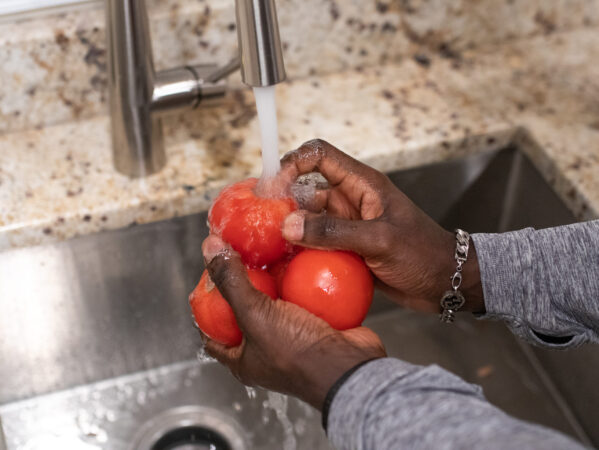
We washed our vegetables and fruits as a matter of routine. I never saw my grandmother sample a tomato or a piece of lettuce without washing it first. When we picked apples, we weren’t allowed to eat them until we got home. Huckleberries, blackberries, and strawberries had the same rule. We never placed raw meat on the same surface as the vegetables we were prepping.
As a child, I did not pick up wild animals that were sick even if they were teeny tiny and cute. If I saw a bat or possum during the day, I stayed away out of caution. That doesn’t mean I was taught to be fearful. I walked through a line of honeybees every time I went down the driveway. I didn’t run if I saw a spider or a snake as long as I determined it wasn’t poisonous.
Today, there seems to be a disconnect from these common sense rules. I now live in the city where if it’s cute most folks I know will let their kids pick it up and kiss it with no thought whatsoever. They’ll eat berries out of the farmer’s market crate without cleaning hands or fruit. But if they see a snake, bee, spider, or wasp of any kind, they run without ever looking to see whether it’s dangerous.
And there are other disconnects. Some friends who will only buy organic vegetables are quick to use wasp spray on their houses, insect spray on their skin, and Roundup® on their yards.

Perhaps a few common sense rules for disease prevention bear repeating:
Always wash your hands thoroughly using soap and water:
(Adults should supervise the hand washing of young children.)
Before eating and after using the bathroom.
After changing diapers or cleaning your toddler’s bottom.
Before preparing food, during food preparation after handling meat, eggs, poultry, fish, and seafood and again when food prep is done.
Before and after caring for someone who is sick.
Before and after visiting a hospital room.
After blowing your nose, coughing or sneezing or cleaning a child’s nose.
After touching animals, animal food, animal waste, animal blankets, saddles, leashes, bedding, or hay.
After handling pet food or pet treats.
After touching trash.
To prevent spread of colds, flu, stomach viruses, hand foot & mouth disease and other illness spread through close contact:
Do not share cups and eating utensils.
Clean and disinfect frequently touched surfaces in your home (including toys), at work, and at school.
Follow hand washing recommendations and/or use hand sanitizer after contact with public handrails, door knobs, touchscreens, pens, shopping carts, elevators, remotes, vending machines, and shared keyboards and phones.
Stay home when you are sick.
Keep your child home when he is sick.
As often as possible, avoid close contact with people who are sick.
Cover your nose and mouth with a tissue when coughing or sneezing.
Avoid touching your eyes, nose, and mouth especially when you are around someone who has a cold or flu.
To lessen the risk of giardia, cryptosporidium, campylobacter jejuni, E. coli, legionella pneumophila, hepatitis A, and salmonella:
Do not drink water from standing bodies of water or any water that may be contaminated with feces.
Try not to swallow water when swimming even in chlorinated pools.
Wash all fruits and vegetables thoroughly.
Follow hand washing recommendations.
Follow USDA recommendations for safe food handling.
Cook meat to the recommended temperature.
Pay attention to food recalls.
Keep farm animals out of the house.
Set aside a pair of shoes to wear while taking care of poultry and keep those shoes outside of the house.
Don’t eat or drink where poultry live or roam.
Stay outdoors when cleaning any equipment or materials used to raise or care for animals such as cages and feed or water containers.
Don’t eat after your pets.
Avoid hookworms by:
Wearing shoes when walking outdoors, especially in places that may have feces in the soil.
To avoid hepatitis B, rotavirus, diphtheria, whooping cough, pneumococcal infections, measles, mumps, rubella, tetanus, polio, chickenpox, meningitis, and HPV:
Stay up-to-date on long-lasting vaccinations and consider seasonal flu shots.
To lessen the risk of rabies:
Vaccinate your pets.
Leave stray cats and dogs alone.
Leave wild animals alone. Don’t keep them as pets.
Wash animal bites and scratches immediately with soap and water.
Consult a healthcare professional if you are bitten or scratched by an unvaccinated animal.
To lessen the risk of any illness:
Keep your body healthy, robust, and ready to fight disease by getting plenty of sleep, drinking plenty of fluids, eating nutritious food, being physically active, and managing stress levels.
And finally, it’s worth taking a moment to learn about the organisms with whom we share the planet. All spiders and bees are not to be feared and all furry creatures are not safe to embrace. If you’re determined to kill all insects anyway, please remember that poison is poison whether it goes on your skin, your yard, or your food.
If you want to choose a single piece of advice to help prevent disease, take it from the CDC and please don’t kiss the chickens!
https://www.cdc.gov/salmonella/backyardpoultry-05-19/index.html
https://www.cdc.gov/media/dpk/food-safety/live-poultry-salmonella/live-poultry-salmonella.html
https://www.cdc.gov/features/handwashing/index.html
https://www.fsis.usda.gov/wps/portal/fsis/topics/food-safety-education/get-answers/food-safety-fact-sheets/safe-food-handling/basics-for-handling-food-safely/ct_index
http://www.cooking2thrive.com/blog/?s=safety/
Holiday Baking – Keep it Safe!



 Spiders may not be the current danger for Little Miss Muffet when she eats her curds and whey. Last week, several snack cracker recalls centered around possible salmonella contamination of the ingredient whey. If you’re familiar with the nursery rhyme, you probably instinctively associate whey with milk or milk products, but what exactly is it?
 Whey’s use as a filler in convenience foods grew from there. It is now found in products that may or may not have inhabited my snack bin – things like King’s Hawaiian Bread, Cheetos, Ritz Sandwich Crackers, Goldfish Crackers, Nature Valley Protein Bars, Luna Protein Bars, Oatmega Protein Bars, Swiss Rolls, and Similac Pro-Advance Infant Formula. Whey has also become a nutritional supplement popular with bodybuilders because of its leucine content.