
Wash your hands. Wash your veggies. Wash your fruit. If it’s raw and you’re not going to cook it – clean it. This morning, a new list of recalls crossed my screen. It’s a good reminder that contaminated raw fruits, vegetables, and eggs can make you sick.
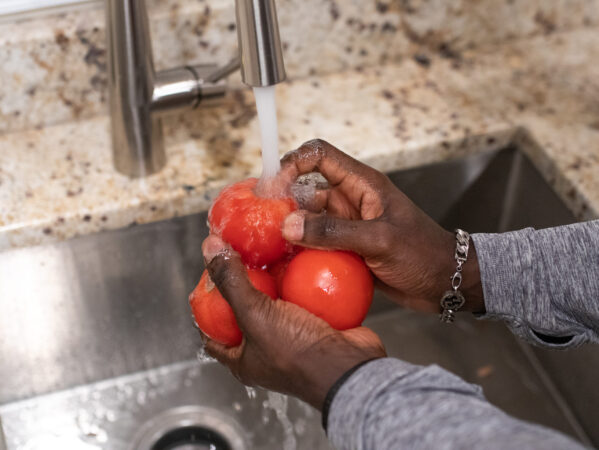
Instead of a quick rinse in water, consider using some kind of veggie wash product to remove an additional layer of contamination. This may not remove every organism, but it will help minimize potential exposure to undesirable substances.
In certain circumstances I wear a mask to handle fruit. I’m most likely overdoing the safety factor, but with berries that mold quickly and citrus, I’m doubly careful.
I understand the risk of inhaling enough fungus or mold to be problematic is low, but I remember my mother having a lung lavage to rid herself of a fungus growing there. Her doctors speculated that she had inhaled the fungus from unwashed citrus fruit she peeled.
Mold, fungi, and bacteria can travel in and on food. Histamines can multiply as food ages. We rely on farmers or supermarkets to handle food properly. But we should always keep in mind that the food we purchase may not have been kept at the ideal temperature. It may also be older than we imagine. And if you grow your own vegetables, cleaning removes soil as well.
In addition to the food itself, keeping utensils, cutting boards, and countertops clean will help prevent contamination from one item to the next. I know it may seem like you’re generating more dishes to wash without much benefit, but one round of salmonella will convince you the extra effort is worth it.
My great aunts used to make sure all the dishes they handwashed were rinsed in scalding water. I use this technique in the RV where I’m trying to keep the volume of water usage low. I still scrub with soap, but I want the double protection of rinsing with boiling water.
It absolutely drives me crazy to watch TV cooks wipe their hands off on a cloth towel when handling meat and then go back to handling knives and other utensils without actually washing their hands. I understand a kitchen set with rolling cameras means handwashing creates a disruption that requires more editing but showing this also teaches new or potential cooks bad habits.
Modeling healthy habits and kitchen cleanliness for our children is beneficial. We don’t want them sending us to the hospital the first time they cook us a meal! And learning by repeated, consistent example can be effective even if we don’t reinforce the lessons verbally.
I guess that brings us to the question of the five second rule. It’s not as bad as it sounds depending – how clean are your floors, do you have pets in the house, does anyone track in agricultural waste, and what is it you dropped – these are all factors that affect the safety of the policy. If you are pet free and mop often, five seconds probably won’t hurt anything.
On the other hand, if you break an egg onto the floor and do not disinfect the spill, you may contaminate other things that touch the floor.
Each of us has our own sensibilities when it comes to cleanliness. If you’re going to eat it, clean is better as long as you’re cleaning with ingestible cleaners. And high temperature cooking will kill most bacteria.
If you don’t want to wash your hands as often, wear gloves – keeping in mind that gloves can also spread contaminants from one surface to another.
In short, keeping it clean in the kitchen means wash, wash, wash.

 Spiders may not be the current danger for Little Miss Muffet when she eats her curds and whey. Last week, several snack cracker recalls centered around possible salmonella contamination of the ingredient whey. If you’re familiar with the nursery rhyme, you probably instinctively associate whey with milk or milk products, but what exactly is it?
 Whey’s use as a filler in convenience foods grew from there. It is now found in products that may or may not have inhabited my snack bin – things like King’s Hawaiian Bread, Cheetos, Ritz Sandwich Crackers, Goldfish Crackers, Nature Valley Protein Bars, Luna Protein Bars, Oatmega Protein Bars, Swiss Rolls, and Similac Pro-Advance Infant Formula. Whey has also become a nutritional supplement popular with bodybuilders because of its leucine content.