Is Bigger Always Better or Should I Channel My Inner Goldilocks?

Here’s what I’ve been pondering: Is bigger always better or should I channel my inner Goldilocks and learn to be satisfied with just right. I know, it seems obvious that just right is just right and therefore the obvious choice, but I’m surrounded by images, ads, attitudes, messages, and the occasional TEDx talk that imply, or outright state, that just right is somehow failure; that if I do not reach the absolute pinnacle of wealth, status, expertise, or achievement in my field, I will have failed to have a great career or a great life.

Versailles USA
And it seems to be no secret that I’m supposed to feel happiest when I buy a bigger house, fancier car, more expensive TV, computer, phone, coffee maker, iron, and larger lips, boobs, and these days, perhaps even booty. But I know plenty of people who have bought a bigger house or a high end car and now talk as if they’re more stressed than they were before. I have numerous friends who own the latest and greatest everything, look fabulous, and feel anxious, so anxious in fact, that they use daily medication or alcohol to take the edge off. Working in a service business for 25 years, I am also no stranger to the conversation that includes an expression of dissatisfaction with a job or spouse.

But something feels wrong to me. I understand that most of us are our own greatest limiters, so trying to inspire us to be more isn’t a bad thing on it’s own. The hard thing with all the messages encouraging excess is to determine when more becomes too much. Without tools for discernment or a different measure of enough, it’s easy to fall prey to the lure of too much and too many. Once we get on that roller coaster, nothing is enough and we certainly can’t be enough or produce enough or ever live up to our expectations. How can our spouse, our kids, our boss, or anyone, ever measure up? In this environment, how can we help but feel anxious and fearful?
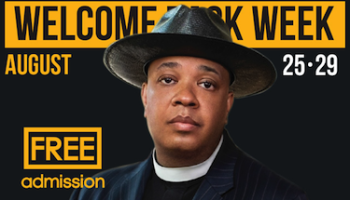
Rev Run
Last fall I went to see Joseph Simmons (Rev Run) speak at a college nearby. He described a scene early in his career when he was experiencing the kind of success we’re told to strive for. Run DMC’s albums had just gone gold, platinum and then double platinum. At that point, Run’s goal became to top LL Cool J, so, his plan was to go to LA, get a presidential suite with a huge Jacuzzi tub, order French toast and smoke some weed. Then one day, he’s in LA in a presidential suite, in the Jacuzzi eating French toast and smoking weed just like he planned. As he described it, syrup was falling in the tub and ashes were falling in the tub. A guy that ordered him a Rolls Royce to rent was at the door. “Rolling Stone” magazine was at the door with a girl for him, and the hair cut guy was on the way. He had everything he had imagined as “winning”.

Then, Rev said, he had a moment of clarity. He realized that he was trying to have everything at once. He was trying to win like we’re told to win and it did not come with the good feeling he expected. That point was the beginning of his bottom, or as he said it when I saw him, his top was his bottom. To quote the way he said it on another occasion to CNN, “At that moment I took a deep breath and realized that there`s more to life than just being No. 1, pushing the other rappers down.” It was the beginning of a journey that led Rev Run to become a real reverend with a real ministry.

When I was reading “Fearless Living” by Rhonda Britten, the book instructed me to choose a list of heroes. In various versions of this list, I chose Burt Rutan, Steve Jobs, Elon Musk, Ben Vereen, Theodor Seuss Geisel, and Ron Clark. In the beginning, I noticed that most of my lists were full of men and none included anyone I actually knew. Was it possible that the idea of bigger is better had caused me to believe that no everyday person could possibly qualify as a hero? Even more frightening, did I believe that only men could achieve the level of hero?

By the time I’m consciously asking a question, I know I’ve already shifted my subconscious beliefs enough that I can entertain a new point of view. Today my hero list includes Michelle Knight, Elizabeth Smart, and Michelle Wilkins – all women who endured the unspeakable and emerged with a bright, sweet spirit intact. It’s that spirit that inspires me. You can’t buy it. You can’t get a degree in it. You can have it no matter what you look like. It’s available within each of us and it can be cultivated, nourished, and shared. It is a piece of wholeness.

We all have different paths to healing and wholeness. Along the way, some of us will enjoy accolades, win prizes and garner fame as the foremost achievers in our field. Some of us will receive recognition for our contributions as parents or patrons of the arts. For some of us, there will be no overt recognition. We will only know we are having a positive effect during brief moments when we feel it in another’s response to us.

No matter what my job, my social status, or my financial situation, the more whole I am, the more contentment, satisfaction, beauty, and joy I’ll be poised to experience. That sounds to me like the underpinning of a great career and a great life!
coweta
Wholeness does not require wealth, a bigger house, a high end car, a Nobel prize, a larger TV, plastic surgery, a ticket to the Super Bowl, or French toast in a presidential suite. If I am whole, I can be a hero in my life. It seems quite simple, perhaps obvious, that bigger is only bigger and better is only better when it’s just right. Now that we cleared that up, I’ll just sign off – as Goldilocks, of course!

http://www.ted.com/talks/larry_smith_why_you_will_fail_to_have_a_great_career?language=en

http://www.cnn.com/TRANSCRIPTS/0810/10/gb.01.html

Can you stop just existing and thrive? You can, and you are worth it.

Can you stop just existing and thrive? You can, and you are worth it, but you may not be living that way because you may not believe it way down deep. Why do so many of us feel so bad about ourselves?

In this age of headlines and 24/7 talking heads we lunge from crisis to crisis. Our culture is swept up in rivers of bad news, glaring failures, dissatisfaction, and united finger pointing at whomever we can identify as a potential villain. NFL players have taken the stage this week led by Ray Rice and Adrian Peterson.

What has resulted is a narrow focus on the behavior of professional athletes. Not even women’s rights advocates have suggested that all professions should purge their halls of those who physically assault their partners or children. Why is the NFL special? Let’s purge elementary schools, colleges, newsrooms, courts, churches, investment firms, manufacturing facilities, the trucking industry, pipe fitters, doctor’s offices and mental health facilities as well. If we don’t, what point are we making?

And that’s my point. Most of the time, it feels like we’re just finger pointing and creating a villain of the moment – someone who can make us feel better about ourselves while we contrast our public behavior from theirs. What we sometimes forget is that most of the violent incidents we see aired were not believed to be public. They were private moments. We know this and if we’re willing to tell ourselves the truth, we know that we would not look good if our most vile or shameful moments were plastered on a TV screen.

All of us have erred. All of us feel shame. In this commonality of human experience we can find compassion, empathy, and healing or we can find condemnation, comparison, and hate – peacefulness or warmongering.

The problem with focusing our energy on the condemnation of other people in order to make ourselves feel better, or momentarily superior, is that this behavior systematically prevents our own improvement. As we elevate ourselves in contrast with others, we become less and less willing to admit when we have erred in a similar manner for fear that an astute observer may remember our prior condemnation of this behavior and hold us accountable. We will go to great lengths to support our fantasy that we not like those we vilify.

As we feel the internal conflict inherently created by trying to live a fantasy, we are forced to disassociate from our authentic feelings and real truth. Until we reconnect with these, we simply cannot live fully. We will be able to make superficial change, but our inner turmoil will remain. We will never thrive.

Unfortunately, many of us are products of family systems that denied our reality. We had mothers who failed to report our injuries from our father’s physical violence, or fathers who failed to acknowledge the real danger we experienced when our mother passed out and almost burned the house down with us in it. Of course there are millions of versions of this story. The point is that when our family systems normalize this behavior while simultaneously requiring us to hide it, we are trained early on to deny the truth of our experience.

With a cultural bias toward public condemnation and universal opportunities presented by social media to anonymously criticize, it can feel daunting to embrace your truth, especially when it doesn’t match up with social convention. So many of us develop a habit of selling ourselves short.

If we grew up as targets of abusers, we may carry this a step further. The scenario goes something like this: deny our truth, sell ourselves short, blame someone else for holding us back, feel angry, release that anger in inappropriate ways or use it as a defense that prevents us from receiving love and support, suffer the consequences of our behavior or perceived lack of support and continue to make choices that cause us to feel like a victim. Victims do not recognize their power. If they did, they would not choose to continue to live like victims.

If you are existing rather than thriving, we support your desire for change! No matter who you are or what you have done, you deserve appreciation and love. We cry with you as you grieve your losses. We accept your less than perfect behavior even when we can’t condone it. We understand that when we tell ourselves the truth, you are the same as we are and given similar circumstances we are capable of making the same choice you have made.

Forget what you think you “should” do. We encourage you to do at least one thing each day that makes you feel free, safe, happy, light, or content. We also encourage you to allow yourself to feel your anger, fear, sadness, and longing in order to begin the process of letting it go. You do not need permission or approval to embrace the unique gifts and journey you have been given. They are your birthright.

It does not matter how many times you have been told you are worthless. Repetition does not make it true. Whoever told you that was lying to you to make you believe you are powerless. It does not matter how much time you’ve spent alone because a parent did not nurture you. You deserve love, attention, and affection and there are people who will show you love when you find the courage to let down your defenses. You are not valuable because of what you achieve or what you own. You are valuable because you are here. Let your legacy be how fully you live. If your energy is consumed by attaining material wealth at the sacrifice of your relationships or your health, you are living a life limited by material possessions. Such an existence may appear full from the outside, but you know the hollowness inside the facade.

The path to thriving is not all easy, but it is all worth it. No matter where you began or what you have endured, today begins with a choice. You can choose to live your truth or you can be confined by someone else’s. Can you stop just existing and thrive? Yes you can, and you deserve it. The truth you choose will determine whether you exist or whether you thrive.

Epilogue:
When you need a bit of inspiration, check out the stories of these survivors of violence, neglect, and abuse who have found a way to move past horrific events in order to thrive. Know someone else inspiring? Share with us in the comments below.

ESmart
Elizabeth Smart
IVanzant
Iyanla Vanzant
PConroy
Pat Conroy

JWalls
Jeanette Walls

OWinfrey
Oprah Winfrey
BClinton
Bill Clinton

RBritten
Rhonda Britten

Disclosure of Material Connection: I have not received any compensation for writing this post. I have no material connection to the brands, products, or services that I have mentioned. I am disclosing this in accordance with the Federal Trade Commission’s 16 CFR, Part 255: “Guides Concerning the Use of Endorsements and Testimonials in Advertising.”