Good Enough

When is good enough good enough? We often hear the cliche, don’t let perfect be the enemy of good. There’s wisdom in that. None of us will ever reach perfection. Allowing pursuit of perfection to stop us from progress is counterproductive.

Letter tiles spell be safe.

But is good enough always sufficient?

Obviously, that’s going to depend on your definition of good enough. In some areas, good enough will depend on your overall goals. But when it comes to adhering to a specific diet plan, your health may dictate whether good enough is sufficient or perfect should be the goal.

I know it may seem a bit lofty to explore dietary adherence when we’re spending a lot of time just trying to make sure the eggs, lettuce, sprouts, avocadoes, and blueberries won’t kill us. But let’s assume for this moment that we have resources for locally grown food that is safe.

If you have celiac disease, research indicates strict adherence is necessary to eliminate damage. In that instance, it is not sufficient to avoid cake and donuts most of the time. That isn’t good enough for optimum health.

If you have an anaphylactic response to peanuts or shrimp or any other food (chemical or medication), strict avoidance is necessary to make sure you can continue to breathe. It may not even be good enough to avoid eating shrimp (or whatever you’re allergic to). You may have to avoid areas in which it’s cooked or surfaces it has touched.

When you are following a heart-healthy diet, you may be able to have the occasional problematic food. Discuss with your doctor what level of adherence is good enough for your situation.

For those with MCAS, it can be a bit of a mixed bag. You may be able to tolerate small amounts of certain histamine liberators while others may send you into an intolerable flare. Good enough may be good enough for everything but specific trigger foods, medicines, or personal care products.

Diabetes can also be tricky. You need carbohydrates in the form of fruits and vegetables, but too many carbs can elevate your blood sugar level. And what about the occasional piece of cake at a party? You may be able to tolerate a small piece of cake without a significant spike in blood sugar.

Whether or not you use insulin or a prediabetes management medication will also have an effect. With diabetes, it is important to have a plan and to adhere to it. But your doctor and nutritionist can help you determine if and when good enough is enough to manage your disease. This may change over time.

All of us want to breeze through a day eating when we’re hungry, drinking when we’re thirsty and choosing whatever tastes good in the moment. For some of us, that’s not a luxury that’s available if we want to keep breathing, avoid running to the bathroom, eliminate abdominal pain or cramps, and avoid rashes, kidney disease, heart disease, muscle weakness, peripheral neuropathy, or diabetic coma. For some of us, good enough may not be enough.

It would be great if this weren’t true. But fighting reality can mean prolonging symptoms, development of additional symptoms or complications, shortened life expectancy, and even sudden death from an allergy.

The best tool you have is to understand the parameters in which you can operate and have optimal health. That is the only way to know if good enough is healthy enough.

https://pmc.ncbi.nlm.nih.gov/articles/PMC6647104/

ad

Setting the Stage

A question I asked myself daily when my children were growing up is what am I setting the stage for? That may seem like a less than emotional approach to parenting. It is. But based on my family of origin, thoughtfulness was always better than my initial emotional instinct.

I didn’t sit and study an issue for hours. I just quickly played out the lesson I was teaching to the extreme. Quick example: When my 2-year-old took a Happy Meal toy from another 2-year-old, I suggested he apologize. As I watched his fury and reluctance, I knew he wasn’t sorry. If I pursued pressuring him at that moment, I was teaching him to be disingenuous aka lie.

I’m not discounting that he needed to learn to be polite and kind and function well in society. But that required a more thoughtful and lengthy discussion repeated over time.  

If I teach a child to lie at a time in their development that I’m also attempting to teach him to tell the truth about throwing my ring in the trash, feeding the dog chocolate, or breaking his grandmother’s vase, can he differentiate or will he determine he should just ignore me because I make no sense?

You could argue I’m only teaching him to be emotionally disingenuous. Okay, well how will that play out in his adult relationships, especially intimate ones? Will he adopt polite appeasement over the truth? Maybe or maybe not, but the stage has certainly been set for it.

Each decision we make as a parent sets the stage for something. It is worth considering for what. This is also true as business owners or corporate citizens. And it is true of healthcare.

Young man with dark curly hair sitting at white table next to black chair pulling his hair with both hands.

The US healthcare system set the stage for people to seek answers elsewhere. Unfortunately, this has led to doubting science along with healthcare professionals. But dismissing people who run to Dr. Google first is to miss the point of the patient experience.

The aftermath of 2020 led many institutions away from the emphasis they were putting on patient-centered care. This is unfortunate. And even with a movement toward listening to the patient, the system in general needed hearing aids.

Many patients with GI problems suffer through years of no diagnosis, misdiagnosis, ineffective medication, being treated as though they’re crazy. And then years of paying off the invoices generated in getting them no relief. Why wouldn’t they mistrust a system that is not serving them?

A lot of those patients want to be treated by someone who cares to get to the root of the problem even if it means trying something besides medication. I’ve written before about the doctor I had coffee with who said he would never put someone on a gluten-free diet unless they had a positive biopsy. I understand the importance of best practices, but a gluten-free diet does no harm and might give him helpful information toward diagnosis.

Can we get past rigidity of thinking when we know our diagnostic tools are limited? Opting for surgery in an unclear diagnostic situation is considered acceptable. Is that because surgery gins more money through the system?

Why is a non-harmful approach rejected when a potentially dangerous procedure is considered acceptable within the standard of care? The answer may not be simple. Sometimes, it’s just that the physician you rely on is not well-informed on new research or developments. Sometimes, it’s fear of being sued. Often, it’s that huge systems are not nimble and move slowly.

But sometimes a complex answer gets simplified to – we’re following science – and presented to the patient. Great job! Now you’ve set the stage for that patient to distrust science.

And such incidents may come on top of setting the stage for patients to distrust the way medicine is practiced because they haven’t been provided a diagnosis or effective treatment. Further, they may have been treated as if they’re crazy (especially if they’re female).

Posters on Reddit and BlueSky last week asked people to post the most ridiculous thing a doctor had ever said to them with a straight face. These posts received hundreds of replies and thousands of replies and reposts.

We’re reaping the results of distrust in science in things like measles outbreaks. That is bad and dangerous. But until the healthcare system chooses some self-reflection, it will continue to set the stage for distrust.

Disclosure of Material Connection: I have not received any compensation for writing this post. I have no material connection to the brands, products, or services that I have mentioned. I am disclosing this in accordance with the Federal Trade Commission’s 16 CFR, Part 255: “Guides Concerning the Use of Endorsements and Testimonials in Advertising.”

Bad to Worse

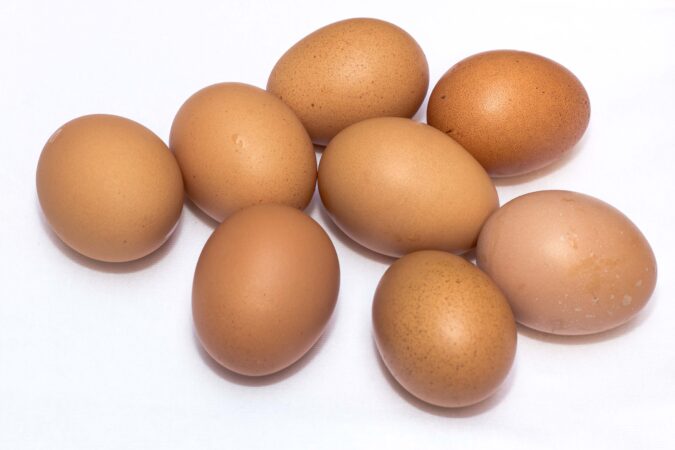
Since last week’s post about growing container vegetables to ensure the safety of your salad, problems in the food supply have gone from bad to worse. The recent recall of 19.2 million eggs was upgraded to a highest-risk warning and Hampton Grocers, Inc. recalled its Lacnola Lactation Granola over possible salmonella contamination.

eggs

None of us want to endanger ourselves or our families. A few years ago, recalls didn’t come at the fast and furious pace they do currently. Watching the news or reading the morning paper (remember those days?) seemed sufficient for staying on top of what we need to avoid. Now, it’s easy for a new notification to blend into one you heard yesterday or slip through the cracks when you’re muting a political ad.

In order to maintain the same level of safety, you may need to consider signing up for recall notifications. The FDA’s notification service requires you to fill out this form.

https://public.govdelivery.com/accounts/USFDA/subscriber/new

Additional sources of information include:

The FDA Website www.fda.gov has many levels of information on food, drug, and product recalls.

The CDC website contains information on Current Foodborne Outbreaks. It lists active investigations by germ, has a table of outbreak notices with links to each individual notice, plus additional information. These can be found here https://www.cdc.gov/foodborne-outbreaks/outbreaks/index.html

There’s a federal government website managed by the US Department of Health & Human Services called FoodSafety.gov https://www.foodsafety.gov/recalls-and-outbreaks This site contains safe internal food temperature and other information on food safety in addition to recalls and outbreaks.

Foods overseen by the USDA will have recalls posted on the Food Safety and Inspection Service website https://www.fsis.usda.gov/recalls

Some retailers publish recalls on their websites.

For example, Walmart publishes food, drug, and product recalls here https://corporate.walmart.com/recalls

Costco posts recalls here https://www.costco.com/f/-/recalls

Target’s recall page can be found here https://www.target.com/help/articles/news-safety/product-recalls

Whole Foods has a recall page https://www.wholefoodsmarket.com/legal/product-recalls

Kroger lists recall alerts here https://www.kroger.com/i/recall-alerts and here https://www.ralphs.com/i/recall-alerts

Trader Joe’s posts recalls under announcements https://www.traderjoes.com/home/announcements?category=store-openings&id=74537090

The Amazon list of announcements with links resides here https://www.amazon.com/product-safety-alerts and contains a link to take you to recalls of any products you’ve purchased through Amazon.

If the government sites and retailer sites aren’t sufficient for your family, you may want to consider a paid notification service.

Subscription services that push recall notices to you:

Recall Watch  https://getrecalls.com/

Recall Ping https://www.recallping.com/

RecallGuard https://recalledbrands.com/#/

SecureRecalls https://www.securerecalls.com/

Recall Radar https://recallradar.company/manage-subscription

I have not used and cannot vouch for any of these services. Most of the paid services have a free trial or unpaid tier so you don’t get locked into paying for a service that doesn’t bring the information you were seeking.

You can also get updates by following some of these sources on social media. For me, this isn’t ideal because I primarily use BlueSky and some of the government sites do not post there.

It’s important to stay safe and I prefer to do so without having to scramble around looking for information resources. Having these links readily accessible removes a lot of stress. We hope this list of resources will serve to reduce your stress as things go from bad to worse.

Disclosure of Material Connection: I have not received any compensation for writing this post. I have no material connection to the brands, products, or services that I have mentioned. I am disclosing this in accordance with the Federal Trade Commission’s 16 CFR, Part 255: “Guides Concerning the Use of Endorsements and Testimonials in Advertising.”

Container Vegetables

With continuing recalls of food due to cyclospora cayetanensis and salmonella, now’s a great time to consider container vegetables. You don’t have to be an avid gardener or have tons of space to grow vegetables. If you have a patio, porch, deck, yard, flowerbed, or sunny room in your home, you can grow a number of herbs and vegetables. Growing your own gives you the ability to make sure contaminants don’t reach your food.

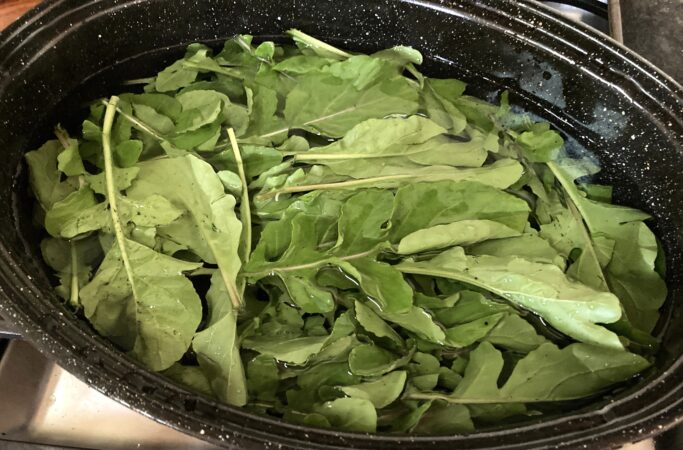
arugula in water in a black speckled roaster

All you need are pots or planters, soil, and plants or seeds. Pots and planters are often available for free through community gifting groups or at low cost from thrift stores and flea markets. Soil can be purchased from dollar stores, hardware stores, big box retailers, and garden centers. Many of these will deliver to your porch allowing you to avoid carrying heavy bags up steps.

Plants or seeds may be available from gifting groups, neighbors, hardware stores, big box retailers, and garden centers. To choose the most appropriate plants for your space, time of year, and growing zone, visit a seed company website and search by container vegetables then look for recommendations for your growing zone.

If you think you’ll be limited to tomatoes, peppers, and herbs, you’ll be pleasantly surprised. You can grow those in containers, but you can also grow lettuce, kale, arugula, celery, scallions, squash, cucumbers, eggplant, green beans, baby okra, strawberries, blueberries, blackberries, raspberries, and corn. And that’s not all, radishes, potatoes, and garlic are possible, even inside.

I gardened with my grandmother as a child and once when my children were little. In 2020 when I learned how fragile our supply chain was, I started gardening again. Currently in my garden are cucumbers, peppers, green beans, bok choi, and the end of romaine lettuce and arugula for the season. My blackberry bush is beginning to flower a second time, and I have a blueberry bush in a pot on my back porch.

That means I have a lot of a few things to consume. If you’re used to grocery store produce, you may not be familiar with seasonal substitutions. Yesterday, I used some of my abundance of cucumbers to make gluten-free muffins. They’re not that different from zucchini or kiwi muffins. I just substituted what’s in season from my garden and changed the flavor profile a little.

This is how I grew up eating so it’s not a stretch to try a new way to prepare something I might otherwise tire of. With seasonal substitutions you get the full flavor of fresh vegetables or fruit that haven’t been trucked around plus variety of taste and texture.

As some plants become prolific, you’ll understand why great-grandmothers made pickles, jam or jelly, tomato juice, cider, and canned vegetables and why many people dry or freeze food. Once you’ve invested the labor to plant, water, and weed, you don’t want anything to go to waste.

But you don’t have to go big to avoid recalled foods. A planter of lettuce may give you the salad base you’re missing. A pot of jalapeno peppers can bring the heat you miss to your nachos. Once you’ve made the initial investment, you will most likely save money as well.

I’m not happy with the lack of food safety we’re currently experiencing. But it is a reality. Growing container vegetables and fruit is a way to continue to enjoy fresh produce with an added layer of safety. Now’s a great time to try it out!

ad