Get Those Chips Off Your Shoulder

Get those chips off your shoulder and out of your pantry. Yes, I’m talking to me. I love a salty, crunchy snack. And I know that chips are a lot of calories that don’t add significant nutrition. In summer, I’ve sometimes struggled to get enough salt without processed foods. This summer, I’ve changed my tactics.

To be fair, I might have kept chips as a guilty pleasure but I had to reconsider because my system can’t tolerate sunflower or palm oil and olive oil chips cost $10 a bag. But I still want crunch and some salt after I garden in the mornings.
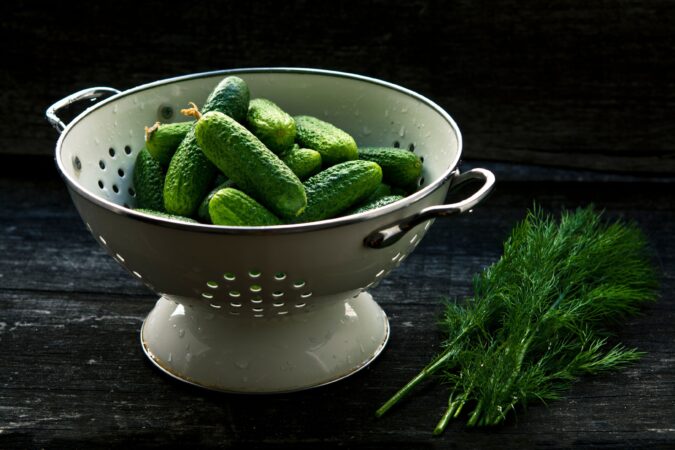
Porcelain colander filled with cucumbers sitting on dark wood table with dill lying beside it.

The garden brought me a solution – an abundance of cucumbers. I’ve given away a few and considered pickles. But fermented pickles could bring a histamine issue. After some thought, I peeled, sliced, and salted a couple. This resulted in a delightfully crispy, refreshing cucumber snacks.

These will last a couple of days in the refrigerator. And they stay crisp enough to use as a holder for soft cheese eliminating the need for packaged crackers. Top the cheese with herbs and you’ve got an easy appetizer. Or, add a crunchy layer to your caprese salad. They’re also delicious with tzatziki and hummus.

When I mentioned cucumber crisps to my sister, she pointed me to watermelon fries. What, you may ask, are watermelon fries? Well, first, they’re not fried. They’re just watermelon slices shaped like fries, placed in the freezer for 30 minutes then dusted with sea salt flakes and chili powder if desired.

These are a great poolside snack. Some people serve them with a dip made from coconut cream, lime, honey, vanilla and salt or drizzle them with dark chocolate to create a unique summer dessert.

If you can do this with watermelon, it stands to reason you can do it with honeydew or cantaloupe. A platter with all three would be a great addition to your summer BBQ as an appetizer, side, or dessert.

There are many pluses to using fruit to add crunch and salt to your diet instead of chips. You skip other chemicals that are added to chips and crackers. You don’t get that old oil taste some chips have. In fact, you skip the seed oils altogether which makes my tummy happy. The kids don’t cover your chair cushions in colored dust that stains everything in its path.

You also eliminate a lot of calories. And add water. Unless you’re allergic, intolerant, or really hate these fruits and vegetables, there’s not a downside to using them to deliver a needed electrolyte (as long as you don’t overdo, of course). And this summer when produce is suspect, it’s great to incorporate things you can peel.

So, lose the frying, the oil, the man-made chemical compounds, the coloring, the flavoring, and the plastics used to package when you get those chips off your shoulder and out of the pantry! You’ll still be able to enjoy a salty crunch!

Deconstruct Your Salad

When lettuce is suspect, deconstruct your salad. If you don’t have access to locally grown greens this summer, but love salads and want to avoid cyclosporiasis, a few changes may be necessary.

Last week, a friend was bemoaning her inability to eat salad during the current outbreak of cyclosporiasis. She had purchased dried fruit instead. This seemed like an odd choice to me, but her idea of salad is a bit fixed, so it made sense to her to go a whole different direction. But that’s not really necessary.

chopped cucumber, pepper, tomato

Take away the leafy greens and you can still have a salad full of delicious, fresh, veggies, fruit and protein. You can also include quinoa, rice, or pasta. When deciding on ingredients, think of it as a deconstructed salad you’d make if you had a bed of leafy greens to top.

Keep things traditional by using slices of yellow or zucchini squash, carrots, bell pepper, tomato, and cucumber. If desired, add broccoli, red onion, cubed cheese (your choice) or cottage cheese. Top with bacon, sunflower seeds, or raw almonds.

If you want to combine your salad and protein, add boiled egg, grilled chicken, fried chicken, cubed ham, roast beef, pulled pork, or deli meat.

Use broccoli for a green base but instead of adding the traditional bacon and cheese, use raisins, or dried cranberries, and apples plus raw almonds, walnuts, or sunflower seeds.

Go southwest with a combination of black beans, corn, pico de gallo, and cheese. Add some pizzaz with cilantro and a sour cream dressing.

Combine throwback Thursday with a carrot, raisin, walnut salad. My grandmother served this regularly, but sans walnuts. You may also want to add pineapple.

Keep it simple. Start with a bed of sliced mushrooms. Top with herbs, fresh garlic, olive oil, balsamic vinegar, salt and pepper. Add a little heat with pepper slices or flakes.  

Lean Mediterranean with chickpeas, olives, tomato, scallions, and dill or chickpeas, black beans, cucumber, onion, garlic, parsley, and mint. Both versions are delicious with quinoa.

Like vibrant color? Make a marinated beet salad with onion, avocado, and edamame.

More in the mood for pastels? Make pear salad with goat cheese and spiced pecans. Who needs greens?

Consider returning to tradition with a caprese salad. Tomato, fresh mozzarella, and basil have always played well together.

Finding a way to include fresh vegetables and fruit is important to a healthy diet even as recalls and parasite risks linger. But before you ditch salad made from fresh vegetables, try deconstructing it.

Drink Water. Just Do It!

Drink water. Just Do it! It’s hot. Hotter than hot. You may be losing more fluid than you realize going about your daily routine when your body is trying to cool you down from getting in a hot car or carrying in groceries in hot, humid conditions.

blue background with clear glass of ice and water being poured in

Your body also needs water to produce tears and saliva. You may notice you have less energy or feel grumpy when you don’t stay on top of how much you’re drinking.

People with sore tummies may have an aversion to both food and fluid intake. This can lead to dehydrating more quickly because we get fluids from both.

I’m not opposed to fluids other than water, but I avoid both sugar and sugar substitutes. Not only do I find them distasteful, they don’t satisfy my thirst.

For me to drink water, it needs to be cold. Even if it’s cold outside, I prefer water with ice. If you have an aversion to drinking water, experiment with the temperature. Both of my sons enjoy hot water and many swear by room temperature.

If you’re easily distracted and forget to drink, set a timer or combine drinking with another activity – stretching your legs, walking to the printer, attending a meeting, loading the dishwasher, or doing laundry. Keeping an insulated tumbler handy can also be helpful.

If you don’t like the taste of water, a squeeze of orange, lime, or lemon may help. And there are many flavor packets you can add to make it more palatable. My preference is plain water, but some packaged flavoring may also have needed electrolytes. Be sure to read labels to avoid ingredients your system can’t tolerate.

For those who suffer from chronic or episodic diarrhea, you may be losing both fluids and electrolytes and need to monitor your salt intake as well. Talk to your doctor about the best approach to take.

Caffeinated drinks, some medications, exercise, elevation, and weather can have a significant effect on the amount of water you need. For those who suffer from chronic or episodic diarrhea, you are losing fluids (and electrolytes and may need to monitor your salt intake as well).

Of course, this means there’s no static amount of water needed to stay properly hydrated because every day is different.

Mayo Clinic’s website indicates studies suggest an average healthy adult will get enough water if they ingest about 11.5 cups (92 oz or 2.7 liters) to 15.5 cups (124 oz or 3.7 liters) per day of total fluid. This amount can include food and other liquids.  https://www.mayoclinic.org/healthy-lifestyle/nutrition-and-healthy-eating/in-depth/water/art-20044256

If you walk into a convenience store to purchase bottled water, you’ll find 16.9 – 20 oz bottles are common. As a visual reference, you’ll need the equivalent of about 6 of those per day, more if you’re walking a lot, gardening or doing yard work in the heat, spend a lot of time in airplanes, or are living or traveling at a high elevation.

I’ve moved my walking time up two hours and still have to abbreviate the distance just to make it tolerable. This minor walk or 20 minutes in the garden result in sweat rolling down my face and limbs. It takes an equal length of time to cool down and rehydrate once I’m back inside. Can I go longer or do more? Yes, but then it takes longer to recover.

When you’re swimming, you may be less prone to drink because fluid loss is not as obvious. Using a timer or carrying salty snacks can help remind you to drink water when you take a break from the pool.

Getting enough fluids will most likely come down to smart self-management. Play to your weaknesses so they don’t become barriers to getting what you need. If what you try first doesn’t work, try something else.

Through trial and error you can figure out the best way to motivate yourself to drink water. Just do it!

ad

Omega-3s on a Low Histamine Diet

Where can you get Omega-3 fatty acids on a low histamine diet? If you have MCAS, Omega-3s can help reduce inflammation. Of course, you’ll want to get plenty of them. But most food high in Omega-3s are filled with problematic foods. Still, there are some options to explore beyond relying on supplements.

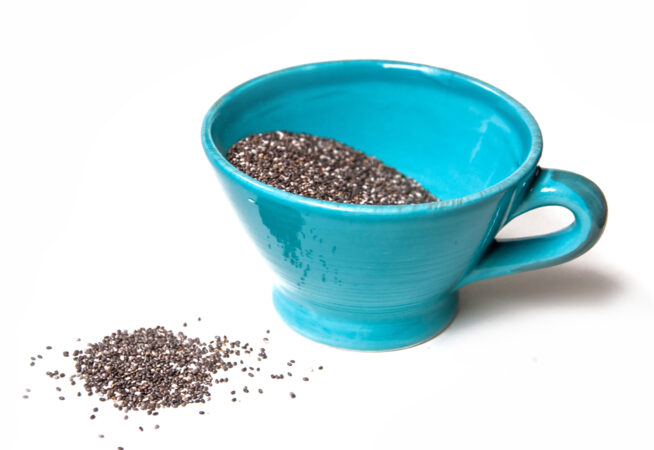
aqua mug of chia seeds plus more on white background

Fresh caught rainbow trout is one of my favorites. I grew up fishing at a trout farm a few miles down the road from our farm. While that trout farm no longer exists, the same family has a new farm where I’ve taken my grandson fishing. Bald eagles like to fish there too.

Farmed trout typically have fewer contaminants than other farmed fish and they provide 1 gram of Omega-3s per 3.5 ounce serving. My grandchildren prefer breaded and fried trout fingers, but I love pesto trout, trout almandine (gluten-free, of course), or grilled trout with lemon and herbs.

Some game and fish organizations stock public ponds and lakes with trout. The water has to be cold. I’ve also caught plenty of them in streams below a dam that lets out water from the bottom of a lake.

If you can tolerate flax, chia, or hemp seeds, they are also could sources of Omega-3s. Chia seeds are often used in gluten-free recipes because they form a gel-like substance when soaked in liquid. The gel can be used as an egg replacement or included in puddings, cakes, or breads. A tablespoon of chia seeds contains about 2.1 grams of Omega-3.

Flax seeds beat chia seeds by a small amount delivering around 2.3 grams per tablespoon, but they require grinding for your body to digest them. The good news is, flax seeds are often included in other foods. Purely Elizabeth gluten-free Oatmeal contains flax, chia, and hemp seeds.

Hemp seeds don’t need soaking or grinding. They don’t deliver quite as many Omega-3 fatty acids (1 gram per tablespoon) as chia and flax, but they are high in protein (3.3 grams per tablespoon) and contain all nine essential amino acids.

Oils like canola, soybean, and flaxseed also contain Omega-3s. Flaxseed oil has the highest concentration at 7 grams per tablespoon, but should not be heated. Soybean oil has .9 grams per tablespoon and is primarily used in commercially produced products. Canola oil delivers 1.3 grams of Omega-3s per tablespoon and is commonly used for cooking.

Heart health, eye health, and brain health, including the support of fetal brain development, may be improved by including sufficient amounts of Omega-3s in your diet. You may not be able to eat salmon or tuna without suffering MCAS symptoms, but that doesn’t mean your diet has to be lacking in Omega-3.

Try these options when you need to keep the histamine low and the Omega-3 high.

https://www.devitosrestaurant.com/troutfarm

Disclosure of Material Connection: I have not received any compensation for writing this post. I have no material connection to the brands, products, or services that I have mentioned. I am disclosing this in accordance with the Federal Trade Commission’s 16 CFR, Part 255: “Guides Concerning the Use of Endorsements and Testimonials in Advertising.”