Bad to Worse

Since last week’s post about growing container vegetables to ensure the safety of your salad, problems in the food supply have gone from bad to worse. The recent recall of 19.2 million eggs was upgraded to a highest-risk warning and Hampton Grocers, Inc. recalled its Lacnola Lactation Granola over possible salmonella contamination.
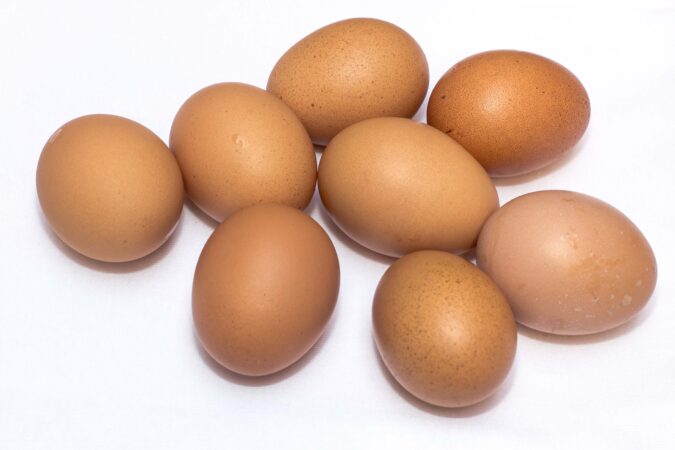
eggs

None of us want to endanger ourselves or our families. A few years ago, recalls didn’t come at the fast and furious pace they do currently. Watching the news or reading the morning paper (remember those days?) seemed sufficient for staying on top of what we need to avoid. Now, it’s easy for a new notification to blend into one you heard yesterday or slip through the cracks when you’re muting a political ad.

In order to maintain the same level of safety, you may need to consider signing up for recall notifications. The FDA’s notification service requires you to fill out this form.

https://public.govdelivery.com/accounts/USFDA/subscriber/new

Additional sources of information include:

The FDA Website www.fda.gov has many levels of information on food, drug, and product recalls.

The CDC website contains information on Current Foodborne Outbreaks. It lists active investigations by germ, has a table of outbreak notices with links to each individual notice, plus additional information. These can be found here https://www.cdc.gov/foodborne-outbreaks/outbreaks/index.html

There’s a federal government website managed by the US Department of Health & Human Services called FoodSafety.gov https://www.foodsafety.gov/recalls-and-outbreaks This site contains safe internal food temperature and other information on food safety in addition to recalls and outbreaks.

Foods overseen by the USDA will have recalls posted on the Food Safety and Inspection Service website https://www.fsis.usda.gov/recalls

Some retailers publish recalls on their websites.

For example, Walmart publishes food, drug, and product recalls here https://corporate.walmart.com/recalls

Costco posts recalls here https://www.costco.com/f/-/recalls

Target’s recall page can be found here https://www.target.com/help/articles/news-safety/product-recalls

Whole Foods has a recall page https://www.wholefoodsmarket.com/legal/product-recalls

Kroger lists recall alerts here https://www.kroger.com/i/recall-alerts and here https://www.ralphs.com/i/recall-alerts

Trader Joe’s posts recalls under announcements https://www.traderjoes.com/home/announcements?category=store-openings&id=74537090

The Amazon list of announcements with links resides here https://www.amazon.com/product-safety-alerts and contains a link to take you to recalls of any products you’ve purchased through Amazon.

If the government sites and retailer sites aren’t sufficient for your family, you may want to consider a paid notification service.

Subscription services that push recall notices to you:

Recall Watch  https://getrecalls.com/

Recall Ping https://www.recallping.com/

RecallGuard https://recalledbrands.com/#/

SecureRecalls https://www.securerecalls.com/

Recall Radar https://recallradar.company/manage-subscription

I have not used and cannot vouch for any of these services. Most of the paid services have a free trial or unpaid tier so you don’t get locked into paying for a service that doesn’t bring the information you were seeking.

You can also get updates by following some of these sources on social media. For me, this isn’t ideal because I primarily use BlueSky and some of the government sites do not post there.

It’s important to stay safe and I prefer to do so without having to scramble around looking for information resources. Having these links readily accessible removes a lot of stress. We hope this list of resources will serve to reduce your stress as things go from bad to worse.

Disclosure of Material Connection: I have not received any compensation for writing this post. I have no material connection to the brands, products, or services that I have mentioned. I am disclosing this in accordance with the Federal Trade Commission’s 16 CFR, Part 255: “Guides Concerning the Use of Endorsements and Testimonials in Advertising.”

2 + 2 Always Equals Four…or Does It?

Healthy eating - Colorful spicesFour days of sitting in the hospital have me wondering whether 2 + 2 always equals 4. Remember my feisty 95-year-old cousin Colene? Well, she fell a couple of times the other day when she went out to play dominoes. The result is a hairline fracture of her tibial plateau. It’s very painful for her to put weight on her leg.

The doctor wants her to push through the pain and walk as much as possible so she won’t lose the ability. Up until now, she has taken care of herself with the assistance of a housekeeper who comes three times per week. Colene LOVES her housekeeper and wants to stay at home rather than in a nursing home. We have talked and talked about enduring some pain now so that she’ll have a chance to go home and resume her normal routine.

It seems like she’s in agreement that it’s important to try to walk and then when anyone tries to get her to put her feet on the floor, she squawks and hollers and hangs onto whatever’s handy with a death grip. For the doctors, it’s a simple equation. Pain meds & anti-inflammatories (2) + physical therapy & walking (2) = the chance to go home (4). For her, 2 + 2 = too much fear – clearly a different answer.

For some nutritionists and health experts, protein & carbs (2) + vitamins & fiber (2) = a complete picture of the nutritional value a food will provide us in these areas (4). Seeing food as nothing but the sum of its individual nutrients is sometimes referred to as “nutritionism”. In his controversial documentary, “In Defense of Food”, Michael Pollan explores how this line of thinking may not give us an accurate picture of the value a particular food provides to our diet. Again, among experts 2 + 2 yields widely varying answers.

Even when measuring calories, 2 + 2 doesn’t always equal 4. Determining the calories in a serving of almonds or pistachios using the Atwater general factor system which assigns a certain number of calories per gram of macronutrients and alcohol gave us calorie counts that have now been proven to be higher than the actual bioaccessible calories our bodies will absorb. A USDA study indicates that the traditional system for determining calories, may be a poor predictor of the calories in food that will affect the body.

We’re also learning that an individual’s particular mix of gut bacteria can mean that identical diets will have different weight and health consequences in different individuals. How’s that for confusing?

If 2 + 2 equals multiple answers, how can we decide what choices are healthy? It’s a simple question with a million answers from a million experts. Let’s just say, it’s complicated. What’s healthiest for one person may vary from what’s healthiest for another. What we believe is fact today will be proven to be a tiny part of the overall picture later. This is where we are in nutrition science.

So if 2 + 2 doesn’t always = 4, what’s a person to do?

Here are a few ideas:

• Prioritize your goals.
Determine what you’re more concerned with – overall health, energy level, strength, endurance, appearance, cost, eliminating chemicals, etc.
• With those goals in mind, determine what you’re really willing to do on a daily basis to reach your goals.
If you want to eliminate chemicals, can you afford to buy organic or do you have the time to grow some of your produce? If you want to eliminate processed food, will you cook daily or are you willing to eat leftovers or freeze meals that you cook on Saturday? Perhaps you will decide that you’ll still need to eat in restaurants 20% of the time. If you want to be strong, how much time can you dedicate to strength training each week. What type of training will it be? Where will you train? As long as you are realistic when you make your plan, there will be no need to feel you’re falling short later.
This is an important step to keep you on track.
• Listen to your body.
If you feel better eating more protein and less carbs, that may be the best way for you to eat. If you feel best eating a balance of protein and carbs at every meal, then that may be best. Do you feel tired every time you eat tortilla chips? Does your tummy hurt when you eat onions? Just be aware that the chemicals, sugar, and fat in processed food can trick you into craving things that are not good for you. You’ll get more clear signals from your body when you go a period of time without eating lots of processed food or sugar. And don’t just observe what happens at meal time. How do you feel an hour after you eat or at the end of a long day? Does how you feel vary depending on whether you eat at certain intervals? Does walking or swimming leave you more energized? Does lifting weights leave you too sore to move the next day?
• Write it down.
We all think we have a great memory, but you’ll get a much clearer picture of real patterns when you keep a journal. Over time, you can adjust your plan so that you make steady progress toward feeling great most of the time.
• Be patient.
We’re so accustomed to the immediate fix it’s easy to discount slow, steady progress. Slow, steady, and lasting will ultimately be more beneficial than immediate and transitory.
• Enjoy the process.
This may sound like a crazy idea, but any time you begin a process with an open mind and an attitude of keeping things enjoyable, it is way more likely to be enjoyable so I have to think it’s always worth giving it a try.

When all the conflicting information regarding sugar, fat, gluten, coffee, red wine, chocolate, fortified grains, and calorie content begins to seem overwhelming you can always resort to the simplest solution – balance. Don’t eat too much red meat, too many fried foods, too many starches, or too much sugar, eat plenty of fresh vegetables, fruit, seeds, nuts, and legumes, drink lots of water, and move, move, move.

Want to learn more?

https://en.wikipedia.org/wiki/Nutritionism


http://michaelpollan.com/media/documentary-films/

http://agresearchmag.ars.usda.gov/2013/sep/calories/

http://www.scientificamerican.com/article/how-gut-bacteria-help-make-us-fat-and-thin/