In Praise of Casseroles

I often say food is best just as it comes fresh, but today’s post is in praise of casseroles. My block is currently full of surgical patients. Pre-op, post-op, young, old, the demographics are everywhere, but there’s also commonality. Each family needs food and we support each other.
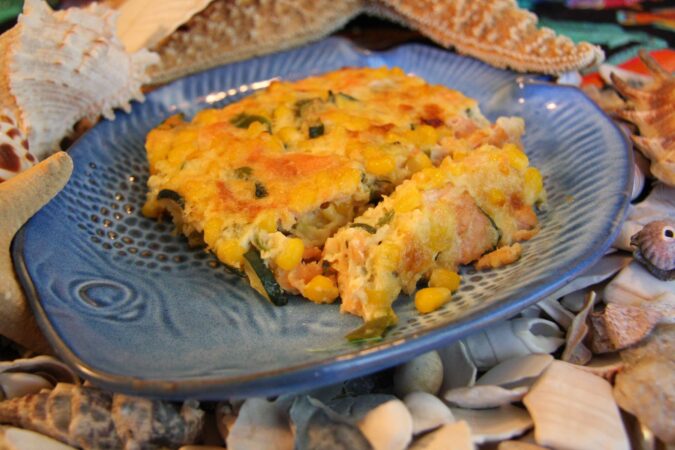
At times, nothing beats a one pot meal that can be frozen and used when needed. Casseroles fill that bill. The possible flavor combinations are numerous, the level of prep variable, and the dietary specifics adaptable. I’m delivering three versions to my neighbor this afternoon.

When you have time, you can begin with fresh vegetables, herbs, meat, poultry, or seafood and homemade sauce or gravy. When you’re rushed, prepared soups, breadcrumbs, or sauces, rotisserie chicken, and frozen vegetables will speed the process. Just make sure the prepared items are compliant with any dietary restrictions.

I like to deliver casseroles in disposable, freezer-safe containers so no one feels obligated to wash and return them. I often break each casserole into meal-sized portions and pre-freeze. This comes in handy with multiple households needing food at the same time because it allows me to combine prep and cooking.

I can’t say that I have a favorite casserole, but some regulars include chicken and rice with broccoli or asparagus; tamale pie with ground turkey, corn, and black beans; tuna with English peas topped with crushed potato chips,

Popular casserole recipes seem to contain lots of cheese and butter. If you’re trying to avoid dairy, overcooked sweet potatoes or potatoes will break down to thicken a sauce that begins as mostly water. Rice will absorb extra water along with the flavors of the spices and staples you choose. Pot likker adds an extra layer of flavor. If you can tolerate aged foods, tofu will add protein and creaminess.

My secret ingredients for added non-dairy flavor include toasted sesame oil, balsamic glaze, turmeric vinegar, mirin, chili garlic sauce, green chiles, and molasses. I also sometimes use the extra barbecue sauce that comes with takeout.

Casseroles aren’t just for delivering down the street, they’re a great place to use left-over vegetables and to extend a meal when unexpected guests arrive. And they’re fast! If you’re throwing one together after work using cooked ingredients, about 20 minutes in the oven is all you need.

So, top it with butter, slather it with shredded cheese, fill it with herbs, stuff it full of beef, chicken, turkey, pork, tuna, or salmon, stir in the vegetables and do something else. It will bake into a luscious mixture that will warm your tummy and hug your neighbors’ hearts.

Who knows, casseroles may even have healing power when they’re made with love and kindness.

Personal Space

We all know we need personal space to feel comfortable, but how often do we think about the space we take up in society? Watching the Olympics this year, I’m struck by how much broadcast time has been spent featuring nonathlete celebrities.

Movie stars, TV stars, stadium-filling musicians, pro athletes, influencers, YouTubers, and TikTokers take up an increasing amount of space in our everyday experience. It can make us question how we fit into the puzzle. What if we only have 25 followers and get no likes?

world reflected in eye

How do we know if we’re filling the space we’re meant to fill in the world?

Let me begin with, I don’t know the answer. As grounded as I like to think I am, this question perplexes me. Filling any space we occupy with character, integrity, reliability, hard work, dedication, humor, kindness, thoughtfulness, affection, and love felt sufficient before the invasion of the internet. From that beginning point, I could have large or small goals and still be satisfied with my life.

I heard the same message we give children now – you can be anything you want to be. But it feels like something has shifted in how we view significance. That makes me question how hard to push, how much to invest, what to fight for, and when to be satisfied.

I don’t think I’m alone. Some of the reminders to enjoy the process are based on a need to feel satisfied in a world in which it seems increasingly impossible to come out on top because not everyone will be famous.

I mean, the athletes at the Olympics are superior in their field. And yet, their airtime at an event specifically to showcase their talent and training is being co-opted by people who are just there to watch.

It is hard to find your footing when your best qualities seem invisible, or worse, are dismissed as unimportant. How do you feel significant if the primary examples of significance revolve around fame?

How do you learn you’re important when your parent is engrossed in a screen while you’re dancing your legs off to get their attention?

How do you develop a sense that you can make a difference when no one appreciates the person who makes a difference for you?

How can you learn who you really are if you’re busy chasing the legitimacy gained by fame or fortune? And how can you know what you’re capable of if you rely on a husband or children to provide significance? (I am not against marriage or children. There are significant contributions to be made by being a supportive partner and parent – perhaps the most significant. I’m specifically referring to relying on a role or title in place of mindful exploration of your gifts, abilities, and values.)

Is it important to be the best or to do your best?

How do you measure when to fight and when to quit?

What do you consider significant?

What makes you feel fulfilled?

What contribution can you make?

These aren’t questions of the moment. They’re age old. But our current fishbowl is larger, visible to more people, has swift waves, and distorts reality. The space in which we live has changed.

How do we change accordingly to define the personal space we hope to occupy?

Today, I’m just going to leave you with questions. You’re living the answers you’ve come up with so far. Periodically exploring options can lead to another level of mindfulness regarding the space we occupy, greater satisfaction we have landed where we intended, or the discovery that we have far exceeded our previous goals. Questions are always worth asking.

Boiling Point

Water may always boil at the same temperature, but humans reach their boiling point quicker when conditions are stressful. Think of stress as water from the hot water tank. If you fill your pot with hot water from the faucet, it will boil faster than if you fill it with cold water.

Many of us currently live in situations that feel like hot water. A tiny bit of added stress can feel like the proverbial straw that broke the camel’s back. We boil over before we even see our response coming.

Here, the heat and humidity add stress earlier and earlier each year. It doesn’t take much to set off a driver who has just jumped in a hot car. Road rage becomes a bigger risk.

Frequent surgeries can keep a parent from their children. On top of that, the child may see all sorts of frightening equipment when they visit the hospital. If that child is then made fun of at school, their reaction may be 10 times larger than it would have been before. Labeling as a problem child becomes a bigger risk.

A disabled family member may require hours of care each week leaving caregivers without time for recreation or rest. This may lead to impatience with spouses or children from the most previously patient person in the family.

When one person in a family or group that lives together begins to express themselves differently, it affects everyone. That can be a tough pill to swallow when we self-reflect. We may recognize that we have inadvertently become a cog that contributes to stress in our family.

As hard as it may be to realize we are part of the problem, we can choose to see it as great news. Perhaps not immediately. We may have to process feelings of shame or guilt, inadequacy or fear. But once we have enough perspective to be clear-headed, we can embrace our power to change the situation.

A lot of us spend way too much time trying to control what happens around us when the only thing we can really change is ourselves. But changing ourselves will also change what happens around us. We may be able to lower the temperature in our homes with some simple changes to how we relate within our families.

Sounds easy to say the words, but we all know it’s extremely difficult. And when dysfunction abounds, it can be hard to change while keeping our self-image intact. The system may push back against change by doubling-down to force us back into familiar patterns.

This response can put us in a frustrating and/or painful position. Any time someone we rely on for support seems to continually disagree or push back when we were previously in sync, it can affect how we view ourselves and our decisions. Even with strong resolve, we may begin to question ourselves or long to reconnect with such fervor that we acquiesce to the pressure.

The problem is that dysfunctional connection is still dysfunctional. It may feel familiar, even normal, and for a moment, less stressful, but we are sacrificing long-term stress relief for short-term calm.

Writing this, I realize I unintentionally described the cyclic pattern of domestic abuse which also boils over. I really meant to focus on recognition of baseline stress and our ability to change ourselves in service of reducing it. Now, I feel a need to address the perils of changing ourselves for peace.

If changing yourself threatens an oppressive, violent, abusive living situation, you should absolutely change AND GET OUT! Get protection. Get support. Get out. Right now, I’m speaking to adults. For children, it’s a lot more complicated and requires a separate post.

Adults, this is the voice of experience. You CAN find a way and you are worth it. Anyone who has told you or made you feel as though you must live with domestic abuse is WRONG, that you are less than is WRONG, that you deserve the stress you’re living in is WRONG. I don’t care how rich, educated, connected, famous, or “respected” they are. THEY WERE/ARE WRONG.

You can love them and forgive them down the road if you want or choose to, but for now, focus on the damage they cause and leave. You can take a minute to get your ducks in a row and be strategic in order to be safe. But the longer you stay, the harder it will be to follow through.

And if it requires reaching your boiling point to propel you out the door, temporarily ignore the first part of this post and get there quicker. Just be aware that not getting out the door is the real problem. Once you prioritize setting boundaries and leaving, you’ll be on the path to reducing baseline stress and lowering your boiling point. You’ll also be closer to finding a path to heal and keep it low.

When you live with a significant amount of baseline stress, it’s even more important to eat well, move, get outside, and get enough rest. Challenge yourself enough to feel a sense of accomplishment. Rest enough to feel renewal. Every health regimen includes these basics for a reason. They work.

And now, I must go out into the ridiculous heat that will RAISE MY STRESS! But I won’t stay long. Take care!

Trickledown Effects

I’m not here to argue trickledown economics, but I will say there are sometimes trickledown effects from events, policies, and decisions. Sometimes they are unanticipated and unintended. Sometimes they are from something as simple as drinking water.

We’ve lived under excessive heat warnings here most days in the past two weeks. I never leave my home without a bottle of water. After almost burning my hand on one I left in the car for two hours, I have vowed to also carry an ice chest at all times.

You’re probably thinking, just get an insulated water bottle. Believe me, I’ve been through my share of double-walled tumblers. One tumbles right out of my cup holder each and every time I try to use it. One doesn’t fit my cup holder at all. Another one has an annoying top. The only one I currently like, I use to keep French press coffee hot every morning. I’m not going to use it in the car.

All of this makes me more likely to carry commercially bottled water by default. Perfect, bottled water. Easy to carry. Easy to drink. Popular enough for over 15.9 billion gallons of it to be sold in the US in 2022. Why is this even worth mentioning?

Most of us drink bottled water with the intent of staying hydrated during our busy on-the-go lives. Increasingly, we seek out water that is alkaline, electrolyte-rich, caffeinated, or fortified with additional hydrogen or oxygen. I assume these preferences are an effort to be healthy.

It’s great to want to be healthy, but you may be overlooking one simple thing that is missing from bottled water, fluoride. Some people may think that’s a good thing since there’s an ongoing controversy about it. But the retired Army colonel I spoke with yesterday told a different story that went something like this…

fragile recruit

Prior to 9/11/2001, kids were more likely to play outside with less supervision. When they needed a drink, they grabbed some water from the tap or garden hose. That changed on a dime with a terrorist attack.

Mothers became more cautious. Kids came inside where they didn’t lift their own body weight or run around as much. As more screens became available, they spent more time on them. They drank more bottled water without fluoride.

Kids still grew. They looked normal. But when recruits showed up at training camp, they were fragile. Not snowflake fragile (although possibly that too), but bone break fragile.

What the Army discovered was that if they built muscle too swiftly during training, bones would simply snap. They didn’t have the density and strength of previous generations of soldiers. According to the colonel, drinking non-fluoridated water while their bones were developing was a contributing factor to this change.

And if that unintended consequence isn’t enough, we now know the plastic bottles leach microplastics that can end up in our bloodstream and contribute to the seriousness of heart disease. The most prominent plastic found in blood by researchers was polyethylene terephthalate (PET), a common type of plastic used in making drink bottles, food packaging and fabrics, as well as lip gloss.

It seems the trickledown effects of added efforts to protect our children turned out to endanger them in unanticipated ways. This kind of unintended consequences occur frequently and often in spite of our best efforts. Once they recognized the problem, the Army learned to train recruits for 100 days in a manner that would balance bone and muscle strength.

The rest of us may only be fighting everyday wars, but we can follow the Army’s example and put new knowledge to good use whenever we discover a trickledown effect that is detrimental to our health.

ad