Quiet

You can tell it’s a holiday week because it’s so quiet! While the official day may not be here yet, the traffic tells me many people have already put work behind them. I love quiet days with empty streets. My favorite time to be downtown has always been when businesses and stores are closed. It just has a whole different feel.

Like most of our lives in the US, we fill the holidays with activity. Some of us plan elaborate meals with elegant place settings and seats assigned by calligraphied place cards. We clean for hours so we can fill the kitchen and dining room with dishes that will take more hours to clean. We work, work, work only to discover our guests must rush on to another dinner before the ice cream melts on the pie.

We watch parades and football and go back home without knowing what our cousins do for a living or where their kids go to school. It’s amazing how we can busy ourselves into a noisy frenzy that leaves no time for quiet, forget quiet reflection or thoughtful attunement.

How did we get so uncomfortable with stillness?

The barrage of two competing screens is barely enough to distract some in my home. What I keep coming back to is how on edge all that noise makes me feel. Is noise the cause of the anxiety that plagues them?

I guess what I’m wondering is why we create a frenzy and then suffer from the effects of it? Seems a lot like chasing our tails.

What would happen if we sat on the porch or in front of the fire this Thanksgiving and listened to each other instead of watching balloons float down 6th Avenue or channel surfing through games?

What if we just sat in the quiet? I know it probably sounds like I want to go back to the past. That’s not it.

What would happen if we stopped rushing, pushing, scrambling, hurrying…distracting, distracting, distracting? Especially, when we are actively creating part of our need for distraction.

What if Thanksgiving dinner were a normal supper plus a fancy dessert? Would we take more notice of the flavors and effort put into that one item? Would we take our time and savor it? Would we talk about it while envisioning the preparation? Would it remind us of stories of other desserts at other times – stories that would allow us to connect with the new in-law at the table?

You can say all you want about mindfulness, but quiet stillness as a default would allow us to relax into the present rather than applying laser focus to it.

Where has the ease of being part of the rhythm of the world gone? Perhaps it’s still on the ski slopes or under the curl of a wave. But we no longer feel it in a gallop beneath us on our way to get groceries or hear it in the crunch of a wheel on gravel.

At a recent party, someone asked my Serbian neighbor the biggest difference between living in the US and Serbia. His answer was how much less time we spend sitting and visiting – taking time during the day to enjoy each other and connect.

We have rampant anxiety, violence, addiction, and chronic illness all on the rise. I’m not 100% blaming those on a lack of quiet. But I think it’s worth studying those conditions in order to discover if there are ways in which they correlate with a lack of it.

And I’m certain it’s worth asking yourself why the next time you feel compelled to fill a piece of quiet with noisy, frenetic activity.

Thanksgiving and Kindness

This day before the election has me thinking about Thanksgiving and kindness. I have no idea how tomorrow, or the following days, will go. I’m not feeling the excitement of those entrenched in either side. I have concerns. One of those is whether families will be able to be kind to each other during the holidays regardless of politics.

After two days of camping this weekend, I took a quick shower and rushed to a docent tour of an Art Nouveau exhibit followed by a birthday party. I hadn’t slept well on the road, we had gray tank difficulty, and my companions required a lot of attention and effort. Let’s just say, I was tired, tired, tired by the time I arrived at the party.

There were three kinds of chili and cake. Two of the chilis and the cake weren’t options for me from the get-go. They either contained gluten or a large amount of high histamine ingredients. The chicken and white bean chili might have been okay.

The problem was, I didn’t want to force myself to ask the needed questions required to determine whether I could safely consume it. The effort just seemed like too much for the moment. I had something to drink and didn’t eat. I don’t know if that was the best thing to do, but it was all I could muster. I have a feeling Thanksgiving may be a similarly exhausting series of events for some families.

If you are hosting, it can be a great kindness to incorporate a few simple things that best fit your style of Thanksgiving meal:

Ask your guest to send you any dietary restrictions by a certain date. You can go further and ask for preferences, but I’d probably limit the question to allergies and sensitivities.

Determine what will be available for those with restrictions. You don’t need to limit your menu or change your recipes. Add a fresh veggie tray, a build-your-own salad set-up, or request that restricted guests bring something safe for them to share. It is a great act of caring to communicate options in advance.

Let go of the idea that each plate should be identical. If you need something to visually be the same for photos, put out a plate that fits your mission, take the photos, and bring a new plate that can be filled with other options.

Take no for an answer. If someone says no thank you to something, let that be the answer. Are you sure may seem like an obvious follow-up, but that implies that I owe you an explanation for why I’m saying no. Another follow-up option is to say it will be here if you change your mind.

Grant grace. A guest who eats gingerly may feel carsick from the ride. They may have an aversion to the aroma of something you’ve prepared. They could have eaten something the day before that has their tummy in spasms. There are a multitude of reasons a guest may need to refrain that have nothing to do with your wonderful food. Accepting what may look like pickiness without requiring an explanation is a wonderful gift of kindness.

There’s part of me that feels as if none of this needs to be said. Then there’s the me that goes to events and recognizes it may be a necessary reminder.

Thank you to the hosts who make a habit of happily accommodating! Those of us who must carefully stay within restrictions appreciate your kindness!

https://www.cooking2thrive.com/blog/back-to-basics-gluten-

free/https://www.cooking2thrive.com/blog/not-exactly-an-allergy/

Basics Are Best

While trying to decide what to plant in my winter garden, I keep remembering basics are best! There’s no reason to try to reinvent the wheel during a season that’s tough on plants.

Would I love some root vegetables? Absolutely, but I know that my rocky soil means waiting a very long time for dwarfed carrots. Would I love some sugar snap peas? Of course, but a single elongated frozen stretch will render the stalks too fragile to produce. As a result, I’m going with multiple greens.

And why not? Mache, bok choy, romaine, and Swiss chard will grow well and I love all of them. They may be simple greens, but they rate highly as healthy foods. Basics as the best food isn’t an idea that’s only true for the garden. It’s a great guide for a healthy diet in general.

No need for fancy fads or packaged health products when your diet is a variety of protein, vegetables, fruits, and some grains. And unless there’s a specific medical need, good nutrition will negate the need for supplements.

Why is it so hard to stick to the basics?

Availability. There are people in my neighborhood who can walk to the dollar store as quickly as they can walk to a grocery. Both are filled with packaged products that will stay fresh for a long time.

Produce is available from the grocery, a community garden in the spring, and a farmers market spring through early fall. But the walk to fresh produce is longer and the food won’t last long.

Fresh meat and poultry are only available from one store in walking distance. Without a way to comparatively shop, fresh meat may be deemed too expensive. Given the obstacles for procuring fresh food, it’s no surprise the neighborhood is considered a food desert.

For those of us who have reliable transportation, plenty of funds, and time to shop, it can be easy to overlook the ever-present gaps in availability.

Time. When you keep preparation simple, cooking doesn’t have to take much time. But it’s hard to do that prep when you’re in your car chauffeuring kids to activities or parents to doctor’s appointments.

Sugar, salt, fat. Processed food is chock full of sugar, salt, and fat. All of those may make you want more of all of those.

Chemicals. If you’ve ever switched from processed to fresh food, you may remember a gradual change that eventually allowed you to be able to taste the full flavor of vegetables. Ultra processed food has many additives that make you crave more of the same. Until your system resets, it’s as if natural flavors have been muted.

Procrastination. Preparing and cooking fresh food requires a bit of preplanning unless you’re just peeling a banana or crunching an apple. Put off doing the dishes and you may not be prepared to cook. Hesitate and you may end up too hungry.

Advertising. Let’s face it, advertising can be effective. I saw a new restaurant I want to try in an ad last week. I’ve been thinking about it ever since.

Misinformation. Every fad will bring with it some sort of endorsement or study (perhaps not all that scientific) that shows it has the potential to deliver some miracle. It probably won’t. If you can approach the same problem by getting back to basics, try that first.

Peer pressure. What we see people do regularly seems normal so we often do the same without giving it a second thought.

Habit. I grew up eating mostly fresh food. My sister grew up eating mostly processed food. We developed different habits and expectations for what constituted delicious food. Habits are hard to make and hard to break.

The phrase back to basics sounds like simplifying down and making things easy. But we all know when it comes to a healthy diet, it can even be complicated to simplify. That doesn’t mean it’s not worth it. Basics are best!

ad

Disease is Defined

Many diseases require lifestyle adaptations, but it is impossible to know what changes will contribute to optimum health until the disease is defined. Unfortunately, that doesn’t keep us from throwing a lot of treatment plan spaghetti at the wall, especially when there’s money to be made from pharmaceuticals.

I read two New York Times articles last week on obesity. The subject has consumed copious column inches for years, but the emphasis has changed with the availability of Ozempic®, Mounjaro® and similar drugs. These drugs may have entered the market as treatments for diabetes, but they quickly morphed into popular weight loss drugs.

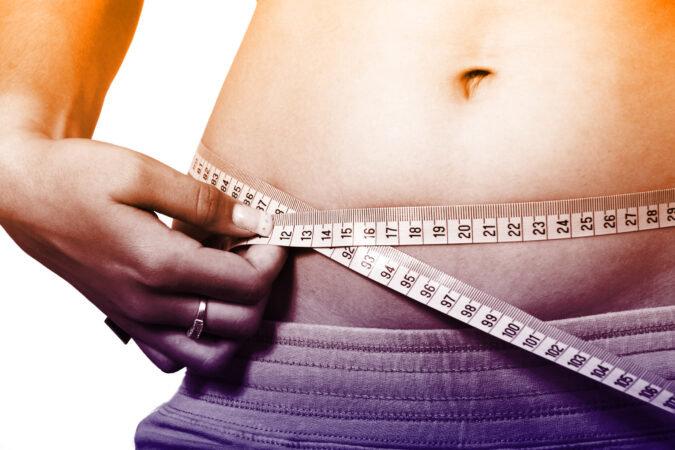
tape measure belly

Some doctors prescribe these drugs for weight loss in obese patients, with or without diabetes, as defined by a body mass index (BMI) of 30 or greater. BMI is a simple medical screening tool that measures the ratio of height to weight to give a rough calculation of  body fat. While it may be roughly correct, BMI can’t actually determine disease. What it can do, and does, is create faux legitimacy for fat bias.

Experience with the painful reality of fat bias has created masses who are desperate to lose weight. Promise them 15% weight loss and they won’t care a flip about the dangers or consequences. In other words, they’re not as concerned about health as they are about acceptance.

And to make them acceptable (or fit their own idea of ideal), doctors by the droves are willing to write prescriptions. This is how things work in a system that’s out of control. And it’s how things currently work in the US healthcare system.

Obesity, like any disease, can be most effectively prevented, and treated when we agree on exactly what it is. The NYTs quotes Dr. Beverly Tchang, assistant professor of clinical medicine at Weill Cornell as saying: “The problem is that we’ve allowed society, insurance companies and everyone else to decide that obesity is just too much fat, which is an oversimplification.”

And it was clear from reading the comments on this article that a majority of those led to post believe obesity both correlates with fat and is an impulse control issue. Even those who allowed a caveat here and there often tacked on a statement to remind us it’s as simple as calories in calories out and you’re the one choosing how many calories go in.

According to the article, “…B.M.I. helped create an equivalency between a disease and body size, but that’s not how researchers understand obesity today. A person can be fat without illness or “thin fat” and sick. Fat can cause mechanical problems in the body — sore knees, difficulty breathing. It can also be a symptom, rather than the causeof illness, like weight gain associated with a thyroid problem.”

My mother suffered some complications associated with obesity, but she was always thin. Always. I can’t think of any time she would have tipped the scales at overweight. The pinky ring she wore in her 20s is too small for my 6-year-old granddaughter’s pinky. But she very well may have suffered from inflammation. She was riddled with allergies.

So was she really obese, but not fat? Was she not obese, but had some linked conditions because inflammation is the real basis of her (and other’s) disease? Hard to know because we have no agreed upon definition of obesity in the US.

The good news is that there is now a Lancet Commission to bring together health experts from around the world together to define the illness of obesity, not just how it looks. “One of several efforts to push the medical community beyond size metrics like B.M.I., the commission’s report, coming this fall, will for the first time describe what it is calling “clinical obesity,” naming signs and symptoms of sickness, organ by organ, tissue by tissue with plausible mechanisms for each one.”1

Having a document in which the disease is defined will give doctors much needed guidance to refine and standardize best practices. It will provide support for treatments that improve symptoms or disease process and (hopefully) eliminate prescriptions of unnecessary medication. One report will not remove bias entirely, but it will allow patients a stronger position from which to review treatment plans to see if they are in line with current science.

This, as they say, is progress.

Disclosure of Material Connection: I have not received any compensation for writing this post. I have no material connection to the brands, products, or services that I have mentioned. I am disclosing this in accordance with the Federal Trade Commission’s 16 CFR, Part 255: “Guides Concerning the Use of Endorsements and Testimonials in Advertising.”

1) https://www.nytimes.com/2024/09/19/opinion/obesity-disease-ozempic-weight-loss.html

ad