Knowing When to Stop

In many professions and life in general, knowing when to stop is a critical skill. It’s true in performance art, poetry, piloting, sports, storytelling, cooking, and healthcare. Often, there’s no clearcut stopping point.

Some like their steak rare. Some like it well done. Some think an athlete should retire. Some think he should keep playing. Some like the length of a movie. Some think it’s an hour too long. Stopping points are often a matter of opinion.

Even a healthy lifestyle requires knowing when to stop. You can lift weights that are too heavy, eliminate too many carbs, garden too long when it’s hot, or play tennis on knees that cannot sustain the quick stops and turns without injury.

So how do you know when to stop?

Consult experts. Leave the AI bots alone. Find a subject matter expert. The more highly skilled, trained, and experienced, the better. Under Twitter’s previous ownership (yes, I know its current name), the platform was a great resource for finding the best in a field all over the world. It still took some vetting, but access was easy. Finding those same experts now can be more difficult.

That’s unfortunate because the most readily available source isn’t always the most reliable or best informed. But if you find one expert you trust, see who they trust. You can slowly build a network of knowledge that will help you build your own.

Read differing opinions on matters. Just because someone has a different view, doesn’t mean they have nothing helpful to offer. Greater understanding and deeper knowledge lead to better informed decisions.

Consult colleagues. Writers often depend on other writers to help them develop the best approach and stopping point to deliver a satisfying ending to the reader. Critique partners are considered a necessity for reviewing manuscripts. A critique partner may or may not have more experience than the writer, but they inherently understand whether something feels upbeat, sad, uncomfortable, rushed, or unfinished.

Researchers receive input from teams of reviewers before grants are funded. These colleagues and community members sometimes note that a study seems too narrow or too broad to accomplish its stated objectives within the time frame allotted.

The medical community develops policies, procedures, and standards of care to help guide practicing physicians regarding the length of treatment regimens. These evolve as knowledge is gained over time. That means the stopping point of yesterday may not be the stopping point of tomorrow.

Consult trusted friends and family. Even within friendly circles, not all advice will seem right to you. It’s still good to hear differing opinions especially when they come from someone you trust to have your best interest at heart. You can discard anything that doesn’t fit.

Compare all the advice to what your gut tells you. Fear, or the desire to please will sometimes interfere with a clear signal as to which stopping point feels right. When I can’t get a bead on that, I review my intentions. Sometimes that’s enough for me to clearly know what feels right. Other times, an option I dismissed will nag at me until I stop and fully explore it.

Give yourself a minute. Sometimes, we have to digest a little more information or process through a whirlpool of feelings before we can see an ending clearly. Walking away for a moment may be all that’s standing between us and the perfect stopping point.

Choose a next step. Even if you don’t feel comfortable choosing a stopping point, you may know a good next step. Take it.

Trust yourself. We can often feel other people’s response through their tone or body language, but they aren’t always responding specifically to us or our work. They come to the situation through the lens of their experience and points of reference. They may not truly understand our point-of-view.

No matter what, all choices ultimately come back to us. The best decisions are the ones we’re willing to own (even if we rethink them later). There is a sense of power that comes with self-determination. Whether or not you believe you’re good at knowing when to stop, taking stock and making a decision will let you feel in charge of your life or your work.

As things go in the real world, there won’t often be a hard, fast answer for knowing when to stop. Sometimes, we just have to gather information and draw the line in a place that feels right.

Disclosure of Material Connection: I have not received any compensation for writing this post. I have no material connection to the brands, products, or services that I have mentioned. I am disclosing this in accordance with the Federal Trade Commission’s 16 CFR, Part 255: “Guides Concerning the Use of Endorsements and Testimonials in Advertising.”

Blackberries

My fresh blackberries are crying out for a perfect drink. This morning, I pulled a handful of plump, ripe blackberries from the bush beside my fence. This is the first year it has produced in volume and I can’t wait to find the perfect drink featuring its refreshing fruit.

You may remember that last fall I hosted a series of porch parties at which I served pitchers of martinis garnished with tomolives. Using pitchered drinks gave me a flavor profile to complement and made serving guests fast and easy. Now I’m searching for a summer equivalent.

The leading contender so far is a Little Black Cocktail. It contains blackberry purée and will be garnished with fresh picked berries. I’m working on the exact proportions which, fortunately for me, requires some scrumptious trial and error.

A strained purée of blackberries plus sugar and a touch of fresh lemon juice will produce a variety of beautiful flavors and colors to use as a base for my pitcher of cocktails. Once I have the taste of the purée nailed down, I’ll dilute with champagne or prosecco. Trader Joe’s Secco is a budget friendly choice if I decide to host multiple parties.

The beaker-style pitcher I use for martinis will work for Little Black Cocktails as well. It fits in the center of my ice bucket so it can stay both handy and chilled at the same time. I’ll serve in tall thin glasses that showcase the rich color and garnish with whole berries. If you prefer a pink cocktail, strawberries or raspberries are an easy substitution.

Other contenders for ideal summer cocktail include combinations of blackberries and whiskey. Whiskey doesn’t scream summer to me, but add some lemonade and I could lean that way. Same with smashed blackberries, bourbon, mint, lime, simple syrup and club soda. The mint and club soda lighten up the heavy feel of blackberries and bourbon.

But my strongest second choice is a blackberry gin fizz made with Hendrick’s gin. Most recipes call for muddled blackberries in this drink. That’s best done in short, individual glasses. A purée with simple syrup will work better for a pitcher version. Again, I’ll have to play with proportions.

It seems this is coming down to the need for lots of sampling and tweaking to perfect a summer pitcher cocktail filled with fresh blackberries. I hope I’m up to the task!

I can’t wait to get started. Bring on the blackberries!

Disclosure of Material Connection: I have not received any compensation for writing this post. I have no material connection to the brands, products, or services that I have mentioned. I am disclosing this in accordance with the Federal Trade Commission’s 16 CFR, Part 255: “Guides Concerning the Use of Endorsements and Testimonials in Advertising.”
Immediate Risk

We often speak in general terms about health priorities without discussing immediate risk. But when caught in a moment that requires a swift choice to survive, talk of other health priorities seems less than important. And the choice to avoid immediate danger at the expense of something that could put us at greater risk in the future doesn’t really feel like a choice at all. Health decisions are often like that.

Standing in an underground concrete box filled with spider webs and strangers a couple of nights ago, I felt like spiders were crawling on my flip-flop clad feet. Would they bite me? Would I have an allergic reaction? Was that guy’s sneeze an indication of a contagious virus or a response to dust? The thoughts ran through my head, but I was sure my priorities were right.

At 2:40 in the morning, I would rather have stayed in bed. I was concerned about spider bites and potential exposure to illness in an enclosed space. But I was staying in an RV. Radar showed three rotating storm cells in the area. General health priorities took a back seat to the decision to avoid the immediate danger of being hit by a tornado.

In retrospect, the decision was sound. A 1500 yard wide 145 mph tornado proceeded on a 20-mile path about two miles away. It killed 4 people. Seeing twisted, collapsed buildings on my route the next morning reinforced my belief that the danger was real. Another camping area in the path saw RVs much larger than mine flipped onto their tops.

Not everyone in the RV park came to the shelter. Did the others know more than we did or were they more comfortable with risk? Were they more concerned with feeling claustrophobic than with being safe? Did they value the comfort of their RV more than temporary discomfort? Did they talk themselves out of a belief they were in danger? One guy started driving around in his truck. Perhaps he thought he could outrun the storm.

We all assess things differently. It’s often difficult to understand why a friend or relative makes the health decisions they make. But what seems clear to me may not be clear at all to someone else. Or they may have a concern that supersedes physical risk.

It can be helpful to think of health decisions in a timeline – immediate risk must be addressed first. After that, it may be harder to determine order. You can always start with what will make your life more pleasant.

For me that’s for my stomach not to hurt, my joints not to ache, and not to feel like my blood sugar is dropping. That means avoiding gluten, eating a low histamine diet, and keeping my mealtimes regular.

It’s easy to view avoiding gluten as making your life less pleasant and it does require an adjustment. But the inconvenience is worth it to me because I feel so much better. I also know I’m increasing my life expectancy. Together, that’s a powerful argument for making dietary adherence a priority.

Next up, I feel better when I move. I don’t have to do anything herculean. Yoga, gardening, swimming, lifting weights, and chasing grandchildren get me away from the computer. As long as I include them on a regular basis, I feel good and stay flexible.

And so it goes. When making health decisions, I try to look at both the big picture and the immediate risks. That clarifies many decisions for me. Perhaps a similar approach can help you prioritize as well.

Sliding Backward and Forward

In this 20th year of living gluten-free, it feels like some things are sliding backward. After a decade of increasing choices for easy gluten-free food, it’s now harder to find options. Unfortunately, some of these are the only options my system tolerated well.

When I’m at home with a normal workload, this doesn’t pose a large issue. When I’m traveling, RV living, or snowed under, it presents an added layer of stress and difficulty.

It’s not that there aren’t some replacement products on the market that look promising, there are. But the frequency in which these products are missing from the shelves makes them essentially unavailable locally.

  • Here are a few of the items I’ve been missing:
  • Glutenfreeda Gluten-Free Oats – no longer made
  • Glutino Original Crackers https://www.glutino.com/gluten-free-crackers-pretzels/original-soda-crackers – supposedly available through Instacart in my area, but consistently removed after ordering and no longer available at Natural Grocers
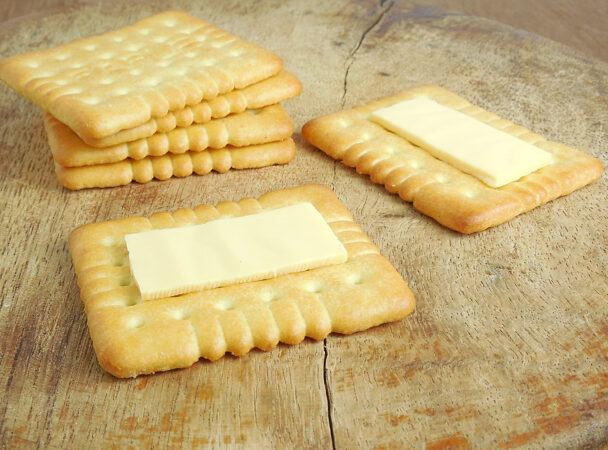
  • The Fine Cheese Company Gluten-Free Toast for Cheese– listed on Instacart, but only gets delivered in the version that’s not gluten-free
  • Annie Chun’s Restaurant Style White Sticky Rice – possibly available at Target today at a price larger than I was paying. No longer available from local Walmart or through Instacart
  • Udi’s Blueberry Muffins – no longer available through Instacart or Walmart in my area. This wouldn’t be a problem if my system liked Flax4Life, but alas it doesn’t

There are still breads, English muffins, and bagels that can be purchased across town. There are also mass-produced cereals in most grocery stores. And there are crackers. Simple Mills almond flour crackers seem to be readily available from multiple stores. We haven’t gone backward as far as we were when I started this journey. And that’s a good thing.

On the other hand, we’re back to a place where you may have to start researching new products to fill in some gaps. That can be expensive and frustrating if you already spent time and money, found a great product, enjoyed that product for years, and are now having to start over.

Prices are also increasing. It’s possible that a lack of some raw ingredients have pushed production costs to the point that the market won’t bear a significant profit margin. This could be why we’re seeing products leave some markets.

In general, it seems that niche items are diminishing across the board, not just on gluten-free food shelves. That’s unfortunate. It will make it harder for those with all sorts of special needs to get the products they need for daily life.

At some point, we’ll stop sliding backward and begin moving forward again. It just may not be soon. Lingering effects of one pandemic are staring down another possible one as the H5N1 flu spreads through livestock across the country.

Preparing homemade items in advance of travel or busy times can fill in gaps. Many Cooking2Thrive bread, muffin, biscuit, and cookie recipes freeze well. And preparing these yourself brings the added benefit of eliminating fillers, preservatives, and chemical enhancers. In this sense, sliding backward in convenience may result in sliding forward in health benefits.

Disclosure of Material Connection: I have not received any compensation for writing this post. I have no material connection to the brands, products, or services that I have mentioned. I am disclosing this in accordance with the Federal Trade Commission’s 16 CFR, Part 255: “Guides Concerning the Use of Endorsements and Testimonials in Advertising.”