Free Your Mind

“Free your mind and the rest will follow.” 1

Remember that song, “Free Your Mind” from the 1990s? It’s seared into my memory by a moment on the dance floor. I looked to my right and grooving to En Vogue as if she had not a care in the world was a woman about to go on trial for killing her husband. I knew her from the pictures that were plastered on the front of my newspaper every day. I felt shocked, amazed, and somehow challenged/inspired. Even if she was innocent, how could she possibly feel free enough to fully enjoy that moment?

I’ve come back to this question from time to time in the ensuing decades. I inherently understand that no matter what has happened or what other people think, my thoughts are mine. And I’m happy letting my mind roam free. But understanding on a deeper level why she could dance freely in a situation in which I would be more likely to hide requires an exploration of the emotions, training, and thinking that limit me.

Exploring these has led me to some thoughts on how can freeing your mind improve your life. Here are a few:

You cannot control anyone but yourself.

The dancing alleged murderer could not control the crime investigation, the newspaper reports, her employer (who fired her the minute she was arrested without waiting to see if she was guilty), or any of us on the dance floor. She could only control herself.

Attempting to impose limits on someone else so that they will conform to you is futile. When you change yourself, everything around you will shift. Sometimes this may be joyfully in the direction you desire. Other times it will be painful. I witnessed a moment of joy on that dance floor. No matter what my training said about an alleged criminal enjoying life with abandonment, that moment was inspiring.

For everything you think you know about someone, you don’t know much unless you’re willing to invest.

So often we make choices based on people’s outward presentation. This limits our choices for friendships, romantic partners, employees, and caregivers. The caregiver who treats you with kindness, gentleness, affection, and respect may use bad grammar or vote for another political party. The well-read, well-spoken, impeccably dressed professor may beat his wife.

My parents greatly diverged in their understanding of this concept. Very few of my dad’s friends were acceptable to my mother. They were mostly what you’d call colorful characters that brought him laughter, adventure, and intellectual stimulation. My mother preferred socially acceptable appearance above all else. She missed many opportunities for expanding her thinking and enriching her life even within our extended family.

Free your mind to visualize.

When you learn to waterski, you also learn to fall. If you can’t get the falling out of your mind, you won’t get it out of your muscle memory. We accept that many sports require conquering the mind game. Life in general is no different. And just like you can improve your basketball shot by visualizing, you can improve your chances of becoming successful at any goal using the same technique.

I’m not saying that visualization will suddenly make me a great basketball player, but unless I can see the possibility of becoming one, I’m doomed before I start. Many of us have learned how to visualize failure.

Most limits are self-imposed.

If your initial response to this statement is a four-letter word, that’s not surprising. It’s more enticing to believe that we are limited by outside forces. It is a fact that outside forces affect us and may change the options, but they limit us less than we believe they do. When we let go of the idea that outside forces control our fate, we are required to face our own demons.

Taking responsibility for our limiting thoughts and behavior is much more emotionally difficult. It may require processing through anger, grief, and loss. It may require a shift in self-image. It will require some decisions that don’t feel good. Letting go of self-imposed limits is not easy, but to the degree it’s hard it’s also healing and rewarding.

Flip the script.

If you understand the value of freeing your mind but aren’t sure how to start seeing the possibilities, try flipping the script. For example, instead of imagining only how awful you’ll feel if you don’t get the job you really want, imagine how great you’ll feel when you do. Don’t stop there. Imagine days, months, and years filled with excitement and fulfillment. Hold onto those thoughts and feelings until you feel a shift from anxiety to confidence.

It is at that moment that the world of possibilities will open. You don’t need that particular job anymore. You want it, but it’s not the only gig in the world worth having. There are millions of opportunities. When your mind is free to embrace all the options, you’ll be free to see abundance instead of scarcity.

It’s not mind over matter.

For some this will work differently. If you have experienced significant trauma, you may need to free your body before you can free your mind. The two are significantly intertwined. There’s nothing wrong with this and there are great tools to help – somatic experiencing therapy, EMDR, and yoga for trauma are all great options for helping your body release so your mind can follow.

Another benefit of freeing your mind is problem solving will get easier. There are multiple solutions to any problem that presents itself. An open mind makes it possible to imagine creative and innovative approaches. Easier problem solving alone is a great reason to free your mind!

I’ll just dance my way out now.

https://www.kheljournal.com/archives/2015/vol1issue6/PartB/1-5-77.pdf

http://www.cooking2thrive.com/blog/preparation-healing-manage-expectations/

Think Going Gluten-Free is Hard – Visualization Can Help

Think going gluten-free is hard – visualization can help! In spite of increased awareness and availability of gluten-free foods, many of us still find the idea of remaining totally gluten-free intimidating. We just can’t imagine actually having to walk past every croissant displayed in a bakery case in France. We find the thought of giving up our grandmother’s cherry pie with its perfectly flaky pie crust unfathomable. We don’t know what we’ll grab when we’re too hungry and dinner won’t be ready for an hour. Rethinking our habitual lunch spot feels like we’re losing our best friend.

Our mind may tell us there’s plenty of information available and the process won’t be difficult, but it feels monumentally hard. We just can’t see ourselves as bread free, pasta free, doughnut free, cake free, or fried chicken free for a week, much less a lifetime. When you think about it, if we can’t “see” it, it’s unlikely we’ll be able to accomplish it. In fact, if we can’t see it, we may not even be able to consistently take that first step toward making it happen. We’ll stick with what we can see in our mind’s eye.
visualize
When I was learning to slalom waterski, I kept falling at the same spot in the wake in the same way over and over again. I remember someone telling me the problem was that I’d learned to fall. Huh? But it was true. When I thought about crossing the wake, what I saw in my mind’s eye was me falling. I didn’t fear it, I just knew it would happen. I had learned to fall.

If we don’t change what we envision, we will subconsciously stick with what we’ve learned. We’re bad at math. We are weak. We are unreliable. We can’t cook. We’ll never amount to anything. We’re lazy. Are we? Do we have to be or have we adopted someone else’s vision of us? Can we see ourselves getting a tutor and excelling at math, lifting weights and becoming strong, only saying yes when we know we can deliver, practicing until cooking seems easy, excelling in life, or working energetically? Changing how we view ourselves can facilitate us changing everything!

Coaches know that visualization can improve athletic performance. In addition to time on the court, they may have a player envision him/herself making free throw after free throw. Scientific studies have shown that visualization does, in fact, improve athletic and academic performance. Pilots-in-training are encouraged to chair fly their airplanes, or, in other words, to visualize themselves flying. Life coaches may incorporate visualization to help a client conquer an obstacle.

When you think about it, this makes perfect sense. If you can see yourself doing something, it’s no big deal to do it. It just feels natural. On the other hand, if you can’t see yourself doing something, it’s a challenge to make the first step toward getting started.

The type of visualization I’m describing isn’t daydreaming. It’s an engaged practice directed to achieve a goal or overcome an obstacle and it can be practiced. For instance, let’s say my greatest difficulty going gluten-free is how I will explain to my elderly aunt that I can’t eat her beef stroganoff. I will create images of myself in which I am brave, strong, and kind when communicating this to her. I imagine myself engaging in some activity that comforts me before and after the communication. Obviously, I can’t control her response, so my visualization focuses on me practicing self-care while addressing my obstacle.

This can go further. I can mentally rehearse several possible responses to my aunt’s imagined reactions. In other words, I can visualize many options I can employ to keep myself feeling centered, supported, and strong. I can also give myself permission to remove myself from the communication if my aunt becomes hysterical, abusive, or unkind. Imagining the many options I have and seeing myself feeling okay no matter how she responds builds my emotional muscles in advance.

With better developed emotional muscles and a mental picture of my many options, I can go into an uncomfortable conversation feeling strong and prepared. Whatever the response, I am prepared to see myself as a person who deserves to be healthy. Remaining gluten-free is critical to my health, so I will remain gluten-free and I will be kind to those who don’t understand because they cannot make me feel bad about treating myself well.

Perhaps your greatest obstacle is financial. It is true that much of the gluten-free convenience food available is more expensive. Gluten-free flours are also more expensive than wheat flour. You can visualize yourself feeling satisfied and happy eating meat, vegetables, cheese, yogurt, fruit, rice, quinoa, beans, lentils, cornbread, corn tortillas, and homemade trail mix. As you imagine roasted chicken, chicken enchiladas, grilled chicken breasts, beef stew, beef roast, grilled steak, pork chops & rice, pork tenderloin, grilled tilapia, fresh green beans with new potatoes, black beans & rice, grapes, peaches, pears, bananas, baked sweet potatoes, sautéed squash & onions, steamed carrots or broccoli, you’ll soon recognize the options are plentiful even on a budget.

Visualizing will also make it easier to develop a pantry plan for your family, meal plans for busy weeks, travel plans so that you always have good gluten-free options, and plans for attending parties or events. As you see yourself successfully navigating these areas, a gluten-free lifestyle will seem less daunting.

Being able to see what can be rather than what will no longer be mitigates the feeling of loss we all experience when we give up something familiar. Visualizing yourself as the pain free, energetic self you used to be can help motivate you to stick with a gluten-free path in order to heal. Seeing yourself enjoying life without a foggy brain, constant itching, tummy pain and discomfort, weakness and fatigue, or achy muscles is great motivation for giving the lifestyle a try.

Can you be successful in maintaining a gluten-free lifestyle to be healthy? Yes, you can! I can see it now!

And when you struggle, we’re always here to help: support@cooking2thrive.com.

https://pdfs.semanticscholar.org/8b20/b4ff5ccdb04dee8f8928f8b7fc6ea5c9772f.pdf

http://journals.sagepub.com/doi/abs/10.2190/X9BA-KJ68-07AN-QMJ8

http://www.marcandangel.com/2015/01/18/4-unconventional-steps-extremely-successful-people-take-in-life/#more-800

Stop Struggling! Start THRIVING!

Good morning and Happy New Year!

Christmas
My cousin who's been thriving for 92 years!

What a great day to become more aware of ourselves and our relationship to our lives! Did you awaken this morning rested, smiling, and excited about the possibilities today brings? Are you looking forward to the Rose Parade, a good bowl game, and dining on black-eyed peas and greens while still in your pjs, or are you feeling hung-over, angry over the hardships of last year, and annoyed that you won’t be able to eat whatever you want today because your health requires limitations?

Do you feel content or dissatisfied? 

Are you too busy or numb to even know how you feel?

I will admit it would be easier to force a smile, make the usual list of resolutions to be ignored, growl over every healthy choice as though it’s deprivation and have a glass of wine to take the edge off.  Perhaps you can even reward yourself with dessert tonight since you skipped the doughnuts this morning. After all, that’s the norm, right?

Unfortunately, it’s a norm that’s often reinforced by our surroundings, our friends, our families, and the media. And there’s a certain amount of comfort in conforming to the norm.  If we fit the mold, conventional wisdom tells us, then we’ll be seen as “good”, acceptable, and lovable. Yet many of us work hard, perform well, do what’s expected only to spend most of our time feeling as though we’re pushing ourselves from one struggle to the next. We do not feel more loved or more joyous.

How can we stop struggling? By controlling our circumstances, right? 

If removing struggle is predicated on controlling our environment, we will always be fighting our surroundings, feeling angry and dissatisfied that we never seem to get ahead.  If it’s not one thing, it’s another.  We may believe that we can be masters of our own destiny, but we cannot control our spouse, our boss, the reckless driver who hits our car, or the tornado that hits our home. We can do everything right and life will still present us with challenges over which we have no control. The longer we choose to fight, the longer we choose to struggle. If we struggle long enough, we will drown any possible joy under the weight of perceived difficulties.

Like the drowning swimmer, we believe that fighting to keep our head above water is the way to preserve ourselves. Like the drowning swimmer, we must calm ourselves and allow our surroundings to buoy us in order to survive.

By now, you’re probably thinking I’m crazy. That’s okay with me. I cannot control you. Not only that, I don’t want to. I do want you to stop struggling and start living!

How can you do that? 

First, recognize that it will be a process. There’s no quick fix for a lifelong struggler.

Next, develop practices that support the process. You’ll need these for reinforcement when fear stands in your way.

Third, begin to recognize the preconceived ideas with which you filter life experience. Get curious about how another point of view may feel and allow yourself to experience that difference without expectation regarding the outcome.

Fourth, let go of your protective persona in order to allow your authentic self to be known. This will require setting boundaries and making choices. With good boundaries for protection, you can begin to open yourself to receiving. This is the environment in which real connections begin. 

Fifth, step into your personal power.  You must be present to win!  Experiencing personal power is all about being present.

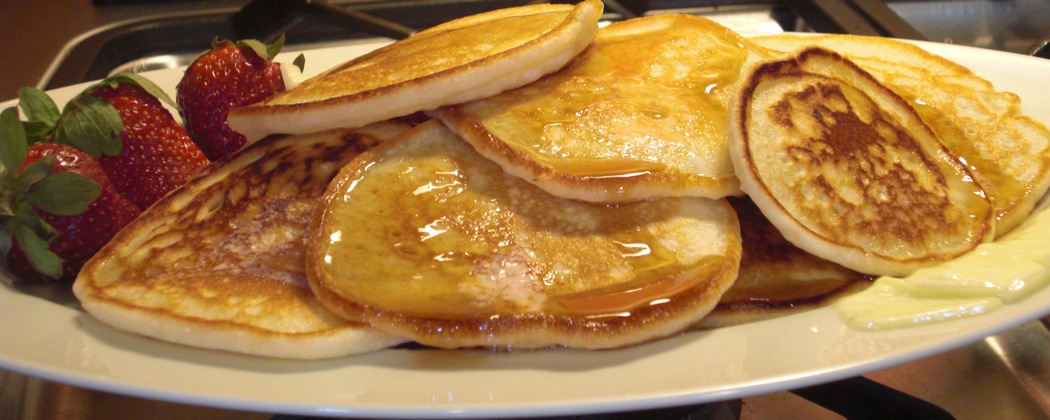
Sixth, practice, practice, practice. Note the experiences that make you feel more whole, connected, encouraged, supported, and joyous. Repeat those experiences when you can.  Visualize them when repetition is not available. (Here are a view visualization possibilities for me.)

Pancakes

cooking

waterfallSeventh, acknowledge and appreciate the experiences you note. Revel in these positives with the same amount of energy you previously devoted to struggle. 

Eighth, acknowledge and appreciate yourself.

Ninth, acknowledge and appreciate others. 

Tenth, sit still, do nothing, be, be, be. You are enough. When you know you’re enough, you will live a full life and make a great contribution. When you know you’re enough, you will make healthy choices. We like to call that thriving!

Is all of this easier said than done? Of course it is. But feeling better is worth it and we’ll be here to feed and nourish you along the way.


Happy New Year!


Can A Small Shift in Perception Equal a Huge Change in Viewpoint?

This morning I had a real problem getting dressed. I was standing in my closet looking at everything hanging there feeling annoyed, irritated, and uninspired.  Normally this would be because I want to look crisp and tailored, but didn’t want to feel anything touching me. (Yes, I realize how this sounds, but it’s true.) This morning, I really wanted to wear navy blue. I took out a navy blue dress with white polka dots and a jacket with a matching blue stripe. Then I had to find tights and shoes.  I don’t own any navy tights. They’re all black, brown, or gray. I don’t own any navy shoes, although I look for some every time I shop, but I wouldn’t have to iron the polka dot dress or the blue and white striped jacket, so I took them out of the closet, hung them from the knobs of my dresser, and paired them with black tights and black Mary Jane heels. Hanging there under a skylight with the black tights draped over the hanger, I noticed that the navy blue seemed to morph into black. Or maybe it was black to begin with and I just thought it was blue? Who knows? Now I had managed to run late and time was of overriding importance. The two colors are so close that when I left the house, I felt comfortable that I looked good enough for the event I was attending that included the governor, mayor, and many local business leaders.

Driving to work, I started thinking about navy blue and black and my perception of the difference. In the sunlight through my windshield, my dress looked noticeably blue again. Noticing this difference, I started thinking about subtle shifts of light and subtle shifts in perception. With a background in graphic design, I know that color perception changes when color is viewed in natural light versus artificial light, on a less reflective surface versus a more reflective surface, or when one color is surrounded by another color. Is it possible that I can use this knowledge to explore small shifts in perception in other areas?

Will it be less convenient? Let’s say I’m planning to pick up burgers on the way home tonight. Instead of driving through my usual fast-food chain, as I leave the office I’ll call a locally owned restaurant and order hamburger steaks with baked potatoes and salad for pick-up. It will be ready when I get there.

What stays the same? I’m picking up dinner on my way home. I will be eating beef and potatoes. Because I’m calling in advance, I’ll still eat at my planned mealtime.

What will change? I’m making a phone call in advance. I’ll see different scenery because I will drive a different route home. A salad is included in the price, so I don’t have to order something additional to get some greens. I won’t eat a whole hamburger steak (maybe), so I’ll have some left over for a snack tomorrow. If I order a burger on a bun, I always eat the whole thing.

For you the changes may be slightly different. You may be able to feed two children with a hamburger steak, plus have a chance to request that the bread included in the price be wrapped separately so that any gluten-eaters in the house can have a double portion. You may discover that the price difference between hamburger steak and a hamburger and fries is more than offset by the increased amount of food you receive. Such a transaction creates an opportunity to teach your children about sharing and value for your dollar. You can also show your family by example that proactively taking care of your health is something you consider important. In addition, you can support a locally owned restaurant. It’s possible that this will increase your sense of community as you become friendly with the restaurateurs.

Are these changes so bad, or so significant, that they create an insurmountable roadblock? For me, they seem like a small shift in my normal routine and I feel as comfortable with these shifts as I do pairing my navy blue dress with black shoes. I still want some navy blue shoes, but I am able to feel satisfied that I look good without them.  I still want a fluffy gluten-filled biscuit for Christmas breakfast, but I feel satisfied with Cooking2Thrive’s Success, Biscuits!

As the temptations of the holidays abound, I hope you’ll consider that it may take only a small shift in perception to make embracing a gluten-free way of living a piece of cake!

biscuits
Success, Biscuits!