In Defense of Aprons

Today, I write in defense of aprons. I am a spiller. I ruin more solid color tops than you can imagine. Somehow, I manage to stain them with things that won’t come out. The fastest, easiest solution is to cover up with an apron.

African American family of four cooking in mismatched aprons.

Aprons are useful parts of a uniform in hair salons, art studios, carpentry shops, flower shops, laboratories, and healthcare settings, as well as coffee shops, kitchens, and bakeries. And they aren’t just useful and protective, they can be decorative too.

I have several hostess aprons from the 1950s or 60s. They are half-aprons that tie at the waist. They sport ruffles and rickrack. They may be embroidered or have an applique. Some are holiday themed. Some are sheer. Most have pockets. Some patterns in vintage aprons were familiar because the aprons were crafted from reused cloth. Our grandmothers were the original upcyclers.

No matter your style, there will be an apron to suit you. They aren’t gender specific. They come in tons of fabrics and cuts. If you like pockets, your apron can have pockets. If you like more protection for your shirt, choose a vest style apron with a zipper or snaps. If you don’t want ties at the neck or waist, choose a cross-back style or a smock.

Aprons make great gifts. You can have them personalized with a name, find them branded for a category or a specific product, or choose one that sports your favorite quote or quip.

Beyond protection from the spills I make in the kitchen, new fabrics add protection from heat in open-flame commercial kitchens. And healthcare settings use aprons to protect patients and technicians from radiation.

If you think aprons may are cool, but may be out of style, do not worry. Last year, aprons were a 3.8 billion industry and are on pace to reach 6.2 billion worldwide by 2035.1

Some of you may have a collection of aprons you’ve received as gifts through the years. Put them on decorative hooks or an adapted coat rack where you won’t forget to reach for one. Put some outside where they’re easy to grab on your way to the grill. Cycle through them. If they get stained, cut them off and let the kids use them for crafting.

girl in red shirt and gingerbread man two layer apron with rickrak holding candy canes

Have family aprons made instead of family pjs for fun holiday photos. Then everyone can help prepare your holiday meal!

Recycle old family quilts into aprons for the family. They’re an easy project for teaching the youngsters to sew.

An inexpensive apron can save your more expensive clothes, hold utensils or tools, and make a fashion statement. Given the large numbers that are sold each year, they don’t need defense from me, but I’ll speak up for them any day.


1) https://markwideresearch.com/apron-market

Appearance or Substance

Which do you look for, appearance or substance? Appearance may make something look a certain way to certain people, but it doesn’t necessarily mean anything. As we have been inundated with the headlines we’re fed by algorithms and news outlets that need clicks, the effect of shallow, surface ideas, idle ramblings, and suppositions have insinuated themselves into conventional wisdom.

light blue background with illustration of computer monitor with webpage layout including video

Less and less information is examined closely before publicly-shared opinions are issued. Once that happens, fact-based presentations carry less weight and it becomes easier to believe misinformation.

It also becomes easy to substitute another’s supposition for fact or delude ourselves and substitute another’s supposition for fact. Social media algorithms prey on the rage factor that often results from this and builds upon itself. Clickety, click, click, click.

Conventional wisdom used to spawn clichés like, don’t judge a book by its cover because we knew that appearance didn’t necessarily represent the substance of the tome. Now, we worry about the time spent on phones.

But isn’t how we spend that time on the phone just as critical? If we limit ourselves to 10 minutes per day, but spend that 10 minutes consuming shallow, biased, misleading information it can still cause harm.

When you’ve done careful, in-depth research and know your facts are solid, it’s difficult to have a conversation with someone who got their information on the same subject from reels. I understand reels are more entertaining, but they’re fed to you by something that doesn’t care whether the content is accurate or misleading.

One result of relying on reels is that medical or psychological terminology can morph into inaccurate descriptions. A person recently described themself to me as an empath, but nothing I know about them and nothing they said would indicate they fit the term I’m familiar with.

They said they believed this because of a reel they had watched. Further examination revealed they were conflating empathizing and being an empath.

According to Psychology Today, my experience was reflective of the influence of a reel similar to one on gaslighting forwarded to Adi Jaffe, Ph.D. that “was well-produced, with clean edits, beautiful shots, and audio. There was only one problem — it greatly distorted the whole concept it was discussing. Instead of defining gaslighting (which itself is not truly a clinical psychology term), the video insisted that when someone close to you tries to sell you on their (presumably different from your own) worldview, they are gaslighting you. But that’s not what gaslighting means at all. Traditionally, when someone tries to gaslight you, they are purposely lying to you about reality in order to make you mistrust your own sense of reality. The whole concept of gaslighting is about a deliberate distortion of truth to gain a psychological advantage over another. Having a different viewpoint from someone else is not gaslighting!”1

These may be only two examples, but I encounter something similar multiple times per week. The proliferation of misunderstanding in a large portion of the population means you I often get caught off guard because people have a vastly different understanding of terms I’ve known for years.

The discomfort this creates for me is unimportant. The disconnect between health facts and fiction created through amplified misunderstanding and misinformation presents a danger greater than we may realize.

Valuing substance over appearance can help guide you to more reliable information and sources. There are licensed professional experts creating substantive online courses (some are free) that deal with the same issues you see in reels. Choose those.

There are professional experts on Bluesky. Find some. Vet them. Follow the ones who are credible. Same with Substack and podcasts. There’s nothing wrong with getting information online. It’s the quality of that information that matters.

To be safe, choose substance over appearance.

1)  https://www.psychologytoday.com/us/blog/all-about-addiction/202505/tiktok-therapy-the-pros-and-cons-of-social-media-psychology

Another Lesson from the Garden

Today, I’m pondering another lesson from the garden. While I was traveling, my garden was taken over by grass and weeds. Since then, downpours have given them the perfect amount of moisture and they are thriving!

When I first returned, I took a weeding fork and pulled the weeds up and left them to die. That is not what happened. Today, it looked like they had rerooted themselves and doubled in volume and size. Obviously, I needed to remove the grass and weeds by the roots and remove them from the garden.

red barn in background weeds and tomato vines

Because of recent rains, the soil was holding together well. I tried to shake dirt clumps from the weed’s roots, but much of that dark, rich, moist soil traveled over the fence with them. It was painful to see soil I’d recently added to the space fly out of the environment.

My choices were to leave the weeds in the garden, spend an extra hour reclaiming the soil, or feel the sting of watching it leave the garden. Yes, I could have put it in the bucket to reclaim later, but if I had that time available any time soon, I’d have done it right then.

I tossed weeds, grass, and clinging soil into the yard. Once I’d made that decision, I could focus on the loss of fertile soil to the garden or view it as good food for the yard.

This process reminded me of a conversation I had with a 5-year-old last week about telling the truth. They insisted they hadn’t kicked someone. I saw the kick. I told them I saw the kick so that story wasn’t going to fly. There was some screaming, stomping, and tears which led to blaming the person they kicked for making them do it. Once things calmed down, we discussed why it’s important to tell the truth.

As we noted, telling a lie may be faster and less complicated than telling the truth. It’s like my first stab at weeding. The problem is, I ended up with a more difficult job this time around.

Lying is the same. The temporary effects are rarely worth the long-term consequences of eroding trust, undermining goals, and preventing progress. We get ourselves lost in the weeds.

Turning perceived failures, relationship difficulties, and workplace conflicts around in our minds until we’re lying to ourselves is a common adult manifestation of the 5-year-old’s behavior. It serves the purpose of diminishing pain, keeping us out of trouble temporarily, and providing the option of convincing ourselves someone else is to blame.

But the ultimate result will be no different than that in my garden. The entanglements will grow, multiply, and thrive. In the long run that is detrimental.

Finding the courage and strength to face pain, difficulty, and loss directly is the equivalent of me facing reality and tossing grass back into the yard where it belongs without removing garden soil because I know I can’t allot the time to do it. Is it annoying? Yes. Does it pain me? Yes. Is it the best way to avoid the same problem in the future? Yes. Can I do it? Yes.

Obviously, garden soil doesn’t carry as much emotional impact as other things. But I recently had the experience of participating in a conversation in which the other person, let’s call him Bob, turned a situation entirely around in his mind from what we had both experienced, discussed, and agreed about two weeks before.

The incident was a business negotiation between Bob and a potential client. There was nothing egregious in the original transaction. Annoying? Yes. But immoral, illegal, or unheard of? No.

Two weeks ago, Bob was clear he had provided less than clear communication to the potential client leaving her guessing and also implying she was doing something wrong without stating any specific objection.

In our more recent conversation, Bob believed he had been crystal clear and the potential client had treated him terribly. Because of this, he did not believe she deserved to have her phone calls returned. In addition, he had poisoned the water with other colleagues she could have hired.

Bob has revised the story into something I don’t recognize, and I was there for the initial negotiations. I don’t know if he does this often, but it makes me view his stories in a whole new light. Will I ever take them at face value again? I’m not sure.

His credibility with me is damaged because I saw him kick (figuratively) the potential client and then say it was her fault. It’s the same behavior I observed with the 5-year-old.

To repeat because it bears repeating, the ultimate result of taking the easy way out and avoiding painful truths will be no different than using the easy way to weed my garden. The entanglements will grow, multiply, and thrive. In the long run that is detrimental.

ad

It’s Beastly, but is it Gluten-Free?

If you have kids who love Mr. Beast, you may know his Feastable food products are beastly, but are they gluten-free? My grandchildren have philosophical conversations about whether Feastables chocolate bars are better than Hershey’s. Of course, with Mr. Beast’s name right there on the package they believe them to be better. They’re happy to let me compare.

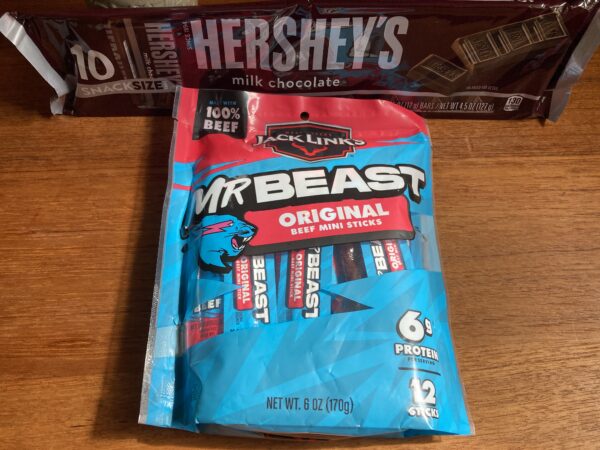
package of hershey bars and package of mr. beast jacklinks

Before I can, I need to know the ingredients. A visit to the website shows nutrition facts are easy to find. https://feastables.com/

The milk chocolate bars do not have any gluten containing items in the ingredient list, but the allergen statement says they may contain wheat. That’s enough for me to avoid them.

Milk crunch again looks deceptively okay. The crunch is rice based. But the allergen statement says they may contain wheat.

Cookies and Cream sounds like it would contain gluten, but it’s made with rice flour. Exciting. But only for a moment. It also lists the possibility of wheat in the allergen statement.

Caramel, peanut butter, almond, dark chocolate, and dark chocolate sea salt contain the same allergen statement.

I don’t worry as much if an allergen statement says processed on equipment that also processes wheat, but they may contain verbiage concerns me.

Peanut Butter and Hazelnut Butter Cups as well as the Yoshi Eggs may contain wheat as well.

All flavors of Sour Strikes appear to be gluten-free. The only questionable item in the ingredient list is natural flavors. Use your judgement and previous experience to determine whether you’re comfortable trying them.

The chocolate milk is gluten-free. I’ll grab a bottle of that and wash down my disappointment that I don’t feel comfortable consuming more of the products.

On an entirely separate website, you can find Mr. Beast Jack Link’s. These are beef sticks that come in original and teriyaki flavor. These seem to be a Mr. Beast branded version of beef sticks that are also sold under the Jack Link’s name. https://mrbeast.jacklinks.com/

A visit to the nutrition facts takes you to the Jack Link’s website. The teriyaki flavor contains wheat. https://www.jacklinks.com/shop/nutrition-facts

The original flavor is a bit of a headscratcher. The label doesn’t list any problem ingredients or contain an allergen statement. But the Mr. Beast side of the website indicated gluten-free products will be clearly labeled gluten-free and these are not.

A little additional poking around on the Jack Link’s website suggests that anyone who is gluten-free should only consume products linked to a specific blog post. The original flavor beef sticks are not linked. Seems like it would be safest to avoid them. https://www.jacklinks.com/blog/10-gluten-free-snacks-to-buy-right-now/

For those who maintain a gluten-free diet, many of Mr. Beast’s snacks are beastly. Sorry for the disappointing news on a holiday!

Disclosure of Material Connection: I have not received any compensation for writing this post. I have no material connection to the brands, products, or services that I have mentioned. I am disclosing this in accordance with the Federal Trade Commission’s 16 CFR, Part 255: “Guides Concerning the Use of Endorsements and Testimonials in Advertising.”