In Defense of Aprons

Today, I write in defense of aprons. I am a spiller. I ruin more solid color tops than you can imagine. Somehow, I manage to stain them with things that won’t come out. The fastest, easiest solution is to cover up with an apron.
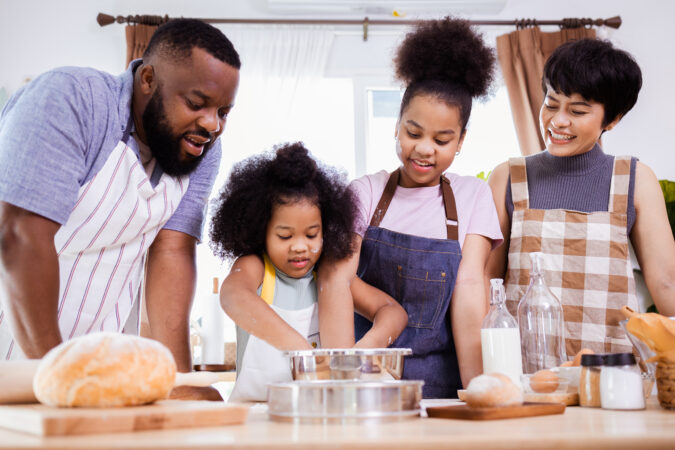
African American family of four cooking in mismatched aprons.

Aprons are useful parts of a uniform in hair salons, art studios, carpentry shops, flower shops, laboratories, and healthcare settings, as well as coffee shops, kitchens, and bakeries. And they aren’t just useful and protective, they can be decorative too.

I have several hostess aprons from the 1950s or 60s. They are half-aprons that tie at the waist. They sport ruffles and rickrack. They may be embroidered or have an applique. Some are holiday themed. Some are sheer. Most have pockets. Some patterns in vintage aprons were familiar because the aprons were crafted from reused cloth. Our grandmothers were the original upcyclers.

No matter your style, there will be an apron to suit you. They aren’t gender specific. They come in tons of fabrics and cuts. If you like pockets, your apron can have pockets. If you like more protection for your shirt, choose a vest style apron with a zipper or snaps. If you don’t want ties at the neck or waist, choose a cross-back style or a smock.

Aprons make great gifts. You can have them personalized with a name, find them branded for a category or a specific product, or choose one that sports your favorite quote or quip.

Beyond protection from the spills I make in the kitchen, new fabrics add protection from heat in open-flame commercial kitchens. And healthcare settings use aprons to protect patients and technicians from radiation.

If you think aprons may are cool, but may be out of style, do not worry. Last year, aprons were a 3.8 billion industry and are on pace to reach 6.2 billion worldwide by 2035.1

Some of you may have a collection of aprons you’ve received as gifts through the years. Put them on decorative hooks or an adapted coat rack where you won’t forget to reach for one. Put some outside where they’re easy to grab on your way to the grill. Cycle through them. If they get stained, cut them off and let the kids use them for crafting.
girl in red shirt and gingerbread man two layer apron with rickrak holding candy canes

Have family aprons made instead of family pjs for fun holiday photos. Then everyone can help prepare your holiday meal!

Recycle old family quilts into aprons for the family. They’re an easy project for teaching the youngsters to sew.

An inexpensive apron can save your more expensive clothes, hold utensils or tools, and make a fashion statement. Given the large numbers that are sold each year, they don’t need defense from me, but I’ll speak up for them any day.

1) https://markwideresearch.com/apron-market

Everything Old is New Again

Just like the song says…everything old is new again. I suppose every generation thinks it at some point and often with an eye roll attached. That’s not to say there’s no innovation or new discovery, but some new ideas are really just repackaged innovations of a previous era.

If there’s a popular buzzword floating about, the concept may fall into this category. Think of the terms EcoFriendly, Free Range Parenting, Unschooling, Optics, Sourcing, Clean Eating, and Plant-Based Diet. I saw Michael Phelps on TV this morning telling me to turn the water off while I’m brushing my teeth to conserve water. My first thought was, who doesn’t do that? I also turn off the lights when I leave a room (or never turn them on during the day), keep the thermostat set below 68 in the winter, take warm rather than hot showers, and only run the dishwasher when it’s full. Conservation is just how I was raised.
corn
One of the buzzwords in food right now is Upcycling. You may have heard the term in relation to old furniture and household goods that have been transformed and repurposed to make them relevant. In food, the term means cooking with food that would otherwise be discarded. That could mean “ugly” vegetables, fruit pulp, produce left in the field, food that ends up in dumpsters behind food distributors because use by dates are nearing, the woody tips of asparagus and mushrooms, broccoli or cauliflower stems, prepared coffee, the green tops of beets and carrots, etc.

While this concept has been popularized by chefs such as Massimo Bottura and Dan Barber, it’s not a new practice. In my family wasting edible food was a sacrilege. We would never have thought to draw attention to repurposing leftovers, using all parts of a vegetable, saving pot likker, or making preserves or pies out of bruised fruit. We never threw away the neck, liver, or gizzards from a chicken. Ugly tomatoes went in tomato juice.

Not only would we have felt bad about the money we were throwing away wasting food, we worked too hard on the farm and in the garden to throw away our sense of accomplishment. Even now I feel bad when I fail to water the mint soon enough and the plant dies. Mint is a luxury herb I can live without, but I still feel the loss as a personal failing.

If a new buzzword brings attention to food waste and helps people think differently, that’s a good thing. It’s just not a new thing. If food waste is an old thing that bothers you, I’d still recommend the movie “Just Eat It”. That recommendation is old too, I’m just upcycling the link for purposes of this post.

Soooo, I’m all for reducing, reusing, recycling, conserving, repurposing, and upcycling in an ecofriendly way. I’m not all that concerned how the choices I make look from the outside. Optics don’t tell the whole story; you can’t judge a book by its cover; you don’t know what goes on behind closed doors; they killed the electric car and now it’s back.

All I know is everything old is new again!

https://www.forbes.com/sites/eustaciahuen/2017/07/31/foodbuzz/#add7af919922

http://www.foodwastemovie.com/

https://www.marthastewart.com/1516365/what-is-upcycled-food-plus-our-favorites

http://www.cooking2thrive.com/blog/man-live-bread-aloneor-heres-learned-last-week/

Disclosure of Material Connection: I have not received any compensation for writing this post. I have no material connection to the brands, products, or services that I have mentioned. I am disclosing this in accordance with the Federal Trade Commission’s 16 CFR, Part 255: “Guides Concerning the Use of Endorsements and Testimonials in Advertising.”