Down Time

The more you push, the more you need down time. Also, the more you push, the more difficult it can become to justify slowing down. Momentum breeds momentum.

Girl blowing dandelion with trees in the background.

Even if you can physically manage overworking for an extended period, you may begin to notice it has become harder to stay emotionally engaged, creatively inspired, or highly motivated. Emotional exhaustion can cause you to slowly detach from tasks and friends. Or you may procrastinate in a way you have not previously.

Each step of a project may be preceded by dread or fatigue. You may feel like you’re in slow motion. Or you may make more mistakes than usual, even when you think you’re paying attention and trying your best.

You may be trying your best. There could be some underlying problem that needs to be addressed with a professional. But it could be you need time to rejuvenate.

We have vacations for this reason. But do we have enough vacation days to create balance? Are we able to relax or do we approach vacations like another to do list? I participate in many more discussions about working too much than about embracing stillness.

Perhaps if we explore the benefits of down time, we can begin to explore and embrace it.

Here are some valuable things to be gained:

Your body can relax. This helps heart rate, blood pressure, and cortisol levels which helps you relax. See what’s happening here?

Your mind can drift. Someone recently asked me how you start writing a book. My first answer was stare out the window a lot. I often come up with a book idea or a plot resolution when I’m in the shower. Why? Because I’m focused on something else (hopefully, sometimes I forget to shampoo my hair when I have a great idea) and my mind is wandering freely.

Your to-do list can pause. Of course it can pause at any time, but when you deliberately enjoy down time, the pause doesn’t come with guilt.

Your mood can shift. If it’s been a long time since you’ve truly relaxed, you may wander through some difficult emotions before you get to some that feel better. This is especially true when you’ve been through a season of caregiving or loss. A dramatic shift is not always bad because it can help get us past numbing. And it’s unlikely that you’ll have no response to such a big change.

Your sleep can improve. If your mind is constantly churning and keeping you awake, down time can help break this cycle.

You can gain perspective. When you’re in the middle of something, it’s hard to see it clearly. It’s hard to make good decisions because we can’t quite get enough distance to be objective. If we’re worn out on top of this, it can feel impossible to have the perspective we need to keep from sabotaging ourselves.

You can make room for fun and/or joy. Keeping ourselves overly busy leaves no room to feel carefree during pleasant activities.

You can be more present for friends and family. If our minds are always rushing on to the next problem, we’re not really able to be present. Down time can give us the luxury of engagement without being in a hurry.

That’s a lot of pluses. Research says down time may make us more productive and more creative when we reengage. Even so, it may not be easy. But down time is worth pursuing.

ad

Raspberry Bread

I’ve been choosing raspberry bread for breakfast. My system rebels against so many packaged products now that it’s hard to find gluten-free bread that doesn’t cause a major, itchy rash. Itching makes it hard to sleep. It makes it harder to work. A rash means I have to alter my wardrobe. I just need to bake something.

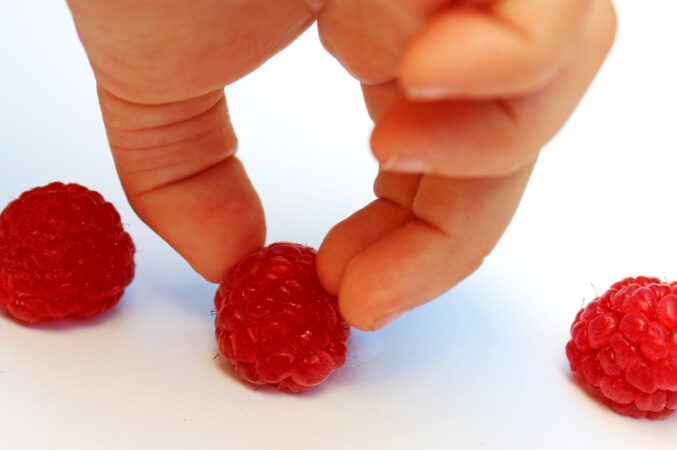
three raspberries on white with fingers picking up the middle one

Breakfast is hard. I used to eat unsweetened, homemade yogurt, raw almonds, and fresh berries. Now that fermented food is a problem for me, I’ve been looking for the best alternative. Muffins could be a good choice.

I didn’t want to mess with a muffin tin or measuring cups for that matter. I decided to dump some stuff in a bowl, throw it in a baking dish, and hope for the best.

Here’s what happened. I started with a large bowl and a small baking dish. After setting the oven to heat to 350°, I sprayed the baking dish with olive oil spray.

Then I started dumping things in the bowl – sweet potato flour, tapioca flour, almond flour, taro powder, baking powder, maple syrup, vanilla, ground cloves, salt, olive oil, eggs, and milk. I added a little hot water, stirred in some fresh raspberries. I baked it 30 minutes. It was quite tasty and satisfying.

I tried again with larger quantities of everything. I had used all of the sweet potato flour I had on hand. Sweet white sorghum flour or gluten-free oat flour could work instead. I could also use melted butter instead of oil, add some molasses, or honey. I dumped away and baked longer. The result has been my breakfast the past two days.

The bread has a dense crumb with a pleasant texture and flavor. I was thinking of calling it spoon bread, but the egg holds it together well enough to slice. I can even toast it.

The raspberries are such a treat to bite into. They’re bright and a little sweet, but also a little tangy. That contrasts with the cloves and taro in a nice way. I think this bread is a keeper.

Before it can become a Cooking2Thrive recipe, I’ll need to devise actual measurements, test the recipe, tweak it, and test again. There will be enough dirty dishes to more than make up for the dump and bake method I’ve used up to this point.

Measuring will bring more consistent results, but it’s good to remember cooking is an art as well as a science. Inevitable differences in heat, humidity, and ingredients will tell a trained eye that the batter may need an additional tablespoon of water. The observant nose will detect an insufficient amount of vanilla.

This bread started as me playing with ingredients in the hope of creating a breakfast food that wouldn’t make me itch. The trial was successful enough that I wanted more.

Your favorite dish may not be raspberry bread, but it may come from playing in the kitchen. Enjoy the process! Devour the rewards.

So Few Answers

If we don’t know how to filter information, a search can give us lots of it and so few answers at the same time. But how do you filter information effectively these days? It’s harder literally every day. Which, by the way, is why we’re talking about it so much.

African American man sitting on bench smiling while searching on phone.

Don’t rely on an AI summary. Yes, it may cite sources, but that doesn’t mean it has generated an accurate answer. The other day, I lifted some 2 cu ft bags of soil onto a wagon to move them. Later, I was curious how much weight I lifted. I searched for the weight of 2 cu ft of garden soil knowing that it varies depending on the amount of moisture in the soil, etc.

Citing two sources that looked legitimate on the face, AI told me the bags weigh 150 lbs each. Um, I may not be particularly weak, but I can’t heft 150 pounds onto a wagon.

A day or two after that, AI generated a list of recent activities for someone I know is dead, has been dead for years, and so far as I know, has not been resurrected. If you’re saying duh, I know not to believe AI, are you certain you know the difference?

Accept that you may not be able to spot fraudulent information simply by the manner in which it’s written, displayed, or broadcast. A friend assumed he was hearing content that was generated by AI because it pronounced something differently than a human. It was simply a machine voice reading content generated by a human. In other words, his understanding of indicators of generative AI weren’t indicative of that at all.

Writers constantly tell me they can always spot AI writing, but I recently read a text comparison in which the difference was not clear at all. That may be because AI learns exponentially. Last month, or last week you may have been able to tell the difference. This week, it may sound just like your mother.

Some AI generated content may be accurate. Some human generated content is fraudulent or reaches inaccurate conclusions. We have to develop a vetting process that’s more nuanced than assuming we can always spot AI and should always ignore it.

Go to real websites. If something is pushed to you through an ad or social media, go to the website yourself rather than using a link from an ad. It’s not bad to keep a list of the actual http:// address for sites you use regularly. The easiest way to do this is to bookmark them in your browser.

Check with human experts. I don’t mean experts like your sister or best friend (unless they are experts). Something some platforms have given us is access to the top researchers and thinkers in the world. What are they saying as opposed to what you’re seeing on TikTok or Reels?

For history, choose historians. For medical and health concerns, look at a combination of research, best practices, and science facts from degreed professionals – M.D., Ph.D., PharmD, DCN, MPH, PsyD and others. Explore who follows each one, what kind of reputation they have among their colleagues.

Avoid the influence of influencers. I’m not saying all influencers are wrong. They may not be. It’s fine to gather information from them and make lists of resources, books, or products. Just understand there may be a financial incentive for them to promote certain things.

Read real books. There’s a world of nonfiction with valuable information. Take your list of vetted professionals and read their books. You’ll get a lot more depth than online summaries.

Use your brain. Some things that are solid scientifically may not make sense to you, but it doesn’t hurt to approach claims with skepticism keeping in mind that political influence of any sort or research dollars from sources that will directly benefit create bias.

Often, we filter information to give us the fastest, easiest sounding solution. There’s nothing wrong with that per se. But it’s important to remember there are no shortcuts without side effects. A side effect might be that you have to give up something to afford the convenient solution. The side effect could mean you eat prepackaged food that isn’t as healthy as fresh.

When it’s time to review your current habits, remember you may find a ton of information but still get so few answers. Unfortunately, that’s the moment we live in, but we’re here to help!

Isn’t It Ironic

Isn’t it ironic that we no longer choose to speak to each other when we can type or send video, but we’re happy to chat with nonhumans about our most important concerns? And listen to what they say. And do it. Even when the nonhuman is making up things that may be dangerous.

I often lament the diminishing number of experts in every area of our lives. It means clear advice and sound information is more and more difficult to come by. I suppose that can make it tempting to rely on an intelligence that has the ability to glean from multitudinous sources.

In fact, in theory that sounds ideal. The problem is that intelligence in 1s and 0s begins with parameters set by humans. Increasingly, by humans with less and less expertise. The exponential learning ability of generative AI means it can outmaneuver mostly absent human gatekeepers. Left to its own, it will generate an answer.

That answer may tell you it’s safe to cook with gas and then give instructions for placing the gas in your sauté pan. If you have some expertise in the kitchen, or just general safety, you’ll know this is horse hockey. But if you’re an 8-year-old who’s trying to fix dinner for a sick mom, who knows?

Before engaging a chatbot to advise you on nutrition, workouts, medication, or mental health practices, keep in mind that your robot buddy has amalgamated thousands of conspiracy theories along with sound science. How it interweaves, gives context to, and regurgitates the information is not dependent on any underlying rules. We haven’t developed those.

And AI likes to have an answer. If it can’t find a ruling to support a lawyer’s lawsuit, it will make one up. I don’t know if hallucinating is the most accurate description of what actually happens.

The desire to turn to chatbots for health advice reminds me how lazy we are able to be – physically, emotionally, and intellectually. So many of us have lived with a level of privilege for so long that we simply can’t imagine not feeling overwhelmed when life requires some effort.

I’m not saying that some of us aren’t overworked. But many of us want convenience, convenience, convenience. Fine, but it’s not always healthy.

Tools are great, but they are tools, not miracles. If you are looking for a miracle, you’ll most likely be looking for another one when the promise of the current one doesn’t bring the solution you desire.

There are always new, brilliant discoveries to be shared. If you can access those from within human groups, you’ll get additional benefits from being part of a community.

Beyond irony, there are real dangers to be avoided when engaging with chatbots. Please proceed with clear intentions, caution, and an abundance of education if you decide to include AI tools in your health decision-making.