One of my kids recently asked why we’re called Cooking2Thrive rather than Eating2Thrive? Given how much all of us like to eat, it’s a valid question. Not only that, but say the word cook and lots of folks want to run for the hills ’cause it sounds time consuming and difficult so why would we want that in our name?
Since the question has been posed, I’m going to answer it with a series I’ll call The Benefits of Cooking.
So here goes – The Benefits of Cooking – Part 1
The Food
I like to focus on rewards, and one of the rewards of cooking is having great tasting food to eat. When I say cooking, I am referring to the act of preparing food using basic ingredients like meat, vegetables, fruits, nuts, rice, polenta, honey, herbs, spices, milk, cheese, and yogurt. If you grew up eating home-cooked meals, your mouth may start watering just thinking about Sunday dinner. It’s hard to argue that food made from fresh ingredients does not taste better than food that has been processed to stay consistent in appearance through weeks or months of transportation and shelf-life.
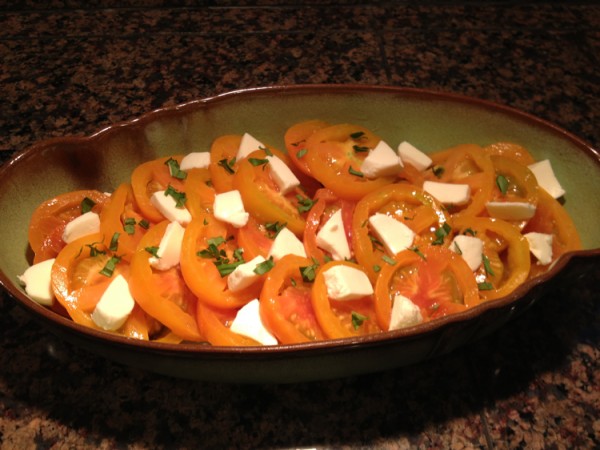
I grew up helping my grandmother in the garden. Every time I see a pale, hard, overly trucked tomato in the grocery store, I cringe as my memory plays the contrasting picture of a soft, dark red, full flavored tomato just plucked from the vine. You know, the kind that sends juice running down your chin when you take a bite! It’s the sort of memory that has many of us attempting to grow tomatoes on the porch when we don’t have a yard. I still miss my grandmother’s tomato juice canned in glass and sitting on a shelf in the basement. That tomato juice started with those vine-ripened tomatoes and ended up as a critical ingredient in my grandmother’s chili or sometimes disappeared as I gulped it thick and sweet from a glass when it was chilled.

The juiciness of a strawberry, the brightness of a sugar snap pea, the crispness of a golden delicious apple with tender skin – all are better when ripened before picking and prepared fresh. As a child, some of my favorite dishes were corn-on-the-cob, fried okra, baked sweet potatoes, green rice, and beef & noodles. Oh, and don’t forget the lemon meringue pie. I requested it for every birthday. My sister preferred cherry pie made with bing cherries from a tree in the yard. One year my mother discovered a fresh peach pie recipe. We bought local peaches in season, peeled them, sliced them, and placed them in a sweetened gelatin atop her flaky piecrust. Topped with whipped cream, this cold pie showcased the uncooked peaches perfectly.
These days I’m quite fond of boneless skinless chicken thighs seasoned with jerk spices, seared in coconut oil, and baked in a cast iron skillet with a little chicken broth, curried pork chops and polenta, mashed butternut squash, roasted cauliflower with a hint of crushed red pepper, steamed sugar snap peas, and my own version of my grandmother’s chili. Since cooking is the easiest way to consume my favorites often, I’m happy to spend some time in the kitchen.
Not only does freshly prepared food taste better, it makes it easier to avoid flavor enhancing chemicals, high sodium content, preservatives, and excess sugars. Even if you’re a great label reader, when you purchase processed food products, you may be consuming chemicals that are not required to be listed or specified on the label. Obviously, most of these won’t kill you on the spot or people would be dropping like flies, so there’s no need to be alarmist and say never ever buy prepared convenience foods from the store or eat what a friend is serving at a party, but it is naive to believe that these chemicals do not alter your body chemistry or affect your brain’s response to food.
And it may not take a large amount of an additive to change how you feel. A study cited in the April 2010 “Medicine & Science in Sports & Exercise” reported that runners who rinsed their mouths with a carbohydrate solution right before and every 15 minutes during an hour-long treadmill session ran faster and further than those who rinsed with a placebo. The brain senses incoming energy “which may lower the perceived effort,” says Ian Rollo, PH.D. one of the study’s authors.1 Since it appears that a little dab will do it, here in a nation with increasing amounts of chronic disease, more studies of the potential negative effects of chemicals in our diet on long-term health are direly needed. In the meantime, it is up to you to decide how much risk you’re willing to take.
Cooking from fresh ingredients is also the easiest way to avoid allergens, gluten, and lactose or limit sodium, sugar, and starchy carbs. Of course, just because you cook the food doesn’t mean these items will magically be absent, but it does mean you have control over what’s included and it can eliminate the effort of reading and rereading labels.
If the word cooking scares you, remember that many fresh ingredients require little or no enhancement. Zucchini, yellow squash, tomatoes, carrots, mushrooms, lettuce, arugula, spinach, broccoli, cauliflower, onion, bell peppers, avocados, radishes, and snow peas for instance can be eaten with just a tiny sprinkle of salt or nothing at all. Fruit may only require peeling.
Even if you purchase water-packed tuna or smoked brisket from a BBQ restaurant and only “cook” a salad to go with it, you can add a tremendous amount of fresh flavor and nutrients to your diet. If that leads you to explore new combinations of flavors and preparations, then you’ll have captured the essence of being a cook. A little curiosity, a bit of practice, and a willingness to sometimes throw the whole thing in the trash are where most great cooks start.
And we all have near disasters or major failures along the way. Most of us burn ourselves, catch a dishtowel on fire, cover the floor in flour, burn cookies, leave out the baking powder, or put too much salt in something from time to time. Often it is from those failures that we learn the most.
I’m going to let this conclude Part 1. As you can see, the benefits of cooking include: Great tasting food and easy elimination of chemicals, allergens, inflammatory foods and lots of label reading. But wait, there’s more! Next up: The Benefits of Cooking – Part 2: The Fun. If you think I’ve forgotten about baking, think again. This is a series, remember, we’ll get to that in a bit.
You’ll find the rest of the series right here at Cooking2Thrive. Look forward to having you back!
Sincerely,
Cheri
1 Rollo, Ian, Matthew Cole, Richard Miller, and Clyde Williams. “Influence of Mouth Rinsing a Carbohydrate Solution on 1-h Running Performance.” Medicine & Science in Sports & Exercise: April 2010 – Volume 42 – Issue 4 – Pp 798-804. American College of Sports Medicine, Apr. 2010. Web. 26 Apr. 2012..