The Flip Side

When you’re stuck it can be helpful to remember there’s always a flip side. I remember reading an article when Tom Green’s comedy was in its heyday. It described his method for creating comedy as turning things upside down or inside out to find the most bizarre opposite. Doing something similar can help move you out of negative head space.

Like vinyl records, we all have emotional grooves that entrench our thoughts and keep us going round and round in the same place. Often, these grooves were created by a significant event that was dangerous, scary, or had high emotional stakes. It’s easy for us to slip back into one of these grooves when we experience emotions similar to those original events.

Vinyl also tended to have spots the needle would skip. Both problems keep the album from moving smoothly through a tune and then shifting seamlessly to another.

If you’re old enough to remember vinyl, you may also remember that placing a penny on the record player needle arm was sometimes sufficient to keep a record from skipping. And you could manually move the arm to unstick the needle. As annoying as the problems were, there were solutions. The same is true of the emotional and mental grooves we tend toward.

One technique for making it easier to move forward is to remember, and make use of, the flip side. I’m not saying look for a silver lining. There are those, but that line of thinking doesn’t usually acknowledge that there’s a cost to only seeking the positive. Instead, we need tools that allow for the downside while also offering peaceful, productive ways to move on to the next tune.

ice cream cone upside down in bowl

So how can we use the flip side?

First, identify the feeling or obstacle that’s keeping you stuck. Don’t worry about being petty or silly. How you feel is how you feel. Name it.

Once you’re identified what’s holding you back, ask what would be the exact opposite of that? For example, let’s say you’re jealous that your husband can eat pastries of any kind, anywhere, at any time. And, let’s say he eats them in front of you all the time with no apology.

What’s the opposite of jealousy? In this particular instance, you’re jealous that he can eat pastry in abundance when you can only have it under very controlled, specific, limited circumstances. Rather than focus on his abundance, focus on increasing your sparse consumption.

How can you consume pastry all the time? Do you really want to? What if you experiment with it to see how it makes you feel?

So, flip jealousy to curiosity and experimentation and flip scarcity to abundance. Bake or buy a freezer load of pastries your dietary plan allows. For several days, eat a pastry every time your husband does. Then examine how you feel.

  • Are you still jealous of him?
  • Do you want to continue eating pastries along with him?
  • Did you discover there’s something you like better than pastry that you want to keep in the freezer or pantry?
  • Does eating pastry make you feel better or worse?

The answer is your guide for breaking out of your rut. You may discover that you don’t like that much sugar and carbs because they make you feel sluggish. Or you may discover that what you saw as abundance feels more like gluttony when you’re the consumer. And if you discover that you’re happy matching him, then you’ve learned it’s important to develop a way to continue doing that.

Maybe you don’t feel jealous. Maybe you just feel like your required diet isn’t satisfying. How would you flip that feeling?

This one can be tough because the enjoyment of food is affected by taste, texture, expectation, and effort. But try letting yourself get extra hungry. Then eat the least satisfying food you’ve been eating on a regular basis. Does being hungry change the experience?

Another way to flip that scenario is to gather three foods you considered the most satisfying before you understood your dietary restrictions. If these are foods that will NOT cause an allergic reaction or adverse immune response, eat them – but only two bites of each. Is it possible that just a bite here or there would diminish your feeling of being deprived?

Or you may learn that these foods make you feel bad and you hadn’t noticed before. You may learn that these foods aren’t as satisfying as they once were. You’ll discover whatever you discover. Being open to all the possibilities and observing as objectively as possible are the keys to accessing the most helpful information.

  • If you’re dairy free but have avoided nut-based ice cream because you don’t like nuts (as long as you aren’t allergic), flip the script and try it.
  • If you can’t eat spinach but have never tried bok choy or dandelion greens, flip the script and opt for a new exotic green.
  • If you hate hot soup, try cold.
  • If you hate fruity yogurt, try it plain.
  • If you hate plain yogurt, add honey or fresh fruit.
  • If you hate hamburgers, try steak.
  • If you hate fried chicken, try grilled, smoked, or rotisserie.

Our work and home schedules take us through the same territory over and over again. We often get locked into routines and forget to think beyond our current habits. We begin to think, I can’t have fried chicken rather than I can’t have fried chicken battered in wheat flour.

Another way to look at the flip side is to make lists of all the foods you CAN have. You may be surprised how long the list is. It’s easier to shift our mindset when we change our point of view.

Don’t be afraid to experiment until you find a technique that allows you to easily explore the flip side. It can make all the difference.

ad

Dessert

How do you think of dessert? Some households treat dessert as a rare treat. Others enjoy a small bite after every meal. And some savor a before-bed nibble larger or smaller than a mint on your pillow.

I remember a former client remarking that an aunt and uncle who were staying with her demanded a LARGE bowl of ice cream every night before bed. This idea was so foreign to her, she felt the behavior was extreme. Both the regularity and amount seemed problematic. But for her relatives, clearly this was normal.

My grandmother had a cookie jar that always contained homemade cookies. You might think this means she baked frequently. She didn’t. She rarely ate a cookie and my grandfather ate none. Dessert in their household was relegated to holidays and having fresh cookies to offer guests. I was not considered a guest.

My grandfather and several of his siblings couldn’t tolerate sugar. They discovered on their own that it made them sick and altered their diets accordingly. No reminder or guideline was needed. They didn’t like to feel bad.

When I was in junior high, the school had vending machines filled with glazed honey buns and a variety of donettes®. If you had cash, you could have dessert between classes or during your lunch break. There was also a donut shop across the street that some students frequented from our mostly but with lots of exceptions closed campus. Dessert was always available.

In spite of the presence of sugary breakfast food at school, I don’t feel like we consumed as much sugar in general as my grandchildren do. We had granola bars, but they weren’t an everyday snack. My mother didn’t carry fruit bars.

Earlier, my kindergarten required fresh fruit as a snack. That was it. No packaged anything. Fresh fruit was the only acceptable contribution. Anything with added sugar besides the breakfast pop-tart, cereal, or donut was considered dessert.

For me, dessert is a treat. How often I allow myself that treat varies. If I bake and it’s readily available, I consume more often. But I can have something in the freezer and never think about it.

Does it matter how you think of dessert?

If you consume lots of packaged, processed food from the grocery store or restaurants, it is easy to eat much more sugar in a day than you realize. In that sense, adding dessert regularly may be providing carbs and calories that you would otherwise avoid. Thinking of dessert as add-on sugar could be helpful to keep sugar consumption in check.

Viewing dessert as a treat can also be an incentive for healthier eating. Dessert can become a reward for following your plan over a period of time. There’s nothing wrong with dangling a motivating carrot in front of yourself.

A shift in what you categorize as dessert can also make a difference in the overall composition of sugar in your diet. My sister keeps her blood sugar even by drinking sodas throughout the day. (We are both prone to sugar lows that make us grouchy.) She doesn’t think of that sugar as dessert. That means that when she chooses to eat dessert, her cumulative sugar consumption can be greater than she realizes.

Similarly, my friend who drinks white wine every evening views it as an apéritif, not a dessert. There’s nothing wrong with that per se, but she also doesn’t recognize the amount of sugar she’s adding to each day. This may not be a concern for her, but it could be for some of us.

Since added sugar brings calories without nutritional benefit and has addictive properties, most of us could benefit from an expanded definition of what we consider a sugary treat.

Will this change how you think of dessert?

It may or may not, but hopefully you’ll take away something that will make it easier for you to consume only the amount of sugar that will lead to you feeling your best.

Five Easy Ways to Freshen Up Your Summer Menu!

teaHere are five ways to freshen up your summer menu! When it’s hot and humid, the last thing you want is to eat is a heavy meal. Fresh, cool, and light seems much more appealing. My preference is to live on gelato in the summer, but that’s not really practical. Of course, I’d be happy to add ice cream, fresh peach granita, or banana popsicles to the menu – again, not exactly practical.

So what are some easy ways to freshen up your summer menu?

Salads
Many of us default to salads as our lighter fare for the summer. Salads are a great place to showcase seasonal fruit and fresh herbs. Strawberries, blueberries, and peaches are all great additions to spring or bitter greens. It’s also a great time to use tomatoes as a base for Insalata Caprese! Mint and watermelon pair well with salty feta cheese while a salad of cucumber and dill will lighten up the meat off your grill.
caprese salad
Cold Soups
Cold soups can fill you up while cooling you off. I love gazpacho in the summer! The traditional version has a tomato base, but you can also begin with watermelon, cantaloupe, cherries, or strawberries. If you’d rather have a milder flavor, vichyssoise made of potatoes, leeks, cream, and broth may fill the bill. One of my favorite cold soups combines honeydew, cucumber, and jalapeño peppers.
honeydew soup
Chilled Condiments
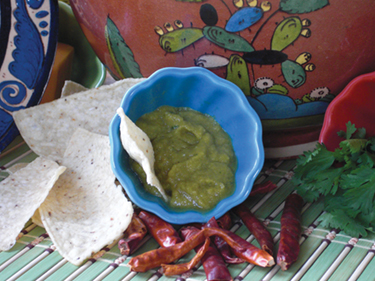
In the winter, it’s comforting to add complimentary flavors to your dish by serving a warm, thick sauce or gravy. In the summer, pico de gallo, salsa, chimichurri, tzatziki, raita, or another cold condiment will add layers of flavor without the heaviness of gravy. I recently made chimichurri with baby arugula instead of parsley. It was delicious with grilled steak!
asparagus guac
Iced Drinks
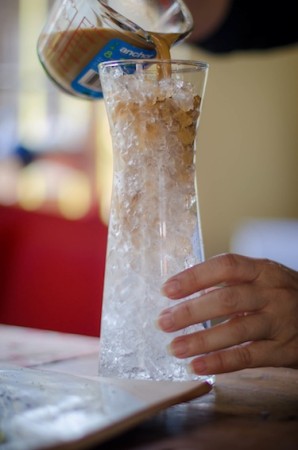
Icing down anything when the thermometer hits 100º just seems reasonable – coffee, water, lemon water, juice, gin, and vodka are commonly served with ice. In the South, we also drink a lot of iced tea! Adding muddled mint or cilantro and leaving out the sugar makes the tea even more refreshing.

Cold Desserts
Summer is the perfect time to serve chilled banana, tapioca, or rice pudding. It’s also a great time for no-bake fresh fruit pies. My mom made a fresh peach pie that makes my mouth water every time I think about it. And really, there’s no need to cook – a bowl of fresh fruit topped with a tiny bit of plain yogurt sprinkled with cinnamon and nutmeg can easily satisfy your sweet tooth in the healthiest way possible.

Freshening up your summer menu with chilled food and fresh produce is practical, easy, and delicious! Give these 5 ways a try.

Summer is For Ice Cream

There’s no doubt about it, summer is for ice cream! It’s barely summer and we’ve already had heat warnings because it feels 108º outside. To me this means it is important to stay cool. That means lots of icy beverages and a steady diet of cold food.
pour over ice
I love ice cold honeydew, watermelon, steamed asparagus, and gazpacho, but there are days when I think I could eat nothing but ice cream all summer. Of course ice cream comes in many forms with vastly different quality, taste, and calorie counts. My favorite flavors always seem to have the most fat and calories so I’ve been looking for ways to enjoy the cold, but cut the fat and calories.

For instance, I like Häagen-Dazs® Chocolate Chocolate Chip Ice Cream. One half cup serving has 300 calories, 19g of fat and 22g of sugar. I also like Talenti® Sea Salt Caramel Gelato. It’s a better calorie choice with 11g of fat and 240 calories per half cup serving, but it contains even more sugar – a whopping 36 grams.

This is a common problem in American convenience foods. Fat is often replaced with additional sugar. While weight loss diets may measure the desirability of a food based on calories, fewer calories doesn’t necessarily mean healthier. The lower fat gelato also contains gum and natural flavors which I prefer to avoid.

Does this mean there are no good choices other than making my own sorbet or freezing a banana? I hate frozen bananas and I don’t want to make sorbet. I just want to grab something cold that’s waiting for me in the freezer when I happen to be hot and hungry.

I’m in luck! I have frozen yogurt bars in my freezer. They’re not perfect. They contain gum and natural flavors, but they’re only 90 calories with 2 grams of fat, 11 grams of sugar and active probiotic cultures.

There are many brands of frozen yogurt bars. My current favorite is Blueberry Outshine® Simply Yogurt Bars. Yasso® offers a similar blueberry bar with no fat content, 80 calories and 13 grams of sugar. There are additional gluten-free flavors available in the Outshine and Yasso brands, and a variety made by Stonyfield, Yoplait® and Häagen-Dazs®.
yogurt bar
And I’m sure there are more depending on where you buy your groceries. You can choose your best match by reading the ingredient and nutrition profile then sampling the product. Hmmm, sounds a lot like dating these days, but I digress.

I suppose there are other options, but since the obsolescence of Banana Fudgecicles, I really prefer ice cream as my summer staple. On the other hand, I hate feeling guilty about consuming all those calories. I’m thrilled that Greek yogurt bars limit my portion size, provide probiotics, reduce calories, fat, and sugar, and still have the soft satisfying feel of ice cream. It’s my 2016 summer bonus!


Disclosure of Material Connection: I have not received any compensation for writing this post. I have no material connection to the brands, products, or services that I have mentioned. I am disclosing this in accordance with the Federal Trade Commission’s 16 CFR, Part 255: “Guides Concerning the Use of Endorsements and Testimonials in Advertising.”

http://www.outshinesnacks.com/products/bars/

http://www.yasso.com/

http://www.stonyfield.com/products/frozen-yogurt

https://www.generalmills.com/Brands/yogurt/Yoplait/brand-product-list

https://www.haagendazs.us/Products/frozen-yogurt/