Luckily, I can see clearly now – even when I play 2048 obsessively on my phone. In the years just prior to adopting a gluten-free diet, I suffered from many symptoms. One of those was dry eyes. When I woke up each morning, it felt like I had gravel in my eyes. I could no longer command my eyes to water at will. I sometimes asked a colleague in my office to tell me a sad story so I could cry and make my eyes feel better.
I tried every over-the-counter eye drop I could find. Some didn’t work at all. I was allergic to others. My opthalmologist explained to me that my eyelids were sticking to my eyes and causing little abrasions. That sounded bad and felt awful. She insisted I use RESTASIS®. I complied.
As I struggled to get a diagnosis for my constant aching, itchy rashes, tummy pain, diarrhea, and weakness, I began to include dry eye in my research. I discovered Sjogren’s Syndrome. This autoimmune disease affects an estimated 1 in 10 dry eye patients.
It often occurs alone, but can also occur along with other autoimmune diseases like celiac, lupus, rheumatoid arthritis, or scleroderma. As I began my gluten-free experiment, I was curious whether healing my gut would have a positive effect on my dry eye. My opthalmologist and I designed a plan to wean me off RESTASIS® so I could find out.
Like the itchy rashes caused by my dermatitis herpetiformis, the improvement in my eyes on a gluten-free diet has followed a much slower and sporadic path than the quick reduction in muscle pain & weakness, stomach pain, and other intestinal symptoms I experienced. My increased use of electronic devices hasn’t helped. While my eyes are still on the dry side, they are much improved as evidenced both by the way they feel and by my optometrist’s observation during yearly exams.
What I’ve discovered along the way is that overall hydration is important. When I drink too much tea or not enough water, I notice a difference. Wearing mascara of any sort results in drier eyes. And I’ve learned that I can supplement the eyes’ self-cleaning action by using eye wash once or twice a day. By making choices to support eye hydration, I had reached a level of adequate hydration with only occasional annoyance, but I can see more clearly now.
Recently, I found an eye cleansing yoga routine and decided to give it a try. It’s a simple set of eye movement exercises plus a period of time breathing while staring at a candle flame or small object about 24 inches in front of the eyes. As I stare and try not to blink, my eyes begin to water in the same manner I was previously able to command them to water at will.
After a few of days of this practice, I decided to try the staring technique while working. I stopped what I was doing, stared at an icon on my computer screen, and boom-bada-boom, it worked. My eyes began to water. I’m thrilled to have another simple solution at my disposal. I can see clearly now, can you?
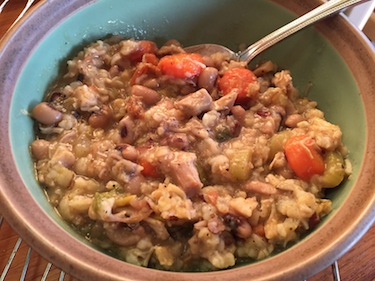
This week when I made chicken soup for my 95-year-old cousin (isn’t she cute!), I cut the chicken up into bite size pieces. It was really more like chicken stew – thick and full of carrots, celery, potatoes, black eyed peas, and rice. Until I cut up the boneless, skinless chicken thighs I included, it was impossible to take a bite that contained vegetables, broth, AND chicken. In fact, the full size chicken thighs were an obstacle that made it difficult to even get s spoon down to the vegetables and broth. Breaking that obstacle up into small pieces resulted in a uniform consistency and full flavor in each and every bite!
When I started the soup, I didn’t spend much time thinking about what it would look like when I was done. I just knew I didn’t want to have to clean another cutting board right then, so I didn’t bother to cut up the chicken before it was cooked. Once I was ready to eat the first bowl, I felt frustrated by the large pieces of meat I had to deal with. Obviously, that was low level frustration. It was only soup and I knew exactly how to fix the problem in a matter of minutes.
But let’s say it hadn’t been soup. What if I were feeling frustrated by the idea that committing to a gluten-free diet means I’ll never have my favorite rolls again AND I’ll have to read labels or ask questions before ordering food. I won’t be able to drink my favorite beer. I may have to eat before parties or carry food with me. I’ll have to figure out a system for keeping my food separate from the rest of the family’s. I’ll have to explain to my grandmother why I can’t eat her scrumptious strudel. It will be harder to eat fast food for dinner or doughnuts at the office. It just seems like way too much trouble.
Most of the gluten-free community has walked down that road at one time or another. I managed to get my mind around the obstacles, make the commitment, and stick to the diet only to find myself a couple of years later on a business trip, really hungry and standing in the cracker aisle of a grocery store…pouting. Seriously, I was pouting like a small child. I eventually grabbed a banana and some nuts and was fine, but I had that moment of, “Do I really have to do this?” Of course, by the time I was pouting, I also knew how much better I feel when I’m gluten-free so I wasn’t really tempted to cheat.
If you suffer from any of the following symptoms, you could have gluten-intolerance or celiac disease and, after testing, your doctor may recommend a gluten-free diet. If the idea of making such a significant change feels overwhelming to you, perhaps you can take the chicken soup approach – figure out your biggest obstacle and break it down into easily digestible pieces then proceed with a plan. As you have success, it will build upon itself and the process will become easier and the routine more uniform.
Symptoms: General
Vague abdominal pain
Diarrhea
Weight loss
Malabsorption (Abnormality in digestion or absorption of food nutrients in the GI tract.)
Steatorrhea (Formation of non-solid feces.)
Behavioral changes
Fatigue or malaise
Growth delay
Hematological
Anemia
Hematologic diathesis
Skin/Mucous Membrane
Dermatitis Herpetiformis (Skin manifestation of celiac disease.)
Alopecia (Baldness – both universalis (from the entire skin) and areata (diffuse hair loss))
Aphthous ulcers (canker sores)
Abdominal or generalized swelling
Epistaxis (nose bleeds)
Easy bruisability
Cheilosis (Scaling at the corners of the mouth.)
Keratoconjunctivitis sicca (Chronic dry eye.)
Stomatitis (Inflammation of the mucous tissue of the mouth.)
Scaly dermatitis (Inflammation of the skin.)
Musculoskeletal
Non-specific bone pain
Joint pain(8)
Osteopenia (Low bone mineral density. Possible precursor to osteoperosis.)
Tetany (A combination of signs and symptoms due to unusually low calcium levels.)
Hyperreflexia (Overactive neurological reflexes.)
Carpopedal spasm (Spasms of the hands and feet.)
Cramps
Laryngospasm (Spasm of the larynx, the voice box.)
Neurological
Ataxia (coordination problems)
Epilepsy
Myelopathy (Damage to white matter that carries motor signals to and from the brain.)
Peripheral neuropathy (Numbness and pain in hands and feet described as tingling or burning.)
Seizures
Gastrointestinal
Abdominal pain
Anorexia (poor appetite)
Bloating
Constipation
Cramps
Diarrhea
Dyspepsia (Recurrent discomfort or pain in the upper abdomen.)
Flatulence, distention
Foul-smelling or grayish stools that may be fatty or oily
Hepatic disease (liver disease)
Hypoglycemia (low blood sugar)
Steatorrhea (Formation of non-solid feces.)
Stomach upset
Malabsorption-Related
Bowel is less able to absorb nutrients, minerals, and the fat-soluble vitamins A,D,E, and K.
Abnormal coagulation
Anemia (Lack of healthy red blood cells.)
Bacterial overgrowth of the small intestine
Failure to thrive (Poor weight gain and physical growth failure over an extended period of time in infancy.)
Fatigue
Growth Failure
Hyposplenism (small and under active spleen)
Hyperparathyroidism (Excessive production of parathyroid hormone because of low calcium levels.)
Bone deformities
Broken bones
Swollen joins
Iron deficiency anemia
Malnutrition
Megaloblastic anemia
Muscle Wasting
Osteopenia
Osteoporosis
Pubertal delay
Vitamin K deficiency
Weight loss
Miscellaneous
Depression
IgA deficiency (Means you’re 10 times more likely to develop celiac disease, AND gives a false negative on screening.)
Increased risk of infections
Irritability
Autoimmune disorders:
Sjogren’s syndrome
Thyroid disease
Diabetes mellitus type 1
Autoimmune thyroiditis
Primary biliary cirrhosis
Microscopic colitis
Infertility
Miscarriage
When you consider the time and energy you lose to pain, fatigue, doctor’s visits, and managing symptoms, it will soon become clear that removing those obstacles will result in plenty of time and energy to pursue lifestyle changes. And unlike using pharmaceuticals, removing gluten from your diet has no deleterious side effects or long-term health dangers. You can eat a healthy, balanced diet without the artificially fortified grain-based products that predominate our grocery stores and television ads.
If you feel you just can’t give up fast food, don’t. That doesn’t mean you’ll be able to eat all of your favorites, but a quick review of the nutrition facts on convenient fast food restaurants’ websites will give you options that you can rely on when you’re pressed for time or want to join your kids in an occasional outing.
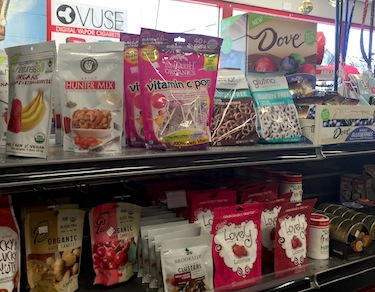
If you travel to rural areas for business, throw a Kind bar in your bag so you feel confident that you won’t get too hungry while searching for a local steak and potato restaurant. I sometimes carry a cooler bag with a couple of peeled & salted boiled eggs and some baby carrots along with a banana. That’s enough for a meal if I run out of restaurant options. And never assume that you won’t be able to find anything in a convenience store. I recently saw Glutino pretzels and gluten-free fruit snacks at the gas station in a small town.
While I failed to do this when making soup this week, the process is always easier when you visualize what things will look like in the end, so imagine what it will look like when you no longer feel sick, tired, and grumpy. Holding that vision in your head helps you break overwhelming ideas down into tiny, bite size momentary decisions that aren’t hard to make. And really, that’s all it takes.
I remain gluten-free with lots of very simple decisions every day: ordering grilled chicken rather than fried, no croutons on my salad, no gravy on my potatoes, befriending a waiter who will help me communicate with the kitchen, reading the labels on packaged food, hosting meetings at my house, and saying no when I need to say no. And I don’t think I’ve felt like pouting in the past 9 years!
It’s natural to feel some fear and temporary depression when making significant change. The good news is that these feelings soon dissipate just like the sore muscles you get when you start lifting weights and no matter how you feel right now, improvement will result from the small, gradual, and consistent positive steps you make over time. Perhaps we should call it a Gluten-Free Practice.
The term gluten-free has appeared in the news so often over the past year that it’s easy to assume everyone knows exactly what it means. Of course, that’s a silly assumption. I remember that I read the term bitcoin in the news 3 times last week, but I don’t know anything about the newfangled currency. So rather than make assumptions, let’s do a quick review of the gluten-free basics.
Gluten-free simply means contains no gluten. If you choose to eat only foods that contain no gluten, then you are living a gluten-free lifestyle. As of August 2014, foods labeled gluten-free* will not contain more than 20ppm gluten. That means they will be free of any derivatives of wheat, rye, barley, malt, or triticale. Sounds simple enough, right?
So what is gluten anyway? Gluten is a protein that’s sticky. It gives dough the elasticity that lets it hold together while it rises and takes on a chewy texture. This protein also causes an autoimmune response in those who are sensitive or intolerant ultimately leading to a host of serious health problems. Luckily, these health problems can quickly diminish when you embrace a gluten-free lifestyle.
If you have been diagnosed with Celiac Disease, gluten sensitivity, or gluten intolerance, you will only reach optimum health if you eliminate ALL gluten from your lifestyle FOREVER. Once you begin a diet devoid of gluten, you may feel better immediately or it may take up to a year before you can tell a real difference. During that first year, you may feel better for a while and then slightly worse, and then better again. This is often a normal part of the healing process.
When preparing to change to a gluten-free lifestyle, it can be helpful to focus on the foods you CAN eat. When prepared at home, you can eat all meat, poultry, fish, seafood, dairy, fruit, vegetables, legumes, nuts, seeds, herbs, and spices. This includes potatoes and corn. You can also eat some grains including rice, sorghum, quinoa, buckwheat, and oats that have been certified to be free from cross-contamination.
If you lived in your grandmother’s day, the switch to this lifestyle would be so minor you would hardly notice. Yes, you’d have to thicken gravy with cornstarch, leave the flour out of the cornbread, and lay off the rolls, but most of your diet would be the same as the rest of the family.
The reason gluten-free sounds like such a big change now is our increase in dependence on cheap, prepackaged, convenience and fast foods. Packaged foods are designed to be resilient to being transported long distances. They are also formulated to maintain consistent texture, appearance, and taste after sitting on store shelves for months or years. Sticky, gluey substances like gluten and gums help achieve consistent texture.
Eliminating the majority of prepackaged food from your diet will give you a head start in improving your health, but you can now find plenty of gluten-free substitutes on the shelves of local grocery stores when you need to grab something in a hurry. You don’t even have to choose items that are labeled gluten-free. Once you learn how to read labels, you’ll discover many more choices in the regular store aisles.
Want to get started today? It’s as easy as leaving behind wheat, rye, barley, malt, and triticale. Don’t eat traditional bread, rolls, biscuits, pasta, pizza crust, cake, piecrust, breaded meat or vegetables. Avoid sauces, soups, and salad dressings thickened with flour or food starch other than corn. Eliminate malted vinegars (unmalted are fine), malted milk balls, and malts. Switch to gluten-free beer. Distilled grain alcohol is usually gluten-free. Ask for a gluten-free menu at your favorite chain restaurant. You’ll be surprised how many have one readily available. Use the internet to find fast-food nutrition information.
You don’t have to learn any more than you want to learn, cook any more than you want to cook, or stop enjoying favorite family recipes. Anyone who tells you this will be a difficult change for you to make doesn’t realize how incredible you are. Shame on them for selling you short. I believe you can do what it takes to feel your best! It’s easy to get started today.
Now that you’re ready to go gluten-free, what can you expect?
Physical Effects
Some people feel a remarkable difference in a few weeks, but it takes a year to a year-and-a-half to heal much of the damage gluten has caused, so don’t expect a miracle cure.
If you suffer from dermatitis herpetiformis, you may continue to have outbreaks for years after eliminating gluten. As time wears on, the outbreaks will itch less and will not last as long. Iodine can trigger these outbreaks so be aware of your iodine intake from food or supplements.
As your body heals, you may feel better for a few weeks and then feel worse again. This can be because you have not eliminated all sources of gluten and need to review lists of foods to avoid. If you have reviewed and don’t think gluten is the culprit, take note of what you’ve eaten. You may discover that there are other foods you cannot tolerate well. Once you’ve identified those, you will feel better if you eliminate them too. A pattern of feeling better then worse can also be a normal part of the healing process. Have patience and stick to the plan. Keep a journal so you can review your improvement over a year’s time. If you are gradually feeling better and better, then don’t worry about momentary setbacks.
By the time you begin a gluten-free diet, your intestinal tract may have suffered so much damage that it needs to digest only monosaccharide carbohydrates in order to heal. If you continue to suffer from diarrhea and/or constipation after several months on a gluten-free diet, a change to the Paleo or Specific Carbohydrate diet will give your body a break and facilitate quicker improvement. You can follow one of these more restrictive plans for a few months, a year, or more. These diets eliminate all starchy foods that are difficult to digest and give your body the best chance of killing off any possible overgrowth of bacteria or yeast that may be complicating the healing of your gut.
When you begin the Paleo or Specific Carbohydrate diet, you may run a fever, have a headache, and feel bad for a week or so. This is normal for those who have excess yeast or bacteria. These organisms want to stay alive and you are starving them out. Essentially there’s a war going on in your gut. Fever tells you that your body is fighting to kill off the invaders. This is good. If the fever persists more than two weeks, visit your physician to make sure there’s nothing else going on.
You may notice that you no longer feel “tight” in your own skin as inflammation begins to disappear. Your achy muscles may stop aching. Your sleep pattern may improve. Your food cravings may lessen. Your stomach pain may lessen. Your bowel function may return to a normal pattern. Your strength may return. Your emotional state may improve. Your hair may stop falling out. It may become easier to gain or lose weight. You may have more energy.
Food Choices
You will still be able to eat delicious, healthy and traditional foods. Sometimes a substitution or two in a recipe is required, but that does not mean you should settle for substandard, tasteless, or unpleasing food. This is true even if you consider yourself a foodie!
Mac & CheeseCheesecake
In the beginning, old habits may cause you to feel a need for “replacements” for foods such as cereal, bread, crackers, cookies, and pasta. In order to keep things simple, you may choose to buy prepackaged convenience foods. These are readily available in the supermarket or online. It is good to be aware that gluten-free prepackaged convenience foods are still processed foods and may not be optimum for achieving your best health. As you get more comfortable with the gluten-free lifestyle, you can gradually phase prepackaged foods to a minimum. Your body will adjust and the desire for these items will diminish accordingly.
Prepackaged gluten-free foods are more costly than their gluten-containing counterparts. As you begin to feel better and have more energy, you may feel like baking more for yourself. This will allow you to have more control over both the ingredients and the costs.
Some gluten-free flours are more costly than wheat based flours. Shopping in ethnic grocery stores or online can help minimize these costs.
Gluten-free foods tend to be more dense and often contain more carbohydrates in one serving than wheat based products. If you need to minimize your carbohydrate intake, it is important to be aware of this difference.
Remember that meat, poultry, fish, seafood, fruits, vegetables, nuts, seeds, legumes, herbs, spices, and milk are gluten-free as are most yogurts and cheeses unless gluten has been added in processing. There are infinite numbers of delicious, satisfying combinations that can be made using these items. In addition, many of you will be able to tolerate other foods made from corn, rice, tapioca, arrowroot, or mesquite.
Social Adjustments
Some changes in routine may be required in order to maintain a diet that is free of gluten. Reading labels on packaged foods is a necessity. In the US, there is no standard for the amount of gluten allowed in a product that is labeled gluten-free. Rather than rely on that designation, it is imperative to read the ingredient list on any packaged items you purchase. You will find that this allows you to consume many products that are not specifically labeled gluten-free. Because formulations change, it is important to read the label each time you purchase a product. Once this becomes a habit, you won’t even notice that you’re doing it routinely.
Eating at fast food restaurants will be more difficult, but there are gluten-free options. Nutrition information can usually be found on the restaurants’ websites and some franchises will have the information available in the store. A shift to small locally owned restaurants can often fill this gap. Local proprietors often allow you to read the ingredients on the packaged food they use, and local chefs are able to adjust recipes to accommodate your order. While it is true that there is always an inherent risk of accidentally ingesting gluten when someone else prepares your food, there is no need to imprison yourself in your home in order to be healthy. Communicate well; use tools like our Server Card to assist you; frequent establishments where you feel comfortable, and when in doubt – leave the food on the plate.
Happy hour out may require an adjustment. If you’re a beer drinker, you may have to switch to wine or hard liquor. Few bars or restaurants stock gluten-free beer. Playing a tasting game until you settle on your new drink of choice can be a fun adventure.
To make things easier, you may want to carry your lunch to school or eat a snack before an office party. This will help keep you from being tempted to grab a piece of cake or a quick finger sandwich when those are the only things offered. Carrying fruit, nuts, vegetables, cheese, boiled eggs, or gluten-free protein bars with you will mean you’re prepared when plans unexpectedly change. Knowing you’re prepared can ease your anxiety and let you focus on making gluten-free choices while enjoying all your regular social activities.
You will learn to strike a balance that allows you to be respectful of well-meaning friends or relatives who try to get you to consume “just one bite” while refusing to harm your body. You will find ways to gracefully negotiate holidays and celebrations in a manner that leaves important traditions intact. Because traversing these negotiations can feel like navigating through a minefield, we offer numerous tips to help you here at Cooking2Thrive.
You may be concerned that maintaining a gluten-free lifestyle will take too much time. It is realistic to expect to spend more time planning meals, reading labels, and shopping for specialized products. This is usually balanced by additional energy and less time spent in the doctor’s office. When you no longer suffer daily physical pain, exhaustion, or distraction from the need to remain close to a bathroom, you’ll be amazed how much more you can do in a day. You’ll reap the benefits of feeling better at work, with your family, and in your social circle.
Once you discover that your child needs to be gluten-free, you will need to communicate with grandparents, extended family, teachers, and other moms in order to both educate them and to devise plans that accommodate your child’s needs without making the child feel like an outcast or other moms feel resentful. Compassion for both your child and for those whose assistance you need is a great starting point.
If your family is like mine, there will be some ribbing about your new eating habits and the implication that your disease is all in your head. Just let this annoyance roll off your back. You and I know that there’s a genetic propensity for gluten-intolerance, so rest assured that some of the current taunters will be eating their words instead gluten soon enough – or they’ll be suffering the consequences of their defiance.
Unless you live alone, it will be necessary to determine whether you will all eliminate gluten from your household, or whether you will continue to stock some gluten-containing items in the cupboard or refrigerator. I don’t feel a need to require others to follow my lifestyle, but this means we must be careful about sharing jams and jellies, washing baking pans, and keeping food prep surfaces separate. If you decide to have a mixed kitchen, it is a good idea to establish rules right now that will ensure the gluten-free items do not become contaminated in the future.
Emotional Adjustments
Facing the necessity of going gluten-free is important because a lengthy denial of your condition can lead to dangerous health consequences. A study of 9133 people over a period of 45 years cited in “Gastroenterology” in 2009 concluded: “During 45 years of follow-up, undiagnosed CD was associated with a nearly 4-fold increased risk of death.” (1) A separate study cited in the “Journal of the American Medical Association” in 2009 found that those with intestinal inflammation, but not Celiac or latent Celiac, had a 72% increased risk of mortality. In the same study, the increased risk for diagnosed Celiacs was 39%.(2) A third mortality study published in “Lancet, Vol. 358, 2001”, observed the following: “We compared the number of deaths up to 1998 with expected deaths and expressed the comparison as standardised mortality ratio (SMR) and relative survival ratio. Findings: 53 coeliac patients died compared with 25·9 expected deaths (SMR 2·0 [95% CI 1·5–2·7]).”(3)
Change is hard for many of us, especially when we feel as though we may be deprived, ridiculed, or labeled as “different”. Change is especially hard when we have suffered long-term pain. The exhaustion that results from pain isn’t just physical; it’s emotional as well. When you’re in a diminished or weakened state, you may feel as though you must hold onto as many traditions as you can to feel safe. These traditions often include family meals, family recipes, and comfort foods. The idea of changing even the most minute detail may feel threatening. If you feel your resolve to walk the gluten-free path begin to wane, keep in mind that with slight shifts, you’ll still be able to participate in family meal traditions, use your family recipes, and eat your favorite comfort foods. And the ingredient shifts don’t have to mean the food tastes inferior.
When you need support and encouragement, you can find help here at Cooking2Thrive. We offer Essential Utensil Emotional Support Tools, Video Interviews with Experts, and videos on Gluten-Free Dating as well as Feeding Your Kids. You can also join a local support group for those who are gluten-intolerant.
As you make good eating choices and your pain begins to diminish, you’ll begin to feel more positive about the changes you’re making. Feeling better makes the necessary everyday gluten-free choices easier and easier to make.
It is natural to have a few pouty moments during which you feel deprived. If you find that these are frequent or that you feel deprived in other ways as well, further examination of this trigger may be needed. Otherwise, embrace the feeling and allow it to dissipate on its own, then make your food choice. In the moment, it may help to write down 5 or 6 things for which you’re grateful. If you recognize you’re grateful you have a disease that doesn’t require surgery, then it’s easier to be happy about leaving a brownie on the plate. If you recognize you’re grateful that you don’t have to endure chemotherapy in order to heal, it is easier to be assertive with someone who continues to offer you a doughnut.
If you find you have a circle of friends that is not supportive of your dedication to your health, there is no need to feel guilty about minimizing time with them. You do not have to cut them out of your life unless you determine that’s the best path, but you may need to decrease the time you spend in a non-supportive environment. You will want to cultivate new friends who recognize that to be at your best you must stick with a gluten-free plan.
Sometimes the time we spend with medical professionals feeds our need for attention. If you do not currently have a supportive partner or family that empathizes with your struggles, this can be especially seductive. Somewhere down deep, you may fight eliminating gluten and allowing yourself to heal because you do not want to reduce your number of doctor visits. The best thing you can do in this case is face the truth, feel any fear that may be feeding self-destructive decisions, and give yourself a break.
All of us deserve to be healthy no matter what we learned in our family of origin. All of us matter. Each of us is an inherently important part of humanity. We all need compassion, concern, and empathy. When we begin to give it to ourselves, we put ourselves in a place to flex our receiving muscles. As we practice receiving, we will find support all around us that we never noticed before. This support helps us feel strong enough to make good decisions, and those good decisions allow us to achieve optimum health. Soon enough, our feeling of needing someone else’s attention to solve our problems will resolve itself with the best possible outcome.
Length of the Journey
Gluten-intolerance lasts a lifetime. It can require a full year of healing to repair the damage caused by a single ingestion of gluten. For maximum healing and optimum health, the commitment to a gluten-free way of living must be a lifetime commitment.
Value of the Journey
Priceless. If you are gluten-sensitive, gluten-intolerant, or have celiac disease, eliminating gluten is critical for remaining or becoming healthy. Who doesn’t want to feel as good as possible, have as many years with our loved ones as possible, be pain free, energetic, and feel good? If these are your desires and you know that all it will cost you is occasional inconvenience, how can you make any other choice?
References
1 – RUBIO–TAPIA, ALBERTO, Robert A. Kyle, Edward L. Kaplan, Dwight R. Johnson, and William Page. “Increased Prevalence and in Undiagnosed Celiac Disease.” Gastroenterology 2009: 88-93+. Www.gastrojournal.org. October 4, 2011
2 – Green, Peter H. R. “Mortality in Celiac Disease, Intestinal Inflammation, and Gluten Sensitivity.” JAMA 2009. Http://jama.ama-assn.org/cg/content/full/302/11/1225. Web.
3 – Corrao, G., G. Corazza, V. Bagnardi, G. Brusco, C. Ciacci, M. Cottone, C. Guidetti, P. Usai, P. Cesari, and M. Pelli. “Mortality in Patients with Coeliac Disease and Their Relatives: a Cohort Study.” The Lancet 358.9279 (2001): 356-61. Print.


 I cut the chicken up into bite size pieces. It was really more like chicken stew – thick and full of carrots, celery, potatoes, black eyed peas, and rice. Until I cut up the boneless, skinless chicken thighs I included, it was impossible to take a bite that contained vegetables, broth, AND chicken. In fact, the full size chicken thighs were an obstacle that made it difficult to even get s spoon down to the vegetables and broth. Breaking that obstacle up into small pieces resulted in a uniform consistency and full flavor in each and every bite!