Cut It Up Into Bite Size Pieces

This week when I made chicken soup for my 95-year-old cousin (isn’t she cute!),
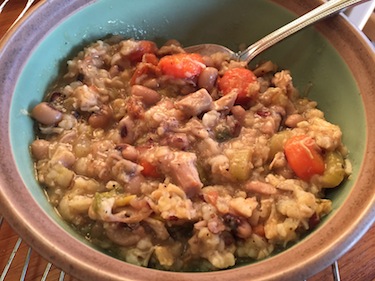
CEI cut the chicken up into bite size pieces. It was really more like chicken stew – thick and full of carrots, celery, potatoes, black eyed peas, and rice. Until I cut up the boneless, skinless chicken thighs I included, it was impossible to take a bite that contained vegetables, broth, AND chicken. In fact, the full size chicken thighs were an obstacle that made it difficult to even get s spoon down to the vegetables and broth. Breaking that obstacle up into small pieces resulted in a uniform consistency and full flavor in each and every bite!

When I started the soup, I didn’t spend much time thinking about what it would look like when I was done. I just knew I didn’t want to have to clean another cutting board right then, so I didn’t bother to cut up the chicken before it was cooked. Once I was ready to eat the first bowl, I felt frustrated by the large pieces of meat I had to deal with. Obviously, that was low level frustration. It was only soup and I knew exactly how to fix the problem in a matter of minutes.
soup
But let’s say it hadn’t been soup. What if I were feeling frustrated by the idea that committing to a gluten-free diet means I’ll never have my favorite rolls again AND I’ll have to read labels or ask questions before ordering food. I won’t be able to drink my favorite beer. I may have to eat before parties or carry food with me. I’ll have to figure out a system for keeping my food separate from the rest of the family’s. I’ll have to explain to my grandmother why I can’t eat her scrumptious strudel. It will be harder to eat fast food for dinner or doughnuts at the office. It just seems like way too much trouble.

Most of the gluten-free community has walked down that road at one time or another. I managed to get my mind around the obstacles, make the commitment, and stick to the diet only to find myself a couple of years later on a business trip, really hungry and standing in the cracker aisle of a grocery store…pouting. Seriously, I was pouting like a small child. I eventually grabbed a banana and some nuts and was fine, but I had that moment of, “Do I really have to do this?” Of course, by the time I was pouting, I also knew how much better I feel when I’m gluten-free so I wasn’t really tempted to cheat.

If you suffer from any of the following symptoms, you could have gluten-intolerance or celiac disease and, after testing, your doctor may recommend a gluten-free diet. If the idea of making such a significant change feels overwhelming to you, perhaps you can take the chicken soup approach – figure out your biggest obstacle and break it down into easily digestible pieces then proceed with a plan. As you have success, it will build upon itself and the process will become easier and the routine more uniform.

Symptoms:
General
Vague abdominal pain
Diarrhea
Weight loss
Malabsorption (Abnormality in digestion or absorption of food nutrients in the GI tract.)
Steatorrhea (Formation of non-solid feces.)
Behavioral changes
Fatigue or malaise
Growth delay

Hematological
Anemia
Hematologic diathesis
Skin/Mucous Membrane
Dermatitis Herpetiformis (Skin manifestation of celiac disease.)
Alopecia (Baldness – both universalis (from the entire skin) and areata (diffuse hair loss))
Aphthous ulcers (canker sores)
Abdominal or generalized swelling
Epistaxis (nose bleeds)
Easy bruisability
Cheilosis (Scaling at the corners of the mouth.)
Keratoconjunctivitis sicca (Chronic dry eye.)
Stomatitis (Inflammation of the mucous tissue of the mouth.)
Scaly dermatitis (Inflammation of the skin.)

Musculoskeletal
Non-specific bone pain
Joint pain(8)
Osteopenia (Low bone mineral density. Possible precursor to osteoperosis.)
Tetany (A combination of signs and symptoms due to unusually low calcium levels.)
Hyperreflexia (Overactive neurological reflexes.)
Carpopedal spasm (Spasms of the hands and feet.)
Cramps
Laryngospasm (Spasm of the larynx, the voice box.)

Neurological
Ataxia (coordination problems)
Epilepsy
Myelopathy (Damage to white matter that carries motor signals to and from the brain.)
Peripheral neuropathy (Numbness and pain in hands and feet described as tingling or burning.)
Seizures

Gastrointestinal
Abdominal pain
Anorexia (poor appetite)
Bloating
Constipation
Cramps
Diarrhea
Dyspepsia (Recurrent discomfort or pain in the upper abdomen.)
Flatulence, distention
Foul-smelling or grayish stools that may be fatty or oily
Hepatic disease (liver disease)
Hypoglycemia (low blood sugar)
Steatorrhea (Formation of non-solid feces.)
Stomach upset
Malabsorption-Related
Bowel is less able to absorb nutrients, minerals, and the fat-soluble vitamins A,D,E, and K.
Abnormal coagulation
Anemia (Lack of healthy red blood cells.)
Bacterial overgrowth of the small intestine
Failure to thrive (Poor weight gain and physical growth failure over an extended period of time in infancy.)
Fatigue
Growth Failure
Hyposplenism (small and under active spleen)
Hyperparathyroidism (Excessive production of parathyroid hormone because of low calcium levels.)
Bone deformities
Broken bones
Swollen joins
Iron deficiency anemia
Malnutrition
Megaloblastic anemia
Muscle Wasting
Osteopenia
Osteoporosis
Pubertal delay
Vitamin K deficiency
Weight loss

Miscellaneous
Depression
IgA deficiency (Means you’re 10 times more likely to develop celiac disease, AND gives a false negative on screening.)
Increased risk of infections
Irritability
Autoimmune disorders:
Sjogren’s syndrome
Thyroid disease
Diabetes mellitus type 1
Autoimmune thyroiditis
Primary biliary cirrhosis
Microscopic colitis
Infertility
Miscarriage

When you consider the time and energy you lose to pain, fatigue, doctor’s visits, and managing symptoms, it will soon become clear that removing those obstacles will result in plenty of time and energy to pursue lifestyle changes. And unlike using pharmaceuticals, removing gluten from your diet has no deleterious side effects or long-term health dangers. You can eat a healthy, balanced diet without the artificially fortified grain-based products that predominate our grocery stores and television ads.

If you feel you just can’t give up fast food, don’t. That doesn’t mean you’ll be able to eat all of your favorites, but a quick review of the nutrition facts on convenient fast food restaurants’ websites will give you options that you can rely on when you’re pressed for time or want to join your kids in an occasional outing.

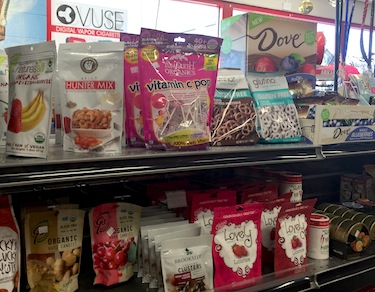
If you travel to rural areas for business, throw a Kind bar in your bag so you feel confident that you won’t get too hungry while searching for a local steak and potato restaurant. I sometimes carry a cooler bag with a couple of peeled & salted boiled eggs and some baby carrots along with a banana. That’s enough for a meal if I run out of restaurant options. And never assume that you won’t be able to find anything in a convenience store. I recently saw Glutino pretzels and gluten-free fruit snacks at the gas station in a small town.
pretzels
While I failed to do this when making soup this week, the process is always easier when you visualize what things will look like in the end, so imagine what it will look like when you no longer feel sick, tired, and grumpy. Holding that vision in your head helps you break overwhelming ideas down into tiny, bite size momentary decisions that aren’t hard to make. And really, that’s all it takes.

I remain gluten-free with lots of very simple decisions every day: ordering grilled chicken rather than fried, no croutons on my salad, no gravy on my potatoes, befriending a waiter who will help me communicate with the kitchen, reading the labels on packaged food, hosting meetings at my house, and saying no when I need to say no. And I don’t think I’ve felt like pouting in the past 9 years!

It’s natural to feel some fear and temporary depression when making significant change. The good news is that these feelings soon dissipate just like the sore muscles you get when you start lifting weights and no matter how you feel right now, improvement will result from the small, gradual, and consistent positive steps you make over time. Perhaps we should call it a Gluten-Free Practice.

It’s a Good Day for Chicken Soup!

It’s a good day for chicken soup! It’s raining outside and I have a cold…or something. I don’t feel horrible, but I don’t feel good. At first my sinuses hurt, then my throat got scratchy, and now I’m getting a cough, but certainly not the worst I’ve ever had. I really just want to go to sleep.
Soup
Sometimes it’s really hard to know when to give in, go to bed and rest, and when to push on. I was able to work out this morning. That didn’t seem to increase my cough or leave me feeling drained. I knocked out some work and went to the post office. It was when I got back that I began to feel draggy and my cough increased.

I’ve been chugging orange juice and it seems like the perfect time to add some chicken soup! Of course I don’t really feel like a lengthy cooking session.

Luckily, I keep organic chicken stock and rice in the pantry and I always have baby carrots in the fridge. Today, I also have celery. It may not look quite the same as my favorite recipe, but I can have some warm, tasty soup ready in a matter of minutes.

Here’s my simple soup making plan:
32 oz box Imagine Low Sodium Free Range Chicken Broth
3/4 cup water
3/4 tsp salt
3/4 tsp garlic powder
1/4 tsp Italian Herbs paste
Pinch of black pepper
12 – 15 baby carrots, sliced into thin rounds
3 stalks celery, finely chopped
2/3 cup quick-cooking Texmati rice

Pour chicken broth and water into a large saucepan. Add salt, garlic powder, herb paste, and pepper, then stir. Bring to a boil. Add carrots, celery, and rice to broth and stir. Cover and turn heat to low. Allow to simmer for 15 minutes. Serve hot.

If I had a leftover chicken breast or a roasted chicken from the grocery store, I’d tear it into small pieces and add it to the broth along with the rice. This isn’t the first time I’ve fixed chicken soup in a pinch. Sometimes I add a little turmeric or substitute curry powder for the Italian spices. Sometimes I throw in fresh rosemary and sage in place of the herb paste or top things off with arugula or green peas. Of course there are a million options. Since I’m feeling under the weather, the point is to use what’s handy and keep it simple.

I’m planning to pair the soup with a piece of homemade gluten-free bread from the freezer and a cup of hot herbal tea…followed by a nap.

I should be back to normal in no time. I won’t be reaching for the meds unless some complication develops. After all, this is Get Smart About Antibiotics Week – when the CDC reminds us that we overuse and misuse antibiotics which, by the way, are not helpful for colds and flu in the first place.

So if you’re feeling just a bit under the weather, won’t you join me for a cup of comforting chicken soup?


http://www.hhnmag.com/articles/6720-hospitals-around-the-world-unite-to-battle-antibiotic-overuse

Does gluten-free take too much time?

We’ve become so accustomed to drive through food that we think in order to be “fast”, a meal must include a wait in the car and a sandwich of some sort.  To think of preparing a home cooked meal without using processed food sounds overwhelming or like an activity to be saved for that special occasion.  For many of us, this becomes reason enough not to consider a gluten-free lifestyle or to haphazardly adhere to its restrictions.  So what is the reality?  Does being gluten-free really take too much time?

Last night Ben and one of his friends showed up an hour before we were scheduled to go to a movie.  Knowing Ben, I guessed that he had showed up early looking for food, so instead of waiting for them to ask, I offered chicken soup.  A couple of embarrassed shrugs later they had piping hot bowls of Eight Days a Week Rosemary Chicken Soup topped with shredded parmesan cheese, some Killer Beans, and dried apricots.  Without any effort greater than looking for clean bowls and spoons, these young men were consuming a tasty, healthy, satisfying meal.  Including the 4 minutes of microwave warming, it didn’t take any longer than driving through one of the 6 fast food restaurants they had passed on the way to my house.

Killer Beans
These beans are killer good!

Both of these young men are gluten eaters and both of them are familiar with my household, so they knew I might not have a loaf of bread or box of crackers handy.  They could have easily grabbed a quick sandwich on the way instead of opting for a gluten-free meal.  And yet they didn’t.  The second I wondered why, I was transported back in time to my grandmother’s house.

My parents owned a business across one street and a large yard from my grandmother’s house.  Through her 60s and 70s, my grandmother walked to work every day.  I worked for my parents periodically and would sometimes follow my grandmother home at the end of the day.  Without fail, when I walked through the door she would offer me food.  It might be chili with some cottage cheese and pears, or a slice of ham with English peas and sliced tomatoes, or if I was really lucky some beef and noodles with a carrot and raisin salad.  The fare was always simple, ready in a few minutes, and always delicious.  My sister and I both loved to stop by.

No matter how much I may like some fast food french fries, they are never as delicious as the simple homemade dishes my grandmother had handy in the refrigerator.  For us those foods were “fast”, but what about for my grandmother?

My grandmother taught me how to make chili so let’s start with that. I can make a big batch from start to finish in 30-40 minutes. All the ingredients are readily available from my pantry with the exception of ground beef or ground turkey.  30-40 minutes for 8 servings is no more than 5 minutes per serving.  As an added bonus, the cost savings is huge!

Now let’s look at a dish I haven’t yet mastered.  My grandmother cooked beef cubes for beef and noodles in a pressure cooker.  I don’t have one of those because I fear I’ll blow up the kitchen, but I’ve read that it takes 10-15 minutes at high pressure to cook beef cubes. The noodles can be cooked while the beef is being pressured.  That means this dish probably takes 45 minutes including prep time and it is a family favorite.  She always made enough for at least 12 servings so that’s less than 4 minutes per serving.

Of course these entrees don’t tell the whole time story, but being a great planner my grandmother would reheat an entree she had cooked for Sunday dinner and serve it with freshly cooked vegetables on Wednesday making the whole process look effortless and feel inviting.  All of us can easily do that.

Yes, I recognize that times have changed.  Everything moves faster.  We work more.  We have more scheduled activities.  I have a 60+ hour per week job and I know how it feels to juggle work, family, and a social life.  Given our current lifestyles, does gluten-free really take too much time or do we just assume that it will?

Let’s go back to the meal I served Ben last night as an example:  I cooked the chicken soup in three steps on different days.  Step one was brining and took 5 minutes of prep.  Step 2 was cooking the chicken.  It also took 5 minutes of prep plus 1 1/2 hours of cooking, so I did that last Saturday when I had a block of time at home.  Step 3 included prepping vegetables. On the day I made the soup, I had already cleaned and prepped carrots, squash, and onion by chopping additional amounts when I was oven-roasting vegetables earlier in the week, then storing them in the fridge until the weekend.  I had prepped the sugar snap peas (I like to trim off the ends) the night before while watching TV.  With all that done, Step 3 took less 30 minutes including cooking time.

While I was brining the chicken, I was also soaking beans for the Killer Beans as well as for the soup.  While I was cooking the chicken, I also cooked the beans.  My prep time for 20 servings of food totaled less than an hour.  In my household these servings were consumed in 8 meals.  Adding in reheating time, the time consumed prepping, and each serving averaged 2 1/2 minutes of time in the kitchen.  Only 2 1/2 minutes.  That includes the initial cooking and prep time and it’s still less than the time I would have spent in 8 stops at a fast food restaurant and much less time than eating 8 meals in a sit-down-to-order restaurant.

Am I saying that I’m as consistently prepared as my grandmother, or that I don’t sometimes feel overwhelmed?  No.  But I recognize that many times when I feel overwhelmed by the idea of fixing dinner more than one night per week, all I have to do is shift my thinking away from the current cultural trends and remember how rewarding it was to eat at my grandmother’s table. I immediately feel renewed energy and excitement for getting into the kitchen to immerse myself in the tastes, colors, textures, and smells of cooking. The added bonus of eating a tasty meal at my kitchen table without worrying about dripping food on my blouse seals the deal for me.  Get me out of this car & into the kitchen!

The next time you’re tempted to abandon the idea of strict adherence to a gluten-free diet because it takes too much time, take a moment to think about your mother’s chicken and dumplings, some piping hot cornbread, or the smell of cookies fresh out of the oven.  Remember how you felt walking into a house that smelled like warm cinnamon.  Go ahead, smile, relax and realize that you can easily have those feelings in your own home tomorrow by making a tiny shift in how you spend your time. The time you would have spent waiting in restaurants or your car can be spent at home.

Caring for myself and my family by providing a beautiful, delicious, healthy, gluten-free meal is absolutely worth whatever time it takes in the kitchen.  And as we have seen, that time is less than the time I would spend waiting for food at a restaurant or drive through!

Be brave.  Do your own time tests.  The worst thing that can happen is you’ll make some great memories for your kids.


 *Eight Days a Week Rosemary Chicken Soup and Killer Beans are original Cooking2Thrive® recipes.