You can pare your kitchen down to the basics and still prepare great food! I love looking at houses online. Of course I pay special attention to the kitchens. For me the primary considerations are a gas stove, functional cabinets, and countertop workspace followed by cuteness.

Cuteness includes what the countertop workspace is covered with, the flooring, paint, backsplash, hardware, and cabinet style. I hate the unimaginative gray that currently dominates new houses and many remodels. I love clean, classic subway tile, European style small refrigerators, hardwood floors, and interesting countertops like wood or recycled glass. With these items in place I’m ready to fill the cabinets with necessities and fun china, pottery, and serving pieces.
What is necessary for food prep?
Let’s be real. Most of us don’t need all of the gadgets that fill our cabinets or clutter our countertops. It’s fine if you want to have them, but if funds are limited or you don’t have much space you can forego the additional purchases and pare down to the basics.
Here’s a list of basic cooking tools:
Durable, sharp knives.
A set with a carving knife, chef’s knife, paring knife, and serrated bread knife is sufficient. Keeping my knives sharp is a constant battle, so a handheld knife sharpener is also useful.
 Cutting board.
Using a cutting board protects your countertop surface and keeps bacteria from meat, fish, and poultry contained. You may want to dedicate one cutting board to proteins and another to everything else. I like to use plastic for proteins because I can wash it in the dishwasher. I use wood or bamboo for vegetables, fruit, chocolate, cheese, bread, etc.
Measuring cups and spoons.
With adjustable or multiple quantity cups and spoons, you may only need one of each. I’d probably have two of each handy — one for wet ingredients and one for dry. Even though they take up more drawer space, I actually prefer separate measuring cups and spoons. Collapsible silicone sets minimize the space used, but hard plastic and metal also serve the purpose.
Mixing bowls.
Unless you do a lot of baking, a basic set of 3 bowls — large, medium, and small should be sufficient. Glass, metal, pottery and plastic choices are all readily available. If you rarely cook or need additional capacity, serving bowls can double as mixing bowls. You can use a cereal bowl to whisk an egg or dissolve yeast and a roasting pan to combine larger amounts of ingredients.
Baking pans.
The most commonly used baking pan is a 9 x 13 rectangular pan. It works for cakes, biscuits, casseroles, lasagne, oven fried chicken, chicken spaghetti, bar cookies, cobbler, bread pudding, and even your Thanksgiving dressing. It may be all you need, but you’ll probably want a cookie sheet or two, a loaf pan (with extra tall sides if you make gluten-free bread), a roasting pan with a lid, a muffin tin, a pie pan, and at least one casserole dish. A square glass baking dish can double as a casserole dish by using aluminum foil when you need a lid.
 Stove top cookware.
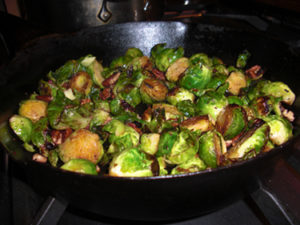
Every kitchen needs at least one cast iron skillet. Okay, you can live without one, but you’ll have much better cornbread, pineapple upside down cake, seared steaks, country-fried potatoes, fried chicken, blackened Brussels sprouts, and stovetop burgers if you have one. Cast iron can be used for any dish you start on the stove top and finish in the oven.
Also essential are a large pot for cooking pasta, and at least one saucepan. Most kitchens will need an additional saucepan or two in order to cook multiple dishes at the same time. You may want to invest in a good skillet and a sauté pan.
Utensils.
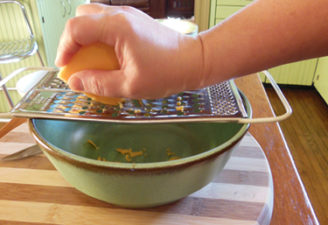 A spatula, slotted spoon, large regular spoon, whisk, grater, can opener, colander, small and large funnel, and dough blender plus a hand crank beater will give you what you need to prepare a meal, bake a cake, and top it off with homemade whipped cream. You can add a basting brush or potato masher if you feel you need them.
Small appliances.
The only small appliances I would recommend are a food chopper, a slow cooker, and a waffle iron. I find a chopper sufficient for the chopping and puréeing I do, and a slow cooker comes in handy at parties. My antique cast iron waffle iron leaves something to be desired. A modern, electric version is definitely preferable.
On the other hand, I don’t need a coffee maker — a French press or pour over coffee maker can make an incredible cup of coffee. I don’t need a toaster — toast can be made in the oven. I can make whipped cream with my hand crank beater in less time than it takes to get out and set up a mixer. I don’t use juice in large enough quantity to justify a juicer. Two cast iron skillets will make a panini. A saucepan will heat water if I don’t buy an electric kettle. I can cook rice in a pan. Poached eggs don’t require a poacher. Popcorn is easy to pop on top of the stove. I don’t drink soda so I have no use for a soda maker. Pressure cookers scare me. I am happy buying dried fruit from Nuts.com and ice cream from the grocery store. And even though that orange nonstick skillet looked really tempting at 2am in a hotel room, I can’t think of any reason I’d need to fry hardware. That’s about a dozen kitchen specialty items I don’t need when I pare down to essentials.
If you love grapefruit and want a grapefruit knife, you should absolutely have one. If having a potato peeler makes you feel better about peeling potatoes, there’s nothing wrong with buying one. If you weigh ingredients when you bake, investing in a good quality scale makes sense.
The point is that you will not be limited to mediocre food when you choose to keep your kitchen simple! Knowing that can help you stay within budget and reduce clutter in your home. It feels good to me to know that I can prepare scrumptious meals and baked goods and still be mindful about kitchen purchases.
In this day of advertising bombardment, I think it bears repeating…you can pare your kitchen down to the basics and still prepare great food!
Disclosure of Material Connection: I have not received any compensation for writing this post. I have no material connection to the brands, products, or services that I have mentioned. I am disclosing this in accordance with the Federal Trade Commission’s 16 CFR, Part 255: “Guides Concerning the Use of Endorsements and Testimonials in Advertising.”


