These Muffins are Gouda!

Last week Ben & I had the privilege of providing a cooking demonstration of the food that will appear in our “Take Me to the River” episode for the local Gluten Intolerance Group. We are always grateful for the chance to share delicious food with other folks who want to be healthy, so this was a great opportunity.

Demo in Kitchen


The Cooking2Thrive® kitchen is an intimate space too small to accommodate more than a handful of people, so the group borrowed the facilities of a local church where everyone ended up crowding into the kitchen while I breaded 3 Pepper Fried Chicken Tenders and mixed up batches of Gouda Muffins.

Kitchen 1

The kitchen was hot and noisy. Ben did the frying and baking.

Ben

Luckily, there was plenty of room to spread out in the dining room where we served Gorgonzola Tarragon Deviled Eggs, Southern Style Green Beans, and Peanut Butter Chocolate Chip Cookies along with the chicken and muffins.

Dining Room

 After dining, visiting, and viewing displays of gluten-free flours and their nutritional properties, each participant went home with a 3 Pepper Fried Chicken Tender recipe card.

Recipe Card


We also had several requests for the Gouda Muffin recipe. For all of you who asked, and for the rest of you as well, here you go:

Gouda Muffins

Makes 12 medium muffins

1 cup white rice flour

1/2 cup brown rice flour

1/2 cup potato flour

1/2 cup sugar

1 tsp sea salt

1 tsp xanthan gum

1 teaspoon baking powder

1/2 tsp baking soda

8 oz whole milk plain yogurt

2 eggs

1/4 cup melted butter

6 oz Gouda cheese, diced

Preheat oven to 425º.  Grease muffin tin.

Combine all dry ingredients in a large bowl. In a smaller bowl, whisk together the yogurt, and egg. Pour the liquid over the dry mixture and gently stir. Add the melted butter and continue to mix until you reach a firm, non-sticky consistency. Fold in the diced Gouda and place dough in muffin pan.  Bake at 425º for 12-15 minutes or until top is browned.  Remove to rack to cool.

Okay, truth time – that’s how I do it.

Here are the official instructions and the process our chef prefers:

Combine all dry ingredients in a bowl. In a larger bowl combine the yogurt, egg and butter. Slowly fold the dry mixture into the liquids until you reach a firm, non-sticky consistency. Stir in Gouda and spoon dough into muffin pan.  Bake at 425º for 12-15 minutes or until top is browned.  Remove to rack to cool.

Help me out – try the recipe both ways and let me know which works better by posting your comment here! 
Are Processed Foods Okay as long as They’re Gluten-Free?

A study is about to be released that will directly track back the cause of metabolic syndrome to the sugar we consume. Metabolic Syndrome is a combination of medical disorders that increase the risk of developing cardiovascular disease, obesity, high blood pressure, type 2 diabetes, and liver disease.*

You may respond to this news with a shrug thinking you’re immune to the problem because you limit desserts, don’t spoon sugar into your coffee, avoid soft drinks, and never touch a doughnut. Before you get too comfortable, take a moment to read the labels on the packaged gluten-free pizza, bread, rolls, muffins, scones, cornbread, bagels, tamales, chicken broth, deli meats, crackers, pretzels, seasoning packets, jams, jellies, and cereal that you eat along with the labels on your juice drinks and sodas. If you see the words glucose, dextrose, fructose, galactose, high fructose corn syrup, cane syrup, sucrose, maltose, or lactose then the food contains sugar.

If a label contains words like sorbitol, xylitol, mannitol, maltitol, lactitol, erythritol, isomalt or hydrogenated starch hydrolysates then the food contains sugar alcohols. Sugar alcohols are often found in foods labeled sugar-free. Even though they are not sugars, these items are carbohydrates and may trigger the same deleterious effects as sugar such as raising your blood sugar level.

If you employ a gluten-free lifestyle, none of these items will trigger the autoimmune response your body has to gluten. That makes them healthier for you than a gluten containing equivalent. It does not make them healthy.

According to the American Heart Association, the current recommended daily allowance of sugar in a healthy diet is no more than 6 tsp for women and 9 tsp for men.** That might seem like a lot of sugar if you’re eating it straight out of a spoon, but not like much at all when you drink a 12 oz soda even though the soda contains 8 tsp of sugar.

If you want to be as healthy as possible, you can carefully read labels making sure to add up all the sugars listed so that you don’t exceed the recommended number of teaspoons per day. Because most labels list sugars in grams, this can become a confusing and time consuming task. The easier thing to do is to phase processed foods out of your eating plan.

I’m not suggesting that you should never, ever eat a bowl of cereal, packaged pasta, or crackers, but if you make these rare treats rather than everyday staples, it will be much easier to keep your sugar consumption at a minimum. It will also facilitate lowering your sodium intake, and it won’t hurt your pocket book either since gluten-free convenience foods are often priced significantly higher than their gluten-containing counterparts.

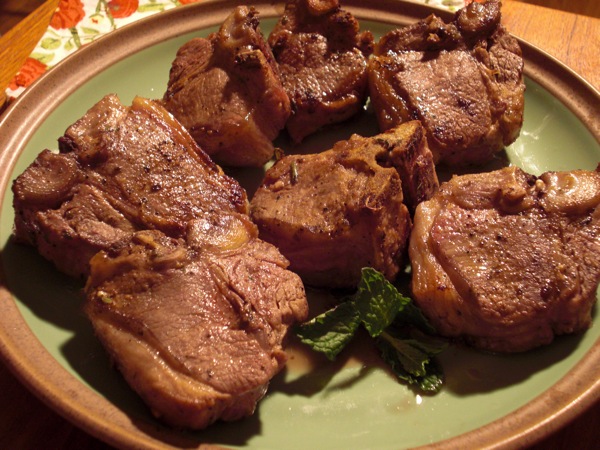
lamb chops
Lamb Chops are Gluten-Free

Don’t worry about not having enough gluten-free choices when you phase out processed food. Fresh beef, pork, fish, seafood, poultry, dairy, vegetables, legumes, nuts, seeds, fruit, herbs, and spices have never contained gluten. By combining these ingredients you can make a seemingly unlimited number of delicious and healthy combinations.

More fresh food means less risk for Metabolic Syndrome. Let’s phase out that processed food, get out those aprons, and start cooking to thrive!
*For more information, see these resources:
http://www.nlm.nih.gov/medlineplus/metabolicsyndrome.html

Lustig, Robert. Fat Chance.; Beating the Odds Against Sugar, Processed Food, Obesity, and Disease. New York: Penguin Group (USA) Incorporated, 2013. Print.

••http://www.heart.org/HEARTORG/GettingHealthy/NutritionCenter/HealthyDietGoals/Sugars-and-Carbohydrates_UCM_303296_Article.jsp

Server card ad

You are how you cope!

Don’t you mean you are what you eat?  After all, this is a cooking blog, right?

Well, yes, Cooking2Thrive® is about cooking, but it’s also about thriving.  Don’t worry we’ll tie it all together for you by the dessert course.

Soup

It is no secret that our intimate relationship with food sometimes takes on a life of its own. When we vow to modify our diet, eat healthy, lose weight, reduce our intake of sweets or carbs or protein or gluten, we can suddenly feel out of control, or obsessed. It feels like the vow has taken control of us.  Why is that?

Salad

Take a moment to crunch on this idea:  Long before we were ready, some of us had to perform tasks that were much too advanced for our age and ability. When things didn’t turn out well, we blamed ourselves or someone else blamed us. Through this process, we learned to cope in a manner that encouraged the overdevelopment of an inner critic. This critic became such an integral part of us that we do not feel like ourselves unless we are thinking: “I’m too fat!”; “I ate too much!”; “I should have eaten slower!”; “If only I had planned in advance, I wouldn’t have had to eat that doughnut at the office, but I was just so hungry!”  As we begin to eat more healthily, this monologue no longer fits, but when it’s turned off we don’t feel like ourselves.  When we don’t feel like ourselves, we begin to feel anxious. Anxiety leads us to seek comfort.  We feel comforted when we eat carbs, so we pick up a cheese roll, criticize ourselves for choosing the food we have vowed to avoid, and breathe a sigh of relief because our familiar coping pattern has been restored.

C. Thriver

Entree

Our inner critic may be alive and well and keeping us from doing our best, but it can go relatively unnoticed while our lives roll predictably along. Enter a stressful disruption, and the war we are constantly fighting within can keep us from making changes that are critical to our health and longevity. For instance, let’s say that we’re suddenly served a huge heaping portion of diabetes. Now the carbs we run to for comfort can literally be our undoing. If we continue to cope in our old way, we will significantly decrease our lifespan. And yet, the added stress we feel may pull us even more strongly toward a familiar coping strategy. We want to become more healthy – it just feels as though we can’t. We may begin to feel ashamed or defeated or that critic may pipe up and say, “You’re not worth the trouble anyway, loser.”

Whatever the specifics of your situation may be, when you go back to coping through the use of strategies from the past that do not allow real change, you are stuck. 

Many of us remain stuck for a very long time while our health and quality of life slowly deteriorate. We begin to believe that we’re destined to be sick and then sicker. We focus on alleviating symptoms rather than controlling, healing, or curing an underlying disease process. This seems sane and normal because we’re surrounded by a host of other people who are following a similar path.  But if sane and normal actions cause us to live more limited, painful, or shorter lives, how sane and normal can they really be?

A part of us may sense that this is a question worth asking, but when we are in a weakened or pain-filled state the asking may feel beyond our reach. Without a side dish of support and encouragement, we may be left to cope in the usual manner.

Dessert

Now for the sweet part! Cooking2Thrive can help support healthy change. Don’t feel like challenging the status quo? That’s okay; we love a good challenge.  Don’t feel you can make progress because you don’t have enough support?  That’s okay; we’re here to encourage you.  Know where you want to go, but don’t know how to get there?  Don’t worry; we will provide a roadmap of practical tools you can use in order to progress.

At Cooking2Thrive, we believe that good health begins with nutritious, fresh food. We believe that with proper nutritional and emotional support, many disease processes can be reversed. We also believe that we all need encouragement and practical tools to develop new ways to process our feelings so that we can discard the coping mechanisms that hold us back in order to live a more rich, full life.

If you currently feel stuck and can’t seem to avoid your inner critic, don’t worry. Things can change.  You can heal!  We can help.

Server card ad

Dessert First! Day Four.

As this week progresses, I become increasingly aware that I have surrounded myself with difficult people. Is that because I exude the same sort of energy as they?  Possibly.  It is also possible that I exude a calm acceptance that feels safe or inviting.  I’m not sure which is the most true right now.  What I know is that it takes a lot of dessert to absorb, dissipate, and cushion negativity and on Day 3 by the afternoon I had resorted to actual dessert. A gluten-free espresso brownie to be exact.

Okay, truth is I had ice cream too later in the evening after a difficult phone conversation. Lots of sweet. Too much in fact. When I eat food full of sugar or carbs without supporting it with protein, I get sick. The same is true when I choose to focus only on the positive and ignore or deny the negative around me. It is only with balance that can accept myself, others, and life’s circumstances and begin to nourish my spirit. It is through nourishing my spirit that I find compassion for others.

In some cyclic way that feels beyond my ability to describe in words right now, I believe this is the beginning of a cycle of positive energy that will feed on itself, grow, and make a contribution to good in the world.

I feel a tiny bit of progress.  What do you see?