Take Candy from Strangers, then Why Not Juice?

Since we’ve broached the subject of taking food from strangers, I’d like to share another recent travel moment. Two weeks ago, I traveled to Raleigh, North Carolina where I took these photos of Historic Oakwood Cemetery.

Oakwood

My flights in both directions were rescheduled, rerouted, and delayed by several hours. As you may have guessed from reading our Travel Tips, for convenience I always carry gluten-free food with me when I fly.

Over the past couple of years, I’ve had to move my meals closer and closer together in order to keep my hypoglycemia in check. I can no longer wait until I feel hungry to eat, but have to consume at regular intervals in order to maintain my energy level and feel my best. This requires that in addition to carrying food, I must look at the schedule in advance so I’ll know if I need to eat a snack on the plane in order to keep my blood sugar level even.

On this trip, I followed my normal procedure and arrived at the airport feeling prepared. I sailed through security with my plastic containers of food and headed for the gate. As a flight delay led to late boarding, followed by sitting on the tarmac for an hour, followed by taxiing back for more fuel, I found myself captive on the plane without enough food to last until we reached the next destination.

As we began our descent, I was hoping to avoid the point at which my blood sugar drops so low that my hand starts to tingle, my lips get numb, and I feel overwhelmed and groggy. I started a mental inventory of my options. Was there time to investigate and consume the $11 snack boxes sold on the plane? Should I ask for a coke? I could already feel the anxious tension creeping from my shoulder blade to my neck. My mind was whirling.

About that time, a young man sitting across the aisle and one row in front of me opened the can of apple juice he’d been staring at for almost an hour. He filled his plastic glass then looked at me with a knowing look and asked if I wanted the rest. His offer was unexpected and the perfect solution at the perfect time. I accepted with a nod and a smile. He smiled back. I quietly offered a thank you.

That was the extent of our interaction. We had not been conversing and we didn’t begin to at that point. This man was simply attuned enough to recognize my need and I was willing to accept his gift. It was the kind of powerful everyday moment that can feed our hearts, mind, and spirits when we allow our minds to be open and our hearts willing to receive.

Taking the apple juice from a stranger allowed me to finish the flight with no ill effects. For that stranger, I am grateful. For that juice, I am grateful. For that moment, I am grateful.

Oakwood 2Server card ad

Travel Tip #6 – Go Ahead…Take Candy From Strangers!

So how many of you tell your children to never take candy, or food, from strangers? I’ve said the same thing…many times. The thing is, when I’ve said it, I wasn’t really thinking about the food. I was concerned about some deviant using food as a bribe to get my child to do something he wouldn’t otherwise do. Now that we’re all adults, I say, “Going on a trip? Forget that old rule. Take food from strangers”!

Candy
Cherry Candy

I realize some of you are thinking I’ve lost my mind, so give me a moment to explain. I am not encouraging you to eat off a stranger’s plate, drink out of the same glass, or consume any item you do not feel complies with your necessary medical restrictions. With that in mind, let’s explore some of the opportunities travel offers for a change in menu.

When traveling to a foreign country, you may have no choice but to vary from your eating norm. If this is the case, there are many treats in store. First there are local people who may want you to sample their dishes. While they may be strangers, please consider the offer. This is the absolute best way to experience local food.

Next are the grocery stores or markets. Shopping in a different environment with unfamiliar products can be an adventure in itself. I often browse the aisles taking in the packaging and shelf arrangement as if perusing an art display. I spend a moment contrasting the number of items that look familiar from the number that seem different. I watch the shoppers. I try to grab a sense of their lives and develop a list of questions I may want to research about local eating habits or food culture.

In Australia, I find the packaged foods more familiar than foreign. Many of the brands are the same as those at home and the boxes vary only slightly. In the Netherlands, I am struck by the abundance of dark, heavy breads and the frequency with which our hosts offer us a stop for food. In New Zealand, I find the roadside fruit and vegetable markets a delight!

Bakeries and restaurants offer yet another view of both food and culture. There is nothing more beautiful than the fruit tarts displayed in the window of a bakery along Champs-Elysées in Paris. Sometimes I browse the shelves of a bakery even though I recognize I probably won’t be able to eat any of the products.  I love to see the offerings, take in the aroma of freshly baked bread, and bask in the warmth of the room. When I can do this with a cup of rich, dark coffee in hand, I am happy to wait for my gluten-free snack.

After browsing, you’ll be ready to consume. Here’s another opportunity to engage a stranger.  Ask some locals to tell you what or where to eat, then trust your instincts. If you don’t feel comfortable with a particular person’s advice, ask someone else. If two or three people mention the same hole-in-the-wall, it’s probably good.

Pork Loin
Stuffed Pork

When traveling closer to home, the same rules apply. Keep in mind that any time you enjoy a meal at a new restaurant in your city, you are accepting food from strangers so there’s no reason to be hesitant to try something new in a neighboring borough. I ate some of the best hummus I’ve ever tasted at a cigarette/gift store/restaurant with a sliding cage door in Memphis. My son recommends tacos served on the porch of a make-shift operation at a man’s house in Little Rock. A friend’s favorite barbecue sandwich ever was sold out of a Hot Springs man’s back door. People drive for an hour or more for a weekly fish fry on the grounds of a Stuttgart farm. None of these locations employ advertising other than word of mouth and none are to be missed.

Search online, look at reviews, and get an eating plan together, but don’t be afraid to ditch the plan on the advice of someone you just met. When you’re wiling to embrace the food offered by a stranger, you increase your chances of being pleasantly surprised.

Have any surprisingly good dining experiences you want to share? We’d love to hear them.

Server card ad

Are Processed Foods Okay as long as They’re Gluten-Free?

A study is about to be released that will directly track back the cause of metabolic syndrome to the sugar we consume. Metabolic Syndrome is a combination of medical disorders that increase the risk of developing cardiovascular disease, obesity, high blood pressure, type 2 diabetes, and liver disease.*

You may respond to this news with a shrug thinking you’re immune to the problem because you limit desserts, don’t spoon sugar into your coffee, avoid soft drinks, and never touch a doughnut. Before you get too comfortable, take a moment to read the labels on the packaged gluten-free pizza, bread, rolls, muffins, scones, cornbread, bagels, tamales, chicken broth, deli meats, crackers, pretzels, seasoning packets, jams, jellies, and cereal that you eat along with the labels on your juice drinks and sodas. If you see the words glucose, dextrose, fructose, galactose, high fructose corn syrup, cane syrup, sucrose, maltose, or lactose then the food contains sugar.

If a label contains words like sorbitol, xylitol, mannitol, maltitol, lactitol, erythritol, isomalt or hydrogenated starch hydrolysates then the food contains sugar alcohols. Sugar alcohols are often found in foods labeled sugar-free. Even though they are not sugars, these items are carbohydrates and may trigger the same deleterious effects as sugar such as raising your blood sugar level.

If you employ a gluten-free lifestyle, none of these items will trigger the autoimmune response your body has to gluten. That makes them healthier for you than a gluten containing equivalent. It does not make them healthy.

According to the American Heart Association, the current recommended daily allowance of sugar in a healthy diet is no more than 6 tsp for women and 9 tsp for men.** That might seem like a lot of sugar if you’re eating it straight out of a spoon, but not like much at all when you drink a 12 oz soda even though the soda contains 8 tsp of sugar.

If you want to be as healthy as possible, you can carefully read labels making sure to add up all the sugars listed so that you don’t exceed the recommended number of teaspoons per day. Because most labels list sugars in grams, this can become a confusing and time consuming task. The easier thing to do is to phase processed foods out of your eating plan.

I’m not suggesting that you should never, ever eat a bowl of cereal, packaged pasta, or crackers, but if you make these rare treats rather than everyday staples, it will be much easier to keep your sugar consumption at a minimum. It will also facilitate lowering your sodium intake, and it won’t hurt your pocket book either since gluten-free convenience foods are often priced significantly higher than their gluten-containing counterparts.

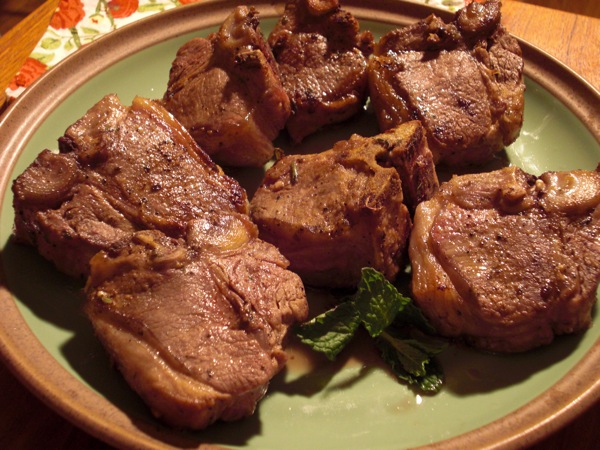
lamb chops
Lamb Chops are Gluten-Free

Don’t worry about not having enough gluten-free choices when you phase out processed food. Fresh beef, pork, fish, seafood, poultry, dairy, vegetables, legumes, nuts, seeds, fruit, herbs, and spices have never contained gluten. By combining these ingredients you can make a seemingly unlimited number of delicious and healthy combinations.

More fresh food means less risk for Metabolic Syndrome. Let’s phase out that processed food, get out those aprons, and start cooking to thrive!
*For more information, see these resources:
http://www.nlm.nih.gov/medlineplus/metabolicsyndrome.html

Lustig, Robert. Fat Chance.; Beating the Odds Against Sugar, Processed Food, Obesity, and Disease. New York: Penguin Group (USA) Incorporated, 2013. Print.

••http://www.heart.org/HEARTORG/GettingHealthy/NutritionCenter/HealthyDietGoals/Sugars-and-Carbohydrates_UCM_303296_Article.jsp

Server card ad

Gluten-Free. Back to Basics. Prohibited Foods.

Last night, I was invited to join a going-away dinner for a friend that reminded me how easy gluten-free basics can be.  She wanted to meet at her favorite Italian restaurant.  The menu is not online, so there was no way to prepare in advance for possible ordering options.  Armed with a server card, I went without a back-up plan, trusting that I could find a suitable option. As it turns out, this restaurant offered gluten-free pasta, so ordering was easy.

The simplicity of my interaction with the waitress piqued the interest of the woman to my right.  She asked, “Is it pretty easy to follow that diet?”

My answer was yes.  All I have to avoid are foods containing wheat, rye, barley, malt and their derivatives.  I also avoid oats unless they’re certified gluten-free.  The list of foods I can eat is much longer than the list of foods I cannot.  The only area in which I feel limited is processed food.

Now let’s get to the Gluten-Free. Back to Basics. Prohibited Foods. For those of you who are considering a zero gluten way of living and are wondering what will be prohibited, you must avoid foods listing any of these items on the label:

Barley

Barley Grass

Barley Malt

Beer (there are GF varieties)

Bleached Flour

Bran

Bread Flour

Brewer’s Yeast

Brown Flour

Bulgur Wheat

Cookie Crumbs

Cookie Dough

Couscous

Durum wheat

Edible Coatings

Edible Films

Edible Starch

Enriched Bleached Flour

Enriched Bleached Wheat Flour

Enriched Flour

Farina

Farina Graham

Farro

Filler

Flour

Fu

Germ

Graham Flour

Groats

Hard Wheat

Hydrolyzed Wheat Gluten

Hydrolyzed Wheat Protein

Hydrolyzed Wheat Starch

Kamut

Maida

Malt

Malted Barley Flour

Malted Milk

Malt Extract

Malt Flavoring

Malt Vinegar

Matza

Matzo

Matzo Semolina

Orzo Pasta

Pasta

Pearl Barley

Triticum

Roux

Rusk

Rye

Semolina

Semolina Triticum

Spelt

Sprouted Wheat or Barley

Tabbouleh

Unbleached Flour

Vital Wheat Gluten

Wheat

Wheat Bran Extract

Wheat Germ Extract

Wheat Nuts

Wheat Protein

Whole-Meal Flour

The following items sometimes contain gluten:

Artificial Color

Baking Powder

Boxed Cereals

Broth

Caramel Color

Caramel Flavoring

Clarifying Agents

Coloring

Dextrins

Dextrimaltose

Dry Roasted Nuts

Emulsifiers

Enzymes

Fat Replacer

Flavoring

Food Starch

Food Starch Modified

Glucose Syrup

HPP

HVP

Hydrolyzed Plant Protein

Hydrolyzed Protein

Hydrogenated Starch Hydrolysate

Hydroxypropylated Starch

Maltose

Miso

Modified Food Starch

Modified Starch

Natural Flavoring

Salad Dressing

Natural Flavors

Non-dairy Creamer

Oats

Seasonings

Soba noodles

Soy Sauce

Soup

Stabilizers

Starch

Tomato Paste

Vegetable Gum

Vegetable Starch

Vitamins

Wheat Starch

To fully eliminate gluten from your diet, it is important to review the ingredient list on all foods before you decide to consume them. If you live in the US, you’ll even need to read the ingredients on products that say “Gluten-Free”.  Why?  The FDA has never established a standard for foods to qualify as gluten-free.

When I eliminated gluten from my eating plan, label reading quickly became part of my daily routine. It’s not too time consuming, and it doesn’t take long for it to become a habit.  It’s one of the few simple steps required for gluten-free living. Print out this list, and give it a try!

Server card ad


If you want to read more about safe or prohibited items, visit www.celiac.com.