I Love Systems!

I love systems! I serve as a patient advisor on the Quality, Experience and Safety Team of an academic medical center. During a recent presentation, I was reminded just how much I appreciate detailed, methodical systems. They may not make for an entertaining meeting, but they don’t make me yawn so much as they make me feel calm. There’s something reassuring about having a defined process to guide you toward any goal.
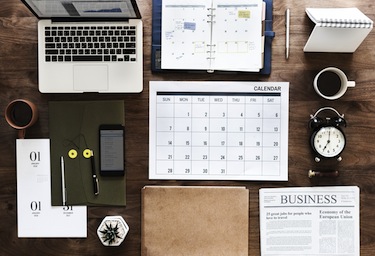
organization
Often such a process ensures safety. That’s the case with using two patient identifiers for every patient procedure in a hospital or using a series of checklists when flying an airplane. I promise you, you want both of these systems to be well-thought, in place, and followed 100% of the time. They are critical for safety.

Some systems help you stay on schedule, collect money owed, or get every dish in a meal to the table at the same time. Creating a system takes the ability to understand the interplay between the big picture and the details of which it’s made. A system doesn’t have to be formal, written down, or generated by an app.

In fact, you probably have a system for getting ready in the morning. It may begin the day before and take into consideration the fact that there is a lesser risk of a need to change clothes at the last minute if you feed the kids before putting on work clothes. It may take into consideration what will happen after work that needs to be prepared for in advance.

You may think of this as a routine. Many routines are personal systems of organization performed at the same time and in the same order each day. Because they are based on years of experience or trial and error, you probably don’t even think about them unless you make a New Year’s resolution that throws a monkey wrench into the whole thing. That will tell you how powerfully effective a system can be. Most resolutions change nothing.

The key to effectiveness is to create a foundation that keeps you from starting over all of the time. With that foundation in place, you can immediately determine the next step in a process by looking at the last one. You will also have a view of how what you do affects the next person in the chain. A good system reduces frustration and friction between departments and enhances the feeling of teamwork.

If you know me, my love of systems may sound ironic. I am somewhat rebellious, a bit contrary, and viewed by some as free-spirited. But if you know me well, you understand that all of those characteristics are strongly rooted in a foundation of reliability, work ethic, thoughtfulness, analytical approach, and mindful decision making. I may not be a rule follower per se, but I appreciate rules and defined procedures and I understand why some are critical.

Because of this, I value the freedom that results from taking care of business first. It’s that exhilaration of flight after you preflight the airplane, follow a series of checklists, taxi onto the runway, accelerate, and reach rotate speed. As the plane lifts and the ground falls away, I feel great!

Free-fall in a skydive provides a similar exhilaration. It also requires careful planning and preparation prior to that terrific moment when the wind hits you in the face. I can enjoy that feeling because I am not cloaked in fear. I trust the system that got me there.

I also love systems because they increase my productivity. Working systematically allows me to handle multiple projects simultaneously and ensure that the details will be handled. Relying on the system allows me to relax and do my best work. It also gives me the confidence to be flexible when required.

A working system makes me look like I have the best memory in the world. The truth is, when you allow a system to support you, you don’t have to remember as much because the information you need is always readily available and you know where to find it.

I don’t worry about trying to be fast. I just organize for maximum efficiency based on priority. The cumulative effect is that I can put together a number of items in a limited amount of time without ever focusing on speed. Hurrying takes away much of the joy of an experience. It also leads to inaccuracies and errors.

My use of systems extends to the kitchen. It’s what allows me to prepare a holiday meal from scratch without a last-minute rush. With meals, as with other projects, I begin with a backward timeline. Then I break down that timeline into smaller components and organize tasks in batches.

I often wonder why anyone would want to work any other way. I’m not saying your system should look exactly like mine. I’m just saying I’m not sure why anyone would want to work without one. I find them incredibly freeing.

Through the years, I’ve watched a lot of people struggle, feel overwhelmed, miss deadlines, and get the same details wrong on multiple projects all because they had no system or refused to follow one. A few of them worked for me…for awhile. In some lines of work, this is inconvenient and/or costly. In others, it’s dangerous.

Chaos is not freedom. Record keeping is not a waste of time. Organization is not the enemy of fun. Well-designed systems provide a foundation for teamwork, fairness, safety, productivity, achievement, and calm. I love systems!

https://www.who.int/patientsafety/solutions/patientsafety/PS-Solution2.pdf
https://www.aopa.org/training-and-safety/students/presolo/skills/before-takeoff-checklist
https://www.cdc.gov/cdctv/video-assets/lifestagesandpopulations/value-systems-thinking/mindset.pdf
http://www.cooking2thrive.com/blog/coulda-woulda-and-should-have/

How can change begin when you’re struggling?

First I started feeling frightened – a sort of antsy, anxious feeling at the edge of my awareness.  I noticed that I felt hungry, but I wanted to be very disciplined about my meal times so I decided to wait awhile before eating.  I passed the time by reading an article on anorexia (interesting choice don’t you think?) and looking at some photos of me that I had just uploaded to my laptop.  

 Soon after daylight savings times begins each year I have one of these days.  I feel like my natural body rhythm is out of sync.  Oh who am I kidding, I have days where I feel out of sync at least once a week, but I like to blame daylight savings time.  Anyway, it was Saturday and I hadn’t made a plan for the day.

 I found myself feeling hungry and dissatisfied with how I looked in the photos punctuated by a vague awareness that I may share some emotional characteristics with anorexics, plus I felt anxious and unproductive without a goal for the day.

 How often do I feel this way?  Not often.  But to ask how often and stop with that is to miss the point. The reason I don’t often feel anxiously unproductive is that I manage that anxiety by preventing it.

 A preventative approach?  “That’s good, you say.  How do you do it?”  Now before you get ready to start making a list of what I do so you can do it, please read further.  

 I’m a pretty smart cookie and I can make even the most convoluted adaptation sound good – especially to me. Remember we’re talking about fear of change.  So here’s my pattern:  I fill each day with a To Do List no one could possibly complete.  Once I’ve gotten through 75-80% of the list, I allow myself to feel okay about stopping from exhaustion.  I also congratulate myself for being productive thereby making me more likely to repeat this pattern again and again.  Don’t get me wrong, I get lots of outside affirmation for this pattern of behavior as well because I can handle massive amounts of work without blinking an eye.  No one has ever called me lazy.

 The pertinent question isn’t whether I’m productive or whether I’m well-adjusted to societal expectation.  The real question is:  Is this structure that I’ve created to keep me from feeling anxious also preventing me from being true to myself, experiencing joy, and connecting with people in a fulfilling way?  In other words, is my self-protective system for anxiety prevention actually keeping me anxious and stuck along with preventing me from making change?  

 I know some of you will object to the idea that we willfully create structures of protection that we then become afraid to challenge.  Your response may be to say that you know you use anger to protect yourself, but that’s what you learned growing up in an explosive family and while you may lead with anger, you’re never abusive like they were so what’s the big deal?  Your response may be to feel way down deep that you ARE your persona of protection and it is YOU. To allow one thought of you without that persona attached may be to imagine that you will disappear, die, cease to exist, never have love, or be shunned.  If this is the case, it will feel extremely important for you to prevent that thought from reaching your consciousness and you’ll be willing to use any means necessary to prevent such an occurrence.  If that nagging thought should rear it’s ugly head in the back of your mind, you’ll reach for a distraction so fast you may not even realize what you’ve done.

 It is often at this point that our relationship with food enters the picture.  Some of us use food as a distraction from anxiety or discomfort.  We immediately reach for a sweet treat to fool our brain with a sugar-induced euphoria.  Some of us are aware that we need a distraction so we’ll go for a walk or go to the gym.  Then we believe we deserve a reward or can afford a few extra calories, so we’ll eat an extra yeast roll with dinner.  Some of us will add guilt to the formula.  We feel guilty for eating the treat or rewarding ourselves. Then guilt feeds anxiety which sends us back into our protective structure where the surroundings feel familiar.  

 With all these complicated entanglements, our brains may immediately react to a suggested change in diet as if we are being threatened with death.  According to Cynthia Kupper, Executive Director of the Gluten Intolerance Group, surveys of Celiac patients have shown that a high percentage of those diagnosed believe their Celiac diagnosis to be worse than a cancer diagnosis.  In reality those patients are not facing surgery, chemotherapy, radiation, a need for dangerous medication, or immediate danger of losing their lives.  It just feels that way.

 Now let’s go back to that recent Saturday I was facing without a plan.  Was it tempting to fall back into my normal pattern?  Of course it was.  But it seemed like the perfect day to explore a different possibility.  I decided to change the question I constantly ask myself from what do I NEED to do today to what do I WANT to do today?

 What did I want?  I wanted to lessen my anxiety.  I decided to begin by feeding myself since for me hunger works as an emotional trigger. I also know that when I am in the kitchen preparing food my brain settles down and that vague sense of hunger subsides so I decide that cooking is a good way to move into the day in a different way. I was wanting a really tasty cheese cracker to eat with the soup I had in the fridge, so I grabbed some cheddar cheese, some parmesan cheese, the almond flour and some butter.  As I began to cook I felt myself relax.  Forty-five minutes later, I  plopped on the couch in front of some reality TV with a bowl of crackers beside me.  Yum, the result of asking what I want was deliciously cheesy and crunchy.*

 How did I feel?  I had a much better outlook on the day.  I felt less scared, more full, and like being more kind to myself for the rest of the day.  I could have moped through the day annoyed and dragging my feet, as I have been known to do when I’m not willing to push myself down the To Do List,  followed by feeling guilty on Sunday thus allowing myself to get right back to needing to prevent anxiety by overproducing. Instead, I began what turned out to be a relaxing, renewing weekend by asking myself a different question and being willing to follow where the answer led.

 Big changes really are that simple. They can begin by simply stopping yourself from what you “normally” do.  Knowing this may help you if you are struggling to remain gluten-free.  Our brains trick us into thinking change is hard because we get stuck in the patterns we formed early on to protect us… and we’re scared… and scared feels dangerous.  Always remember – big change is just lots of small changes added together and it’s okay to feel scared.  Once you are willing to feel your fear long enough to do one thing differently, you will have discovered the secret to embracing change.  Rest assured you will not lose yourself in the process, it just may feel that way for a brief moment as you begin to let go of old patterns of behavior.

 The other thing you should know is that I was able to shift fairly quickly on that recent Saturday because I have spent several years preparing myself and learning how to be comfortable with, and let go of, those stories I tell myself that hold me back.  And you will soon be able benefit from my experience so that you can have success with change in a much shorter period of time than I did!  I have taken those years of experience and developed a set of emotional and social support tools to guide you along the way.  They’re called the Cooking2Thrive® Essential Utensil Support Tools and they’ll soon be released for publication. Wouldn’t it be easier to take that first step toward change if you knew that there was a guide to prepare you for the next step and the next?  That’s just what you get with the Essential Utensil Support Tools.  Be the first to learn the secret to becoming your best, healthiest self without a struggle.  Keep checking back here.  We’ll let you know the minute they’re released and how you can get them!  


Cheese Crackers
Empire Waist Cheese Crackers


*My cheese crackers are now called Empire Waist Cheese Crackers and they’re fantastic!