Add Foods Slooooowly

If you upset your system be sure to add foods slooooowly once you’re feeling better. The mistake I made eating smoked brisket in August, is still affecting me. No, it’s not my imagination. No, it’s not fun. It affects my everyday life, my work life, and my social life.

That’s what ingesting gluten, or triggering an IBS, or MCAS flare can do. It can disrupt everything! The results can make familiar situations so uncomfortable you have to change your routine. And, in the case of me yesterday, they can mean you have to lie down after a meal because if you don’t you feel dizzy or too tired to move.

For the next couple of days, I will eat primarily apples, eggs, potatoes, sweet potatoes, and limited amounts of chicken or turkey. These are things my system tolerates well even during a flare. As time goes on, I’ll add squash and English peas.  

The second mistake I made is, once I felt normal for a day, I rushed back to my regular diet and even tempted fate with restaurant food and a few Cheetos. The restaurant is local and uses fresh food, but still may have stretched the limits. Cheetos. I knew better.
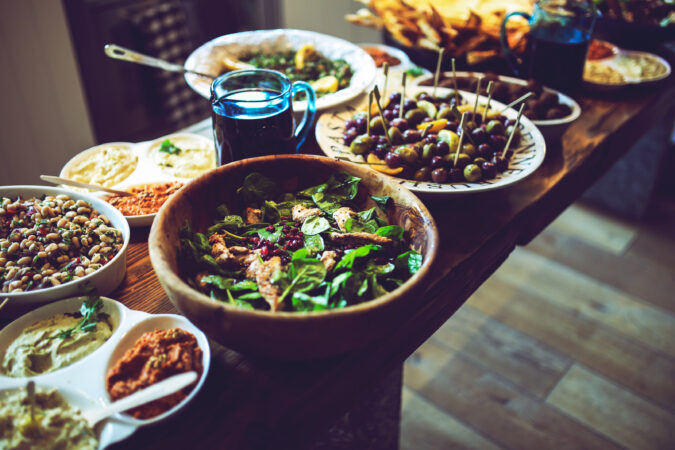
long spread of food on wood table

Don’t worry, I won’t do that again any time soon. But I haven’t had a flare that lasted this long or put me in this much pain in a decade so I no longer remembered the effects viscerally.

If you try an elimination diet, make note of foods that you tolerate well when you begin adding foods back. This can become your go-to diet for recovering from an accidental ingestion of foods that irritate your system.

Using well-tolerated foods as your base, slooooowly add back foods that typically give you the least issues. For instance, I don’t usually have problems with beef until my system has already been triggered to overreact. In that circumstance, beef may cause a significant detrimental reaction.

It’s best if I don’t rush to eat beef once I feel better. If I do, I risk starting the healing process over to some degree. Not only will that bring physical discomfort, it will bring multiple levels of frustration.

Would I love to eat some chocolate today? Yes, it sounds yummy. But chocolate is an irritant I cannot tolerate in large quantities or often. Instead, I’ve gone back to the dietary basics I started with a month ago.

This is a great opportunity for me to practice patience. I will today and tomorrow, but as I begin to feel better, the temptation to eat something that tastes better will reappear. That’s when my resolve will be tested.

To entice myself to continue to eat safe foods, I can add small bites of relatively safe foods to jazz things up as I continue with the basics. Adding a little honey to my toast, a bit of goat cheese to my eggs, a bowl of rice with a dab of butter and raspberry jam to my breakfast, can introduce enough taste variety to reduce the temptation to eat chocolate or Cheetos.

There’s no set time frame for getting back to a more varied menu after a flare but learning from my mistake and not going back to a full diet immediately after you feel better for a day can prevent a lot of pain. After a flare, it’s better to add back slooooowly.

Playmates

Postural Orthostatic Tachycardia Syndrome (POTS) and Mast Cell Activation Syndrome (MCAS) are frequently playmates in a patient’s system. Their interaction can worsen symptoms and send patients through a maze of doctor visits trying to figure out what’s happening as their quality-of-life decreases.

When you get playdates like this going in your system (these are not the only chronic conditions that often occur together), diagnosis can be difficult and take weeks, months, or years. It’s not the kind of thing our diagnostic system is good at. And once you get a diagnosis, the only solution may be to manage the conditions.

Vignette of dice with shadow.

Have these? Want to scream? Yeah, I know. I’ve had two conversations this week with people who walk this tightrope all the time. It can be hard and exhausting. If you then meet resistance from health professionals when you request measures to avoid items that trigger a flare, it can be beyond frustrating. And, if you’re female, your concerns may be dismissed altogether.

None of this means you’re crazy. If you feel dizzy, you feel dizzy. If your right eyelid sometimes swells and feels heavy, it does. If you have rashes that will not go away even with prescription medications, there’s probably a trigger that’s causing a flare of some sort. If the room spins or you faint, it’s probably not all in your head. And yet, some physical reactions can stimulate emotional responses.

So what should you do?

Visit a physician. If you suspect you have POTS, MCAS, Ehlers-Danlos Syndrome, or Long COVID, search for physicians who specialize in these conditions. If there are none in your area and you have the ability to travel, visit one in another area.

If you can’t afford to travel, but have a medical school nearby, reach out to their research arm or see if you can get your case presented at grand rounds. The goal is to get more eyeballs on the problem.

Learn as much as you can. While it’s best to leave the diagnosing to the professionals, you are a part of your own health team. If you have information that you believe may help, it’s okay to provide that. If you have questions, ask them.

Visit the National Organization for Rare Disorders https://rarediseases.org/understanding-rare-disease/undiagnosed-diseases/

Check out The Dysautonomia Project https://thedysautonomiaproject.org/ for educational information on disorders of the autonomic nervous system.

See if the Autoimmune Association has relevant information. https://autoimmune.org/

But keep in mind that when two conditions coexist, diagnosis may be more difficult. https://www.eds.clinic/articles/eds-pots-mcas-trifecta

Follow dietary recommendations that can help. With MCAS, this means avoiding histamine containing and liberating foods. It may also mean avoiding certain medications and ingredients in personal care products. With other conditions, there will be different lists.

Talk to people. Find an existing community or compare notes if you run across someone else who experiences similar symptoms. People who are managing related conditions may be able to suggest triggers you have overlooked or symptoms that you thought were unrelated.

Finding a community that’s helpful can take some work and flexibility, but it’s rarely impossible. Stick your toe in the water and only wade in when you feel comfortable.

Establish a routine. Include eating at fairly regular intervals, drinking plenty of water, good sleep habits, and down time to let your system regroup.

Change what you can. If there are stressors you can let go of, do. A system that’s already overloaded will be more likely to have a lower threshold for triggers.

Trust yourself. I know when your gut is cramping and your vagus nerve has sent the room spinning, you may feel both sick and crazy. You are not. Something needs attention.

When something needs attention and you find yourself being summarily dismissed, you may need new playmates. A supportive community and a curious healthcare team can be just what the doctor ordered.

Happy Foods

What are your happy foods? I don’t mean in a scientific, how does something affect your gut biome and elevate your mood. I mean, what are the foods that make you happy to take a bite?

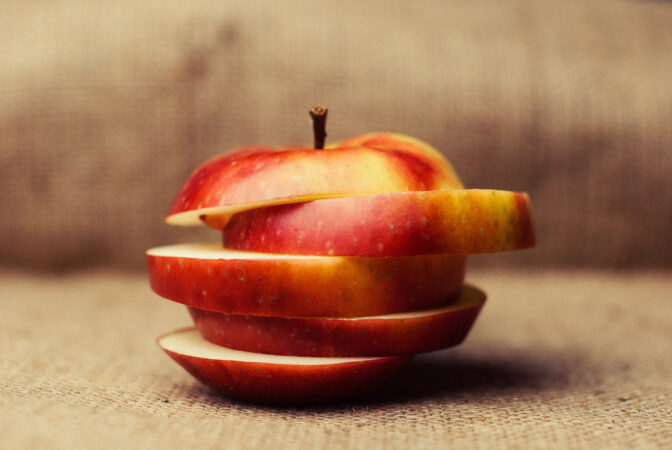
Apple sliced and restacked.

Along with the need to eliminate additional foods from my diet has come a certain ambivalence toward meals. I still get hungry. And I still enjoy playing with recipes. But the everyday meal has become more about getting something in me so I don’t have a sugar crash.

Much of the pleasure of a meal gets lost in the uncertainty that comes with not knowing which day a food will affect me in an unexpected way or exactly why. My friends who have experience with oral chemo describe a similar phenomenon.

Feeling blah about meals can help you cut costs. It seems especially wasteful to buy expensive restaurant food when it doesn’t taste any more exciting than the tacos you have waiting at home. But it can also change your social life if you often gather with friends for food and drinks.

It also becomes more tempting to be less particular about balancing your diet or even eating healthy. Reaching for things that are consistently safe doesn’t always mean you’ll achieve a balanced mix of nutrients.

It’s easy to resort to cereal and milk if you know that’s the one thing that brings no ill effects. Who cares if you’ve eaten cereal for dinner 6 days in a row? Or in the case of my mother, lettuce with a squeeze of lemon juice was her go-to once she was past her Dr. Pepper and saltine cracker phase.

In retrospect, I’m guessing Mom suffered from mast cell activation syndrome (MCAS). Her symptoms and the list of medications to which she had adverse reactions point that direction. Since it wasn’t a known or researched condition when she was growing up with “allergies,” it’s impossible to know.

But given her sometimes immediate and significant reaction to food, I understand how she could have reached a point that it became so difficult and confusing to try to choose a variety of foods that it became easier and more comfortable to stick with the few things she knew were safe. Although I understand how that could happen, I could also see how her health suffered from lack of nutrition.

One trick for motivating yourself to include variety when it’s easier to eat a grilled cheese sandwich again is to explore your happy foods. Let yourself get hungry. Not starving, but hungry. Stand in your kitchen and pick something you have on hand that you remember enjoying.

It doesn’t need to be a food you want right now. There may not be anything that appeals to you in the moment. Just pick something you remember making you happy. Eat it. Savor it. See if it makes you feel happy to eat it now. If so, add it to a list.

Later you can refine this list. If some food gives you a questionable reaction, note that in real time. If your list is filled with unhealthy foods, keep refining until it’s not.

Today, I have raw almonds in the house for the first time in a few weeks. I took a handful and ate them before lunch. It reminded me how happy I am eating almonds.

That tiny act then led me to eat a golden delicious apple. I’ve always known they make me happy. Their skin isn’t tough. I like eating it. The apple is sweet, but not too sweet. The texture is juicy and firm. And I remember picking them on a trip to the orchard when I was a kid.

The significance lies in the fact that choosing one thing I knew made me feel happy led me to eat another thing that makes me feel happy. And both of them are healthy, gluten-free, and well tolerated by my histamine sensitive gut. I doubled both my pleasure and my nutrition component simply by choosing happiness.

Could there be an easier way to make a choice? I don’t think so.

Will every happy choice be healthy? No, of course not. I might choose a chocolate bar and then later regret how it makes me feel. That’s the reason for keeping a list to remind myself in advance. But just like every top-down/bottom-up approach, when I choose happy, I’m more likely to choose healthy and when I choose healthy, I’m more likely to be happy.

Starting with happy narrows down the number of foods I need to research for health purposes and also makes me more likely to do that research later. It’s energizing in a way that’s similar to seeing sunshine outside your window. You may not be out in it yet, but you feel the anticipation of good things to come.

What better time than now to reach for some happy foods!?

ad