If you upset your system be sure to add foods slooooowly once you’re feeling better. The mistake I made eating smoked brisket in August, is still affecting me. No, it’s not my imagination. No, it’s not fun. It affects my everyday life, my work life, and my social life.
That’s what ingesting gluten, or triggering an IBS, or MCAS flare can do. It can disrupt everything! The results can make familiar situations so uncomfortable you have to change your routine. And, in the case of me yesterday, they can mean you have to lie down after a meal because if you don’t you feel dizzy or too tired to move.
For the next couple of days, I will eat primarily apples, eggs, potatoes, sweet potatoes, and limited amounts of chicken or turkey. These are things my system tolerates well even during a flare. As time goes on, I’ll add squash and English peas.
The second mistake I made is, once I felt normal for a day, I rushed back to my regular diet and even tempted fate with restaurant food and a few Cheetos. The restaurant is local and uses fresh food, but still may have stretched the limits. Cheetos. I knew better.
Don’t worry, I won’t do that again any time soon. But I haven’t had a flare that lasted this long or put me in this much pain in a decade so I no longer remembered the effects viscerally.
If you try an elimination diet, make note of foods that you tolerate well when you begin adding foods back. This can become your go-to diet for recovering from an accidental ingestion of foods that irritate your system.
Using well-tolerated foods as your base, slooooowly add back foods that typically give you the least issues. For instance, I don’t usually have problems with beef until my system has already been triggered to overreact. In that circumstance, beef may cause a significant detrimental reaction.
It’s best if I don’t rush to eat beef once I feel better. If I do, I risk starting the healing process over to some degree. Not only will that bring physical discomfort, it will bring multiple levels of frustration.
Would I love to eat some chocolate today? Yes, it sounds yummy. But chocolate is an irritant I cannot tolerate in large quantities or often. Instead, I’ve gone back to the dietary basics I started with a month ago.
This is a great opportunity for me to practice patience. I will today and tomorrow, but as I begin to feel better, the temptation to eat something that tastes better will reappear. That’s when my resolve will be tested.
To entice myself to continue to eat safe foods, I can add small bites of relatively safe foods to jazz things up as I continue with the basics. Adding a little honey to my toast, a bit of goat cheese to my eggs, a bowl of rice with a dab of butter and raspberry jam to my breakfast, can introduce enough taste variety to reduce the temptation to eat chocolate or Cheetos.
There’s no set time frame for getting back to a more varied menu after a flare but learning from my mistake and not going back to a full diet immediately after you feel better for a day can prevent a lot of pain. After a flare, it’s better to add back slooooowly.
My email inbox has seen an uptick in training opportunities related to reducing abdominal pain through trauma treatment. I haven’t attended any of these, but it’s entirely possible that some forms of abdominal pain are caused, or exacerbated, by a history of trauma. When that is the case, it stands to reason trauma treatment could help alleviate symptoms.
An interesting study is taking place in The Netherlands hoping to gain insight into the effectiveness of Eye Movement Desensitization and Reprocessing (EMDR) treatment on abdominal pain experienced with Irritable Bowel Syndrome (IBS). The results could bring the possibility of additional tools to the clinical treatment of IBS. Given that there are currently few effective treatment options, these would be welcomed.
EMDR isn’t the only trauma treatment that may be effective. Attachment healing could be helpful. Somatic Experiencing could be another option. These therapies can be used in combination or succession to create individual trauma treatment plans.
Will this mean that you can forget about restricting your diet and go back to eating whatever you want? Not necessarily. But it may mean reduced physical pain and less emotional stress without a need for pharmaceuticals and their side effects. And it could mean it’s possible to reintroduce some foods without dire consequences.
More research is needed before the scientific community can make any specific determinations. And research moves slowly. In the meantime, if you have experienced trauma, you may want to explore some of these treatments for relief from any lingering effects. Even if they don’t change the way you need to eat, treatment could still be beneficial.
Another option is to participate in a scientific study. As a participant, you will contribute to moving science forward. Not all studies require you to consume medication and all require informed consent. The NIH lists several resources for finding and being matched with a study that fits your circumstances.
The more we learn, the more options we have. That’s why scientific advances are so exciting! We don’t always get the specific answer we desire, but any progress is progress. I’m thrilled by the changes in trauma treatment and the possibilities they bring for expanding the number of foods I can enjoy.
While restrictive diets may continue to play a large part in eliminating various types of abdominal pain, it’s hopeful to see research that is exploring nonpharmaceutical alternatives that could have additional benefits. If trauma treatment can decrease physical abdominal pain along with emotional stress, that’s a big win!
This post originally appeared here in 2015. Since that time, I’ve served as a hospital advisor and member of a Quality Experience and Safety Team Committee at the same hospital. I am not a healthcare professional. I was there to represent patients and families.
At the time, this type of representation was seen as valuable. I say that, there was definitely a period of skepticism within QUEST team as to whether my contributions should be considered. Nonetheless, for a period of time, I felt my contributions to policy made an impact.
Due to family obligations, I stepped back from that committee after a few years. Then came the pandemic and a shift away from patient centered care. There was still lip service, but the division that was happening in general began to happen in the hospital advisory council.
Pointing out an area of weakness was vocally called out as complaining. Vulnerable members were left hanging without resources. There was no leadership to facilitate prickliness.
What had been a room in which I felt all opinions were valued and explored became a place I felt misaligned, uncomfortable, and helpless to make any positive advances. When I resigned, we were no closer to an easy to navigate health system than we had been when I started.
Could I have stayed and fought? Of course. But from the time I was small, I’ve been put in situations where I had to fight for agency, dignity, safety, and a voice. It’s exhausting to always be fighting. It takes away time and energy that can be spent in productive and enjoyable endeavors. And that is where I prefer to invest.
This morning, I read a post on Bluesky from a LongCovid patient who is exhausted from trying to find a doctor that acknowledges and understands how to treat her condition. She may or may not have had the life experiences I have, but she and almost 9% of adults in the US who have ever had COVID now must fight a lengthy, exhausting fight to find treatment that will restore some quality of life.
My heart breaks for all of these patients. I’m so sorry for the misinformation and horrible policies that have contributed to their plight. While it won’t take away their struggle, perhaps something from this old post will help:
Navigating medical care can be an exhausting process as any celiac, IBS, Crohn’s, diabetic, or cardiac patient knows. As this year draws to a close, I’m looking forward to the renewal a new year promises.
I spent the past few days with my mom in a rehab facility. She is a dialysis patient and last week had 3 small strokes. On the phone from the ambulance as she was transported to the hospital, she sounded ok, but said her right arm and hand wouldn’t work right. Five days later, she arrived at a facility where she could receive physical therapy multiple times per day. It was Christmas eve.
Of course holiday staffing varies from the norm. On Christmas day, our nurse was in charge of 60 patients. There are 480 minutes in an 8 hour shift. That means, she could spend 8 minutes per patient even if she didn’t take a single break. We used more than 8 minutes of her time when my mom passed out in the wheelchair from low blood pressure. Needless to say, there is no time for the staff to make sure Mom eats or gets enough fluids.
My mom is lucky because at least one of us has been able to be there for a portion of every day. In spite of that, it has been difficult to get enough information together to assess whether a bad day is just a bad day, or the beginning of a downward trend. It’s hard to know whether we need to quit worrying about the food on the cafeteria tray and just get some Power Yogurt down her. We know she’s not getting enough protein to fend off infection for long. Unfortunately, our experience is not unusual.
I learned long ago when I had a rare parasite that caused recurring pneumonia that when you’re weak and in pain, you must have an advocate with you every step of the way or you can quickly be dismissed and become lost in the system. My lawyer boyfriend was with me when I was trying to get a referral to a large diagnostic clinic. He could barely contain his laughter watching me bite my lip when my pulmonologist said, “If you didn’t have an intelligent boyfriend here with you, I’d say this is all in your head.” And he wasn’t the first physician to say that during my two year ordeal.
I was young, healthy, went to the doctor promptly and still almost died with the first pneumonia after having been diagnosed with a bladder infection. I actually had psittacosis from Chlamydia psittaci which had become encapsulated in a recently capped tooth. This experience made me acutely aware that navigating medical care is best played as a team sport.
During that two years, I read all of my medical charts. This was also an eye opening exercise. The history recorded in the charts often wasn’t even remotely related to the history I gave. I realize my symptom group was unusual. Well, actually it wasn’t for someone with psittacosis, but it was unusual enough for one nurse to determine that I was just a bad historian.
At some point, most of us will need the expertise of the medical system. Without it, we do not have the depth of knowledge, necessary labs, sophisticated testing equipment, or access to medication that may be necessary to get us through a crisis and put us on a path to improving health. Is there anything we can do as patients to make sure we have the best chance of getting optimum results from medical care?
While nothing will guarantee a certain health outcome, here are 5 things you can do to facilitate a more positive journey in the healthcare system:
1. Choose a friend or family member you trust to act as your advocate in any major medical event. The best advocates care about your well-being, can remain calm in a crisis, are good listeners, can process and prioritize information, are unafraid to ask questions, and will tell you the truth in a kind manner.
2. Keep a daily journal of your condition. Try to record facts without interpretation. For example, if you feel your energy level has significantly dropped, record how much sleep you get, when you get it, how many fluids you consume and what kind, what you are eating, how much and when, how much exercise you get, what kind, and when you get it, then note how tired you feel on a scale from 1 – 10.
Doing this every day will help you have a realistic picture of what is happening over time. It will also help identify areas in which a change in routine may help improve your symptoms. If you are too weak to do this, your advocate or caregivers can make notations for you and record their observations as well.
3. Be informed. Ask questions. Make decisions. You are ultimately in charge of your healthcare. If you do not ask questions, you may be passively agreeing to treatment you would never actively choose. It can be helpful to think of yourself as pilot in command.
In an airplane, the pilot in command (PIC) is the person who makes the final decision about what will happen in an airplane. He can accept or refuse instructions from air traffic control and he is in responsible for all operations of the plane until he actively turns over command to another pilot by saying something like, “your plane or your aircraft”, and hearing “my plane” as a response. He then repeats, “your plane”. This is called a Positive Exchange of Controls.
If air traffic control says, “23 Charlie Tango cleared to land 22 left” it does not mean that the PIC must land the plane. He can request a different runway. If he is not cleared for the requested runway, he can initiate a go-around.
You are the pilot in command of your healthcare. You will receive lots of information from instruments and personnel. The more informed you are, the better the quality of questions you can ask and the better resulting decisions you can make. Your doctor is air traffic control. From his vantage point, he can see traffic and the runway better than you can, but he won’t know that you had a fuel leak and do not have enough glide distance to make the runway without input from you. You have the best odds of a safe landing when you work with your doctor as a team to identify alternative landing areas. Once determined, you decide the destination with which you feel most comfortable. You inform the doctor where you prefer to go from here, then you focus on the procedures that will result in your best chance to safely reach the landing area.
Just as it is common to think that air traffic control actually means the tower is in control, many patients do not recognize that they have the choice to request a plan that fits them. More typically, they defer to whatever initial plan the doctor proposes while they’re in her office and then fail to follow that plan once they get home and it doesn’t fit their lifestyle. This can be detrimental to any long-term progress.
4. Treat everyone kindly beginning with yourself. When you have a chronic condition rather than a medical emergency, it can slowly eat away at your energy and attitude. A desire for relief may lead to impatience with medical staff. While you may feel justified in taking your frustration out on nurses, techs, or aides, doing so will not encourage them to treat you kindly.
The simplest way to prevent reaching the point at which you lash out is to recruit consistent, adequate social, emotional, psychological, and spiritual support. These needs are very individual, so a high level of self-awareness will be helpful in determining what and how much you need.
Incorporating a regular exercise, meditation, or yoga practice can strengthen your connection to internal resources. You may also find restoration in activities like gardening, cooking, writing, reading, fishing, walking, painting, woodworking, swimming, dancing, volunteering, or playing with your children or grandchildren.
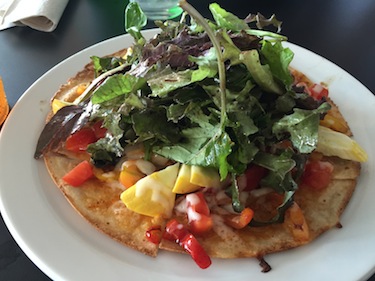
5. Decrease the need for medical intervention. You don’t have to worry about navigating the medical system when you’re healthy enough to only require routine check-ups or regular monitoring. In some cases, significant lifestyle changes can minimize the need for medical intervention. The effects of regularly eating a balanced diet of fresh foods, drinking plenty of water, getting adequate sleep and exercise, and filling our lives with passion and laughter should never be underestimated.
The new year is always a great time to wipe the slate clean and do things differently. I hope you’ll find these tips helpful the next time medical care is required.
Sometimes it’s hard to find a meal that will keep me
satisfied until it’s mealtime again. Some days it’s no problem at all. Why? I’m
trying to figure out the pattern.
Years ago, I took some online diet test that was designed to
separate people into 3 groups – those who need primarily protein, those who
need primarily carbs, and those who need a balance of the two at each meal. I
don’t remember much about the site or whether there was science to support it. I
have seen anecdotal evidence that make the premise feel true.
I tend to believe that I feel best with a balance, but I can
still feel inexplicably hungry after eating plenty of calories. And I can feel
full after eating not nearly enough. Sometimes the most frustrating thing to understand
is why I feel hungrier 30 minutes after I eat than I did before I started.
Most likely, the explanation is that my gut/brain connection
does not function optimally. When we eat, nerve receptors in the stomach sense
when the stomach is full. They send a signal to the brain that should result in
a sensation of fullness.
Conditions like stomach ulcers, IBS, and reflux can contribute to feelings of early satiety. It stands to reason that any intestinal damage due to celiac disease could affect the messages that travel from my gut to my brain.
The specific cause may not be diagnosable, but knowing my
senses are off kilter is important. Being aware can help me make sure I ingest
enough nutrition, and also help me stop eating before I consume calories I don’t
need.
Of course, that’s all easier said than done. If I don’t feel
hungry, it’s hard to get myself to eat. If I feel like I’m starving, it’s hard
to keep myself from eating until I feel full – even if that means eating way
more than I should eat.
Trial and error tell me that to keep things even keel I need
a meal with red meat every two or three days. I need a little protein along
with carbs in the morning. Lunch and dinner should include a bulky salad, black
beans, or a baked potato along with protein, fruit, and gluten-free crackers or
bread. Other vegetables are great, but don’t often do much to make me feel
full.
Eating at regular intervals spaced about 3 hours apart gives
me the best results as far as keeping my energy steady and avoiding major
feelings of hunger. When eating often, the amount doesn’t have to be large.
I may never get the puzzle exactly right, but doing the
things I know work as frequently as possible can at least help keep me
satisfied.



 2. Keep a daily journal of your condition.
 5. Decrease the need for medical intervention.
