The Best Things Take Time

The best things take time. Sometimes it’s hard to remember there can be value in moving slowly. With so much at our fingertips, we’ve developed unrealistic expectations and an impatience that may prevent us from pursuing options that might be more rewarding in the long run.

It’s the way of modernization. Computers revolutionized graphic design, speeding up the process. Dropping the background out of a photo went from painstakingly cutting Rubylith® with an X-ACTO® knife to creating a mask in Photoshop. Errors didn’t mean starting over. Additional effects were available at the touch of a mouse. But rather than resulting in ever more complex and intricate designs, the deadlines just got shortened and expectations of quality slowly declined.

Gardening falls prey to rushing as well. There are ways to hurry the process – start with plants instead of seeds; choose only fast-growing plants; grow using hydroponics and grow lights. If you’re in need of food quickly, all of these are great options. But if you’re looking for the pleasure of discovering shoots peeping through the soil and digging in the dirt, they won’t necessarily add pleasure.

Taking time to savor a meal is often sacrificed to holding a sandwich and the steering wheel in the same hand. And forget taking your time to prepare food from scratch. Store selections, overbooked schedules, and even cooking shows push a narrative of faster is better.
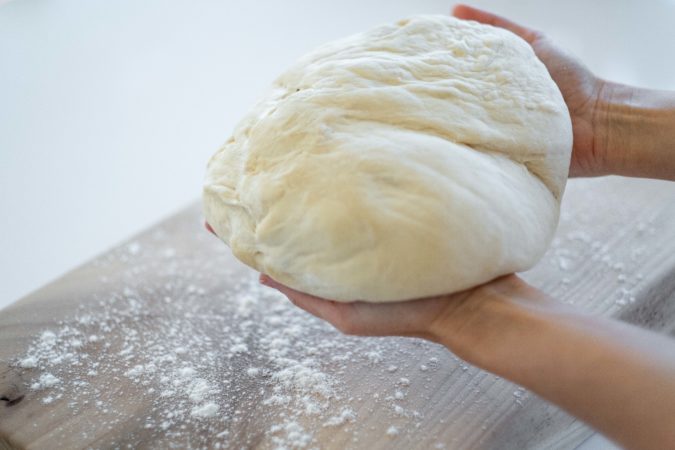
I’m not immune from taking on too many obligations and sticking with things too long even when they detract from my quality of life. But I am aware that I’d rather make bread using my hands instead of a bread machine. I love watching the dough slowly rise while smelling yeast in the air. The whir of a machine doesn’t bring the same level of immersion or pleasure.

I know that reading a novel takes longer than renting the movie, but the art of beautiful language is often lost in a screen adaptation. And there’s something less magical about the character you see on screen versus the character you see in your mind. That’s often why movies don’t measure up when you’ve read the book.

As we become more chronically ill and anxious in the US, I have to wonder how much these states are related to our rushing around choosing shortcuts?

I spent what seemed like an eternity prepping fresh green beans today. Will the result be worth it when I cook them? Absolutely. No frozen or canned beans ever come close to comparing. And once I started, I enjoyed the process.

That’s just it. Once you start anything, you’ll be surprised how many times you enjoy the process. The torture comes more often from procrastination than from trying or even trying and failing. When you allow yourself to learn, failing has its own rewards.

So, stop fooling yourself. Start whatever it is you are delaying. See how it goes. Note whether you were tempted to take a shortcut because of misinformed anticipation or fear or something else. Knowing what stops you will help you avoid the same pitfall in the future.

Also take note of all good things that come along with deliberately moving slowly. Awe-inspiring art, soul-moving music, breathtaking choreography, powerful narrative, and unbeatable baking all originate in in slow space because the best things take time.

Disclosure of Material Connection: I have not received any compensation for writing this post. I have no material connection to the brands, products, or services that I have mentioned. I am disclosing this in accordance with the Federal Trade Commission’s 16 CFR, Part 255: “Guides Concerning the Use of Endorsements and Testimonials in Advertising.”

LADA DADA DA

Latent Autoimmune Diabetes in Adults (LADA) could be the reason a person diagnosed with Type 2 diabetes does not respond as expected to lifestyle changes or treatment. Most of us are familiar with two types of diabetes: Type 1 and Type 2. But there’s another option that is lesser known and sometimes overlooked.

LADA shares features of both Type 1 and Type two diabetes mellitus. It is a specific form of autoimmune diabetes that is characterized by slower evolution towards β-cells failure and insulin dependence. The fact that a newly diagnosed adult may not require insulin can make it appear that a patient has Type 2 diabetes, especially if no screening is done for islet-cell autoantibodies.

The other day, I ran into someone I haven’t seen in years. When I asked how things were going, he mentioned that he is a recovered Type 2 diabetic. If that same person were suffering from LADA, the lifestyle changes he made that allowed him to no longer be insulin dependent would not have the same effect. Once he reached a point at which he needed insulin, it would most likely not be reversible.

It’s easy to read this and think, okay so no big deal. Your doctor will treat you based on blood glucose levels and it doesn’t really matter whether you’re misdiagnosed or not. To some degree that may be true in the early stages of LADA.

But even if a patient is medically stable for a time, the respect with which they are initially treated may wane as the disease progresses in spite of their best efforts and eventually may be lacking entirely. A patient who is not respected is rarely heard or believed meaning that the level of care they receive could decrease.

I’ve been down that road more than once when I had difficult to diagnose conditions. At some point, multiple medical professionals decided that if they couldn’t find the problem, I must be the problem. That’s human nature I suppose, but it didn’t benefit me medically or psychologically. It turned difficult physical circumstances into traumatic events and presented me with an exhausting job of research while trying to survive and function.

Since most diabetics in the US diagnosed as an adult receive a Type 2 diagnosis, identification of those with LADA is dependent on further testing. Past initial diagnosis, an overweight adult African American female may have difficulty obtaining screening for LADA. The same is true of overweight white females in many southern states.

Without further testing, a physician may come to believe a patient who continues to struggle with blood sugar fluctuations is not adhering to a recommended plan. This can lead to misunderstandings and frustration. It can also mean that patients with LADA do not receive treatment to preserve insulin-secreting capacity.

Due to the heterogeneous nature of LADA characteristics, there is no across the board treatment consensus at this time, but there is a push for large randomized controlled studies to gather data that can inform treatment plans.

There is also ongoing research looking at the effects of continuous glucose monitoring in patients with elevated A1C. Perhaps the data being gathered will reveal a way to design future studies to identify potential LADA patients using CGMs.

In the meantime, if you have been diagnosed as an adult with Type 2 diabetes, have not been screened for islet-cell autoantibodies, and have continued to struggle despite following doctor’s orders, it may be time to request further testing.

https://www.cooking2thrive.com/blog/i-dont-want-to-doctor-myself/

ad

Elevate Your Experience

Go black to elevate your experience! I recently bought ground fermented black garlic for to use in a recipe. Now, I can’t get enough! I’ve put it in every entrée I’ve cooked since the jar entered my house.

Black garlic begins as the regular fresh garlic you know. It’s placed in a controlled environment for 15 to 90 days at a temperature of 140 – 190 degrees with high humidity. Over time, enzymes in the garlic break down and it turns black and becomes sticky. The flavor also changes.

As the garlic ferments, it becomes more mellow. Sharp pungency gives way to toasty sweetness that doesn’t leave the same strong aftertaste in your mouth. It has a comforting aroma that reminds me of toast for breakfast.

Aside from yeast bread, I can’t think of many foods that smell as comforting. This characteristic surprised me. And I’ve been impressed at how a little of it can impart the same feel to a whole dish. And that’s just in the ground form I’ve used so far. I’m looking forward to trying whole cloves.

With whole cloves, the sticky inside can be turned into a paste or liquid by adding water. The idea of garlic paste reminds me of the garlic sauce at Zankou Chicken®. When I’m living in LA, we order from Zankou just to get the garlic sauce.

Those who have tried to copy Zankou’s sauce say it contains potato. I’m thinking I need to play with a black garlic and potato paste of some sort. In fact, I can’t wait!

Right now, I envision black garlic sauce with just a touch of pico de gallo as a good combo. Not sure what I’d serve it with, but that will come to me.

I’m also thinking I might use it in or on a breadstick or bagel in place of butter or cheese. It would be delicious with cheese as well, but for those of us who need a substitute, I think it could be an amazing option.

The umami flavor of black garlic also works well with chocolate, cheese, or red wine. Like regular garlic, some cloves will be sweeter than others. The specific flavor of a clove can guide you toward a perfect pairing.

Ground black garlic can be used in soup, meat-based pasta sauce, meatballs, egg dishes, burgers, and risotto. It’s as good with ground turkey as it is with beef. In fact, it deepens the flavor of turkey burgers in a pleasing way.

If you have a significant number of dietary restrictions, finding new ways to season a limited number of ingredients can keep things fresh and appetizing. That can be a key motivator to adhere to healthy choices.

Black garlic is a great way to alter your regular dishes and upgrade everyday meals. Try it! It’s a great to elevate your experience!

Disclosure of Material Connection: I have not received any compensation for writing this post. I have no material connection to the brands, products, or services that I have mentioned. I am disclosing this in accordance with the Federal Trade Commission’s 16 CFR, Part 255: “Guides Concerning the Use of Endorsements and Testimonials in Advertising.”

Sankou Chicken | Rotisserie Chicken, Shawerma, Tarna™, and our legendary Garlic Sauce

ad

Different Times, Different Timetables

We seem to be in an era of throwing things out quickly – different times, different timetables, I guess. While I have to be conscious of histamine levels in food, I don’t have as much a compulsion as the interwebs say I should about shoving things in the refrigerator immediately.

I also think leftovers can be good for longer than 3 days. I’m not trying to promote unsafe food, but some households’ safety precautions seem to be based on the guesses of someone else rather than any solid science.

There are a few things we never worried about when I was a kid. Salted butter stayed on the countertop, not in the refrigerator. Bacon fat sat in a container, sometimes embossed with the word GREASE, on the stove waiting to be used again and again. Pumpkin pie sat out all afternoon without anyone thinking they’d die from eating a piece.

The other night, I accidentally left a small container of cooked rice on the stove all night. The next morning, I considered eating it for breakfast. I ultimately opted not to, but I’m still not sure why other than a lot of bot-delivered information is floating in my head. Sell by, best by, and use by dates have been so confusing and erring to the side of caution so common that we throw away lots of food that is most likely edible.

My grandmother was a stickler about foods containing mayonnaise, but fried chicken could sit out for a long time without her growing concerned. I say that, but even in her day we carried potato salad to the river for a picnic in an uncooled basket. That was a 30-minute drive in an unairconditioned car plus time to unpack and get settled. The amount of time the salad spent out in the elements given the conditions would send some of my current associates into panic.

Added preservatives give food a longer shelf life, but I suppose at this point they also serve to reassure the hypersensitive consumer. We no longer need root cellars or spring houses, but we have an increase in food intolerance.

We place food that’s been trucked around in all sorts of conditions in refrigerator containers designed to preserve edibility when something grown on the back porch would last longer without anything special. And I think that’s the crux of the difference between then and now.

In many communities, the fresh food available to us isn’t as fresh as it once was so we have to be more concerned about its condition once it’s in our hands. I’ve bought celery before its sell-by date, opened it immediately and been met with a foul smell. Grocery delivery often brings me meat that says to cook it by the next day.

These days, you have to be on your toes to avoid food spoilage. There are green boxes, produce life extender bags, and bluapple® freshness saver balls to help fruits and vegetables last longer. You can always throw meat in the freezer. Just be sure to note on the package how many days you have to cook it once it thaws.

Given the changes that have taken place in agricultural operations, food transportation, and food storage, we have less time to relax on the front end before using food and more time to be worried about food spoilage on the back end. It’s no wonder we waste food. Different times, different timetables.

Safety First & Forever – in thriver words (cooking2thrive.com)

Debbie Meyer Innovations | Official Site

Keep Produce Fresh, Reduce Food Waste, Save Money – Bluapple (thebluapple.com)

Disclosure of Material Connection: I have not received any compensation for writing this post. I have no material connection to the brands, products, or services that I have mentioned. I am disclosing this in accordance with the Federal Trade Commission’s 16 CFR, Part 255: “Guides Concerning the Use of Endorsements and Testimonials in Advertising.”