
Time is time. Though our perception of it may change, time is a regular beat moving ever forward. Time after time, we change the clocks from Standard Time to Daylight Saving Time. This doesn’t change anything other than what the clocks say.
Lots of voices on your screens will tell you Daylight Saving Time (DST) means more daylight. NOOOO! It does not. There are exactly the same number of minutes of daylight as there would be if we remained on Standard Time.
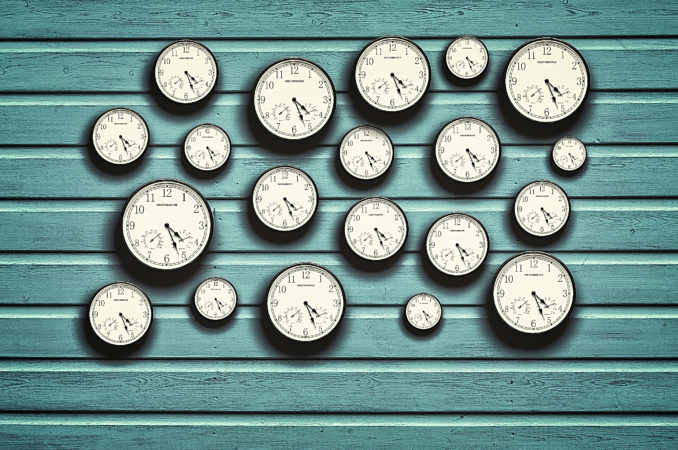
Why DST didn’t fall under if-it’s-not-broke philosophy, I’ll never know. But studies show that changing back and forth can increase the relative risk of many diseases. The effects may not be caused by the time change itself, but the added stress it causes.
A review of patient data for 159 million people in the US and Sweden indicated “immune-related disorders tend to become more common than expected in the first week following each spring DST shift. The largest effect sizes is observed for the following conditions: an approximate ten percent increase in the RR (relative risk) for some cardiovascular and heart diseases in inpatients under 20, injuries at various locations and ages (in the frequentist framework, RR estimates increased by 30 percent), and some immune disorders in senior males….The results suggest risk expansion in diseases involving the immune, circulatory, and digestive systems, the musculoskeletal system, and connective tissue (MSCT), the endocrine systems, some infections and injuries, mental and behavioral disorders, neoplasms, problems with pregnancy, childbirth, and the puerperium (PCP), and symptoms and signs across various systems.”
The effect on immune-related disorders was unexpected, but good to know. Those of us with celiac disease, Crohn’s disease, rheumatoid arthritis, and other autoimmune disorders who may be at increased risk can take deliberate measures to reduce stress around the dates that the time standard changes.
At this point, I could mention I’m refusing to adopt DST this year. I work remotely so being an hour out of sync will make no difference most of the time. Of course, I’ll have to accommodate others’ adoption when we plan meetings or meals, but that’s no different than what I do with colleagues, friends, and family who live in different time zones. A non-adoption policy seems like the healthiest choice.
Even if you switch to DST, you may be able to leave your meal and sleep times intact. If you currently eat lunch from 12 – 1, switch to 1 – 2. That way you don’t have to disrupt your system. The same with sleep – if you currently retire at 10 and sleep until 6, retire at 11 and sleep until 7.
I realize not everyone has that sort of flexibility, but if you do, why not make the most of it and keep your system in sync with Standard Time? Then you don’t have to adjust to anything other than seeing different numbers on the clock during your scheduled activities.
If you must shift meals, sleep, and workout times, keeping to your regular schedule (albeit an hour different) can be more helpful than chaotic disruption.
Other things you can do to minimize potential effects of time change:
- Minimize your workload for a few weeks to reduce stress.
- Transition slowly by changing your schedule 10 minutes a day for the 6 days preceding the time change.
- Schedule something that is fun or relaxes you for the weeks following the change – spa days, golfing, swimming, whatever you enjoy.
- Nap. Some people swear by naps all year long. Try one. See how it makes you feel.
Speaking of, I need a nap. This week, I don’t have the luxury of being on my own schedule. But I plan to take a day off tomorrow and relax, relax, relax. Seems like that’s the safest thing to do the week after springing forward.
 My dad used to say it as if it were my full name, “Cheri, Cheri, quite contrary.” His version was, of course, a takeoff of the nursery rhyme in which the line that follows reads: “How does your garden grow?” I hear him again in my head each spring when my yard begins to bloom. Was he just being funny, or did my dad have a point? Am I contrary?