
If you really get to know your food, will you want to eat it? When it comes to processed food, probably not. But will you make more informed choices? Obviously.
Withholding information as a way to influence or control has been a theme in my life. As a result, I like information, the bottom line, evidence. Give me the bad news. I can take it.
I’m not saying I’m tough. I just understand that withholding means I cannot make the best decision possible. We simply must know what we’re dealing with to make informed decisions. Data before the fact is a better option than recalls.
Information is power. You and I may make different decisions based on identical data, but having the data gives us that choice. Without it, we are at someone else’s mercy. Often, withholding information is used as a power play. When anyone or any entity refuses to provide or goes to extreme means to tightly control information, their motives are suspect.
In the food industry, we know the motive is profit. Since Upton Sinclair’s 1906 novel, The Jungle, we’ve been aware of the lengths to which industry will use and abuse humans in service of profit. We like to think industry is more enlightened, business more humane, and ourselves less tolerant of abuse now. But are those facts?
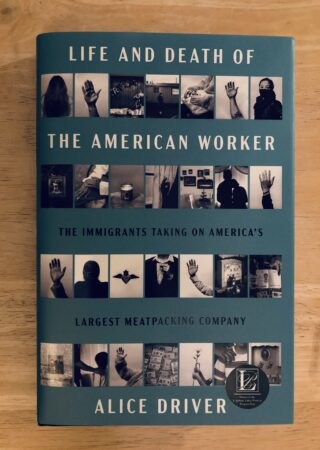
Alice Driver’s 2024 book, Life and Death of The American Worker gives an inside look at conditions we currently tolerate as well as what’s really in those chicken nuggets we’re feeding our kids. Tyson Foods, the largest meatpacking company in America, is the study of this book.
With regard to chicken nuggets, a product Tyson created for McDonald’s, here’s part of the description: “The nugget recipe involved forty-pound frozen blocks of chicken parts: three blocks of chicken breast; two of ground skeleton mixed with blood, necks, and other bits; and one of chicken skin and fat. Victor began his shift by using a crowbar to open the frozen boxes of chicken parts. In his experience, ‘Many times, the chicken is rotten. It smells. It arrives like a rock. When we open it, it is already a different color, not pink. It is green or purple.’”(1)
I know, it’s a shocking and disgusting description. But it’s real. This book has been painstakingly fact-checked. And it’s knowledge. And knowledge is power.
So why aren’t the alleged harsh conditions, inadequate medical treatment, and child labor in the food industry front and center on the news? Well, as you know, money is also power. Besides, in 2024, John Tyson brought the Arkansas (where Tyson Foods is headquartered) Razorbacks a hall of fame basketball coach. And we all look to sports for role models.
Also, there are Ag-Gag laws in some states. Arkansas is one. Enacted in 2017, the law seeks to gag whistleblowers and undercover activists and empowers businesses to sue whistleblowers for exposing the truth about industrial agriculture. Arkansas’ law goes further by banning undercover investigations of nursing homes and daycare centers.
It is hard to see economically successful members of our communities as anything but upstanding and morally centered. And they sometimes are. But the bigger story may be more complicated.
To get to know your food, you may also get to know sad, unspeakable abuse. And you may learn some unpleasant truths about people you have trusted. That’s how it is with truth knowing. Many truths are heartbreaking.
But embracing knowledge, shouldering heartbreak, and deciding what we can and are willing to do to make things better is a more courageous choice than looking away or trying to whitewash the story.
Want to make informed choices? Read Alice Driver’s book, I am. It’s an important way to get to know your food.
(1) Driver, A. (2024). Life and death of the American worker: The Immigrants Taking on America’s Largest Meatpacking Company. Simon and Schuster, p41.
Disclosure of Material Connection: I have not received any compensation for writing this post. I have no material connection to the brands, products, or services that I have mentioned. I am disclosing this in accordance with the Federal Trade Commission’s 16 CFR, Part 255: “Guides Concerning the Use of Endorsements and Testimonials in Advertising.”