Still Navigating Medical Care

maze

This post originally appeared here in 2015. Since that time, I’ve served as a hospital advisor and member of a Quality Experience and Safety Team Committee at the same hospital. I am not a healthcare professional. I was there to represent patients and families.

At the time, this type of representation was seen as valuable. I say that, there was definitely a period of skepticism within QUEST team as to whether my contributions should be considered. Nonetheless, for a period of time, I felt my contributions to policy made an impact.

Due to family obligations, I stepped back from that committee after a few years. Then came the pandemic and a shift away from patient centered care. There was still lip service, but the division that was happening in general began to happen in the hospital advisory council. 

Pointing out an area of weakness was vocally called out as complaining. Vulnerable members were left hanging without resources. There was no leadership to facilitate prickliness. 

What had been a room in which I felt all opinions were valued and explored became a place I felt misaligned, uncomfortable, and helpless to make any positive advances. When I resigned, we were no closer to an easy to navigate health system than we had been when I started.

Could I have stayed and fought? Of course. But from the time I was small, I’ve been put in situations where I had to fight for agency, dignity, safety, and a voice. It’s exhausting to always be fighting. It takes away time and energy that can be spent in productive and enjoyable endeavors. And that is where I prefer to invest.

This morning, I read a post on Bluesky from a LongCovid patient who is exhausted from trying to find a doctor that acknowledges and understands how to treat her condition. She may or may not have had the life experiences I have, but she and almost 9% of adults in the US who have ever had COVID now must fight a lengthy, exhausting fight to find treatment that will restore some quality of life.

My heart breaks for all of these patients. I’m so sorry for the misinformation and horrible policies that have contributed to their plight. While it won’t take away their struggle, perhaps something from this old post will help:

Navigating medical care can be an exhausting process as any celiac, IBS, Crohn’s, diabetic, or cardiac patient knows. As this year draws to a close, I’m looking forward to the renewal a new year promises.

I spent the past few days with my mom in a rehab facility. She is a dialysis patient and last week had 3 small strokes. On the phone from the ambulance as she was transported to the hospital, she sounded ok, but said her right arm and hand wouldn’t work right. Five days later, she arrived at a facility where she could receive physical therapy multiple times per day. It was Christmas eve.

Of course holiday staffing varies from the norm. On Christmas day, our nurse was in charge of 60 patients. There are 480 minutes in an 8 hour shift. That means, she could spend 8 minutes per patient even if she didn’t take a single break. We used more than 8 minutes of her time when my mom passed out in the wheelchair from low blood pressure. Needless to say, there is no time for the staff to make sure Mom eats or gets enough fluids.

My mom is lucky because at least one of us has been able to be there for a portion of every day. In spite of that, it has been difficult to get enough information together to assess whether a bad day is just a bad day, or the beginning of a downward trend. It’s hard to know whether we need to quit worrying about the food on the cafeteria tray and just get some Power Yogurt down her. We know she’s not getting enough protein to fend off infection for long. Unfortunately, our experience is not unusual.

I learned long ago when I had a rare parasite that caused recurring pneumonia that when you’re weak and in pain, you must have an advocate with you every step of the way or you can quickly be dismissed and become lost in the system. My lawyer boyfriend was with me when I was trying to get a referral to a large diagnostic clinic. He could barely contain his laughter watching me bite my lip when my pulmonologist said, “If you didn’t have an intelligent boyfriend here with you, I’d say this is all in your head.” And he wasn’t the first physician to say that during my two year ordeal.

I was young, healthy, went to the doctor promptly and still almost died with the first pneumonia after having been diagnosed with a bladder infection. I actually had psittacosis from Chlamydia psittaci which had become encapsulated in a recently capped tooth. This experience made me acutely aware that navigating medical care is best played as a team sport.

During that two years, I read all of my medical charts. This was also an eye opening exercise. The history recorded in the charts often wasn’t even remotely related to the history I gave. I realize my symptom group was unusual. Well, actually it wasn’t for someone with psittacosis, but it was unusual enough for one nurse to determine that I was just a bad historian.

At some point, most of us will need the expertise of the medical system. Without it, we do not have the depth of knowledge, necessary labs, sophisticated testing equipment, or access to medication that may be necessary to get us through a crisis and put us on a path to improving health. Is there anything we can do as patients to make sure we have the best chance of getting optimum results from medical care?

While nothing will guarantee a certain health outcome, here are 5 things you can do to facilitate a more positive journey in the healthcare system:

1. Choose a friend or family member you trust to act as your advocate in any major medical event.
The best advocates care about your well-being, can remain calm in a crisis, are good listeners, can process and prioritize information, are unafraid to ask questions, and will tell you the truth in a kind manner.

Be sure to identify your advocate as someone who has your permission to view healthcare information so that your care providers will not worry about a HIPAA violation. http://www.hhs.gov/hipaa/for-individuals/guidance-materials-for-consumers/index.html

journal2. Keep a daily journal of your condition.
Try to record facts without interpretation. For example, if you feel your energy level has significantly dropped, record how much sleep you get, when you get it, how many fluids you consume and what kind, what you are eating, how much and when, how much exercise you get, what kind, and when you get it, then note how tired you feel on a scale from 1 – 10.

Doing this every day will help you have a realistic picture of what is happening over time. It will also help identify areas in which a change in routine may help improve your symptoms. If you are too weak to do this, your advocate or caregivers can make notations for you and record their observations as well.

3. Be informed. Ask questions. Make decisions.
You are ultimately in charge of your healthcare. If you do not ask questions, you may be passively agreeing to treatment you would never actively choose. It can be helpful to think of yourself as pilot in command.

In an airplane, the pilot in command (PIC) is the person who makes the final decision about what will happen in an airplane. He can accept or refuse instructions from air traffic control and he is in responsible for all operations of the plane until he actively turns over command to another pilot by saying something like, “your plane or your aircraft”, and hearing “my plane” as a response. He then repeats, “your plane”. This is called a Positive Exchange of Controls.

If air traffic control says, “23 Charlie Tango cleared to land 22 left” it does not mean that the PIC must land the plane. He can request a different runway. If he is not cleared for the requested runway, he can initiate a go-around.

You are the pilot in command of your healthcare. You will receive lots of information from instruments and personnel. The more informed you are, the better the quality of questions you can ask and the better resulting decisions you can make. Your doctor is air traffic control. From his vantage point, he can see traffic and the runway better than you can, but he won’t know that you had a fuel leak and do not have enough glide distance to make the runway without input from you. You have the best odds of a safe landing when you work with your doctor as a team to identify alternative landing areas. Once determined, you decide the destination with which you feel most comfortable. You inform the doctor where you prefer to go from here, then you focus on the procedures that will result in your best chance to safely reach the landing area.

Just as it is common to think that air traffic control actually means the tower is in control, many patients do not recognize that they have the choice to request a plan that fits them. More typically, they defer to whatever initial plan the doctor proposes while they’re in her office and then fail to follow that plan once they get home and it doesn’t fit their lifestyle. This can be detrimental to any long-term progress.

4. Treat everyone kindly beginning with yourself.
When you have a chronic condition rather than a medical emergency, it can slowly eat away at your energy and attitude. A desire for relief may lead to impatience with medical staff. While you may feel justified in taking your frustration out on nurses, techs, or aides, doing so will not encourage them to treat you kindly.

The simplest way to prevent reaching the point at which you lash out is to recruit consistent, adequate social, emotional, psychological, and spiritual support. These needs are very individual, so a high level of self-awareness will be helpful in determining what and how much you need.

Incorporating a regular exercise, meditation, or yoga practice can strengthen your connection to internal resources. You may also find restoration in activities like gardening, cooking, writing, reading, fishing, walking, painting, woodworking, swimming, dancing, volunteering, or playing with your children or grandchildren.
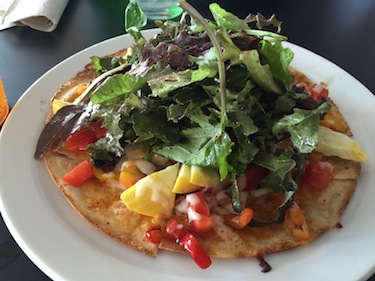
flatbread5. Decrease the need for medical intervention.
You don’t have to worry about navigating the medical system when you’re healthy enough to only require routine check-ups or regular monitoring. In some cases, significant lifestyle changes can minimize the need for medical intervention. The effects of regularly eating a balanced diet of fresh foods, drinking plenty of water, getting adequate sleep and exercise, and filling our lives with passion and laughter should never be underestimated.

The new year is always a great time to wipe the slate clean and do things differently. I hope you’ll find these tips helpful the next time medical care is required.

ad

Start Where You Can Today

When your child is diagnosed with a food intolerance, start where you can today.* I recently met someone at a boxed dinner event chowing down on everything in her box. She offered me part of her cookie. When I said, I’d love to eat it, but I’m gluten-free. She said, “I’m supposed to be too.” I can’t count the number of times I’ve heard this. And when it comes to children who are picky eaters already, it can be easy to ignore the risk of long-term effects and ignore the doctor’s advice.

The problem with that approach is our children could feel so much better, avoid potential chronic disease, and excel in ways we can’t imagine. I say this as someone looking back remembering how I’d puke when running track after a certain kind of breakfast. It was embarrassing to hurl in front of my classmates.

Cutting my track career short wasn’t particularly problematic, I wasn’t that good. But I was a good swimmer who felt increasingly less motivated because I didn’t want to expose my problematic skin. This has even affected me in adult life – robbing me of the joy of being in the water as often. Yes, rash guards help, but having to do something to hide something still weighs on self-esteem and makes everything feel less care-free.

I don’t think any of us want to deliberately rob our children of the option to feel carefree. We just may not be up for the struggle we imagine it will take to get our children to change how they eat. And it can be a real struggle. I’ve seen even very young children who will refuse to eat for so long that they make themselves sick. We don’t want to make food a battlefield.

The age and personality of your child will lead you to the best approach. Observation and listening are a good first step. From that point, start where you can today and build up to the optimum diet.

So often when we get a diagnosis that requires dietary change, we feel like we’ve just been told we have to halt everything immediately and do a 180. While this is true in the case of life-threatening allergies, other conditions allow us time to get our footing and make a plan.

A simple plan can begin with serving familiar foods that naturally fit the regimen your child has been instructed to follow. This means you don’t have to alter anything immediately or announce you’re taking something away. In fact, you can eat this way for awhile before even discussing upcoming changes (depending on the age of your child).

Once you are ready to ease further into the new plan, mention to your child that they can keep eating the things like X, Y, and Z that you’ve been serving. From that point, introduce something new that’s an adaptation of a favorite or incorporates ingredients the child likes.

For example, if your child loves chocolate and needs to be gluten-free, begin the switch-over with chocolate cake, brownies, muffins, chocolate-chip cookies or pancakes. The goal is to ease into the restrictions by providing foods that feel good but are adherent to prescribed restrictions.

A diabetic child who enjoys chocolate might like strawberries dipped in lightly sweetened dark chocolate, hot chocolate lightly sweetened with honey, a brownie made with almond flour, or chocolate hummus on celery sticks.

You can incorporate your child’s best motivators – stickers, a treat, money, time alone with mom or dad, a movie, a trip to the park, a bug or dinosaur hunt – as incentives for trying new things. I just don’t like to begin with, or wholly rely on, incentives because it feels too much like bribery and as though I’m not confident the new foods I’m offering taste good.

That’s not the impression I want to create, and I’d like the changes to feel like an organic extension of what the kids already enjoy. But I’ll be the first to say, if it works, it works. You know your child better than I do.

Another consideration when making dietary changes is the altering of routine. Routines can be comforting. That includes meal times, locations, and menus. When there’s a way, I like to keep as much as possible the same until everyone is comfortable with the changes.

At my house, lunch and dinner are both variable, so I start by slowly introducing new foods into one of those meals before moving on to the other two. This lessens the shock of change.

Once everyone is feeling comfortable, it can be fun to have a contest among siblings to see who is the bravest and will try the most new things. If you’re worried no one will participate, imagine what would happen if you put a new kind of packaged sugary snack in front of them. You’d probably get at least one taker, right?

Even if they don’t end up liking the new snack, they’re willing to try it because they’ve had a good experience with something similar before. Building slowly to this point with new foods will build the same kind of foundation for comfort in trying new things at home.

It can be hard to stick to a plan, so committing in advance to a certain length of time for implementation may be helpful. Once you embark, you may discover that the timetable can be accelerated or may need to slow down. But don’t overwhelm yourself with the big picture at first.

Getting started is the key. Instead of worrying too much about what you’ll do tomorrow, start where you can today.

ad

Keep Me Satisfied

Sometimes it’s hard to find a meal that will keep me satisfied until it’s mealtime again. Some days it’s no problem at all. Why? I’m trying to figure out the pattern.

Years ago, I took some online diet test that was designed to separate people into 3 groups – those who need primarily protein, those who need primarily carbs, and those who need a balance of the two at each meal. I don’t remember much about the site or whether there was science to support it. I have seen anecdotal evidence that make the premise feel true.

I tend to believe that I feel best with a balance, but I can still feel inexplicably hungry after eating plenty of calories. And I can feel full after eating not nearly enough. Sometimes the most frustrating thing to understand is why I feel hungrier 30 minutes after I eat than I did before I started.

Most likely, the explanation is that my gut/brain connection does not function optimally. When we eat, nerve receptors in the stomach sense when the stomach is full. They send a signal to the brain that should result in a sensation of fullness.

Conditions like stomach ulcers, IBS, and reflux can contribute to feelings of early satiety. It stands to reason that any intestinal damage due to celiac disease could affect the messages that travel from my gut to my brain.

The specific cause may not be diagnosable, but knowing my senses are off kilter is important. Being aware can help me make sure I ingest enough nutrition, and also help me stop eating before I consume calories I don’t need.

Of course, that’s all easier said than done. If I don’t feel hungry, it’s hard to get myself to eat. If I feel like I’m starving, it’s hard to keep myself from eating until I feel full – even if that means eating way more than I should eat.

Trial and error tell me that to keep things even keel I need a meal with red meat every two or three days. I need a little protein along with carbs in the morning. Lunch and dinner should include a bulky salad, black beans, or a baked potato along with protein, fruit, and gluten-free crackers or bread. Other vegetables are great, but don’t often do much to make me feel full.

Eating at regular intervals spaced about 3 hours apart gives me the best results as far as keeping my energy steady and avoiding major feelings of hunger. When eating often, the amount doesn’t have to be large.

I may never get the puzzle exactly right, but doing the things I know work as frequently as possible can at least help keep me satisfied.

Where Do You Draw the Line?

A recent restaurant meal leaves me wondering, where do you draw the line? A hectic day last week left me without time for lunch until mid-afternoon. Low blood sugar demanded I choose something nearby so I stopped into an Outback Steakhouse® because I know they have a gluten-free menu.
line
I enjoy the bite of horseradish in Outback’s Caesar dressing. I settled on a gluten-free Caesar salad with grilled chicken. The food arrived quickly. I stared at it for a couple of seconds questioning whether I should eat the Parmesan, but hunger won out and I dug in. The first bite of salad tasted good. I was ready for another. On the second plunge, my fork pierced a hard crouton. CROUTON!?…in a gluten-free salad?

A crouton raises all sorts of questions. How did it get there? Was it dropped in the bowl when they prepared another salad nearby? Do they use the same bowl to toss regular and gluten-free salads? Did they make a regular Caesar and then pull off the croutons when my waiter noticed? Is this kitchen trained to avoid cross contact?

These questions hold the possibility that there could have been a significant amount of crouton residue throughout the salad. I ate the chicken that was arranged on top and left the salad uneaten. About the time I finished the chicken, a manager arrived with an apology and offer of a new salad or dessert.
CaesarSalad
I considered both, but I couldn’t accept. I was done. I had no trust left in that kitchen. After one more apology, they comped my meal. In this case, a free meal in exchange for a single crouton seems like a fair resolution, but there are larger questions that loom in the background.

A study published in 2018 in the American Journal of Clinical Nutrition concluded:
These surrogate biomarkers of gluten ingestion indicate that many individuals following a GFD regularly consume sufficient gluten (>200 mg/d of gluten) to trigger symptoms and perpetuate intestinal histologic damage.

It is possible that the patients studied were not strict in their adherence to a gluten-free diet, but it’s also possible that they ingested a damaging amount of gluten in spite of their best efforts to avoid it. My recent restaurant experience is a perfect example of how that can happen. My recent experience with Cheerios is another example.

The fact that studies seem to indicate accidental exposure is frequent begs the question whether a comped meal is a sufficient penalty to get the attention of a commercial kitchen regarding the serious health damage that can result to those with celiac disease from incidents of gluten exposure. I can’t think that it is but too much squawking about a specific incident could mean retaliation from an angry wait staff or chef.

Again, I’m left asking, where do you draw the line? It is important to my health to avoid gluten. It is important to my social life to occasionally eat in restaurants or attend events. It is important for me to feel like I can trust food labeled gluten-free.

It is important for all of us to be able to trust that we are getting accurate information. It is important for all of us to have food prepared in a safe manner. The more I think about this, the more I feel myself wanting to scream, “I want to be able to trust that you understand the importance to my health of providing me with carefully prepared and accurately labeled food without me having to emphasize my request in any way!”

Some are taking it a step further than screaming in their heads. One father sued Colonial Williamsburg over an incident in which its restaurant, Shields Tavern, did not allow his 11-year-old son with celiac disease to eat the homemade meal he brought with him on a 2017 school field trip because they do not allow outside food in the restaurant. Instead they offered to prepare him a gluten-free meal. The basis for the lawsuit was that the restaurant violated the ADA (Americans with Disabilities Act), the Rehabilitation Act and the Virginians with Disabilities Act.

The case was dismissed by a district court judge, but in a 2-1 ruling May 31st, 2019 the 4th District Court of Appeals reinstated the case. Writing for the majority, Judge Albert Diaz noted that Shields Tavern has rigorous protocols for preparing gluten-free meals that may suffice for most people with gluten intolerance, and a jury might decide those protocols sufficiently addressed J.D.’s disability.

But, he added, “The district court incorrectly overlooked the testimony that J.D. repeatedly became sick after eating purportedly gluten-free meals prepared by commercial kitchens. Until a jury resolves the disputes surrounding the nature and extent of J.D.’s disability, we cannot determine if the accommodation Shields Tavern offered, as good as it may be, fully accounted for his disability.”

We’ll have to wait to see how a jury views this case, but the publicity it is receiving just by being filed could be helpful to put commercial kitchens on notice that they can be held responsible if they do not accommodate dietary requests in a manner conducive to eliminating limits to the disabled of major physical activities or major bodily functions (see ADA definition of disability below).

On the other hand, I don’t know that a bevy of lawsuits over perceived insults that could result from a favorable jury decision is good. Protesting too much can yield the same result as saying nothing. But I think making an 11-year-old struggle to take care of himself because of a policy sounds like bad policy.

I applaud the boy for being willing to put his health above the stigma of being different from his classmates. If more of us showed such strong resolve, we’d all be healthier.

Perhaps reframing exposure to gluten for those with celiac disease and the gluten intolerant as a food safety issue would give it more credence amongst kitchen workers and waitstaff. The question then would be how to identify patrons for whom this is a safety issue as opposed to those who choose to eat gluten-free as a fad.

But should that really matter? As a matter of food safety, protocol should be followed for all patrons all of the time. If a customer requests gluten-free, then that’s exactly what they should receive–not maybe GF, almost GF, or what someone who doesn’t really know THINKS is GF. If gluten-free is not available, the customer should be informed upon ordering and outside food should be allowed. That would be the easiest way to avoid discrimination based on disability.

It would also be the easiest way for me to be able to relax through a meal instead of feeling braced for tomorrow’s tummy ache and next week’s rash. And while that would be welcome, it’s not reality right now. So, I choose to continue the traditions of pre-eating before events, carrying emergency food, and smilingly showing my waiter an errant crouton rather than delivering loud reprimands, throwing fits, or filing lawsuits. All of my screaming remains in my head.

Not everyone draws the line where I do, nor should they. Navigating the social intricacies of living gluten-free has many nuances. I don’t view celiac disease as a disability, but maybe it’s good to have a path of recourse when dealing with entities that choose to restrict requests rather than accommodate. I can see both sides. And my approach may change.

One more round of severe itching from dermatitis herpetiformis and my screaming may be out loud. If that happens, it will be because the itching has worn me down and gotten the best of me. And that may be where some people already find themselves. Celiac is a disease that comes with inherent frustrations and physical misery and it’s disheartening when you do everything right and still end up with damaging levels of gluten in your system.

The best way I know to minimize inadvertent gluten ingestion is to cook from scratch using fresh ingredients. When that’s not possible, patronize brands and places with which you feel comfortable. When you experience the occasional problem, draw the line where it feels right for you.

https://academic.oup.com/ajcn/article/107/2/201/4911450

https://www.richmond.com/news/virginia/court-reinstates-suit-about-boy-bringing-gluten-free-meal-into/article_aa022bd8-33f2-5db8-8e32-80f1e32f1926.html

https://www.ada.gov/q&a_lesley_university.htm

https://www.ada.gov/pubs/adastatute08.htm#12102

http://www.cooking2thrive.com/blog/im-saying-cheerio-to-cheerios/

http://www.cooking2thrive.com/blog/gluten-free-living-gotten-easier/


The Americans with Disabilities Act (ADA) defines disabilities as follows:

Sec. 12102. Definition of disability

As used in this chapter:

(1) Disability
The term “disability” means, with respect to an individual
(A) a physical or mental impairment that substantially limits one or more major life activities of such individual;
(B) a record of such an impairment; or
(C) being regarded as having such an impairment (as described in paragraph (3)).

(2) Major Life Activities

(A) In general
For purposes of paragraph (1), major life activities include, but are not limited to, caring for oneself, performing manual tasks, seeing, hearing, eating, sleeping, walking, standing, lifting, bending, speaking, breathing, learning, reading, concentrating, thinking, communicating, and working.
(B) Major bodily functions
For purposes of paragraph (1), a major life activity also includes the operation of a major bodily function, including but not limited to, functions of the immune system, normal cell growth, digestive, bowel, bladder, neurological, brain, respiratory, circulatory, endocrine, and reproductive functions.
(3) Regarded as having such an impairment
For purposes of paragraph (1)(C):
(A) An individual meets the requirement of “being regarded as having such an impairment” if the individual establishes that he or she has been subjected to an action prohibited under this chapter because of an actual or perceived physical or mental impairment whether or not the impairment limits or is perceived to limit a major life activity.
(B) Paragraph (1)(C) shall not apply to impairments that are transitory and minor. A transitory impairment is an impairment with an actual or expected duration of 6 months or less.
(4) Rules of construction regarding the definition of disability
The definition of “disability” in paragraph (1) shall be construed in accordance with the following:
(A) The definition of disability in this chapter shall be construed in favor of broad coverage of individuals under this chapter, to the maximum extent permitted by the terms of this chapter.
(B) The term “substantially limits” shall be interpreted consistently with the findings and purposes of the ADA Amendments Act of 2008.
(C) An impairment that substantially limits one major life activity need not limit other major life activities in order to be considered a disability.
(D) An impairment that is episodic or in remission is a disability if it would substantially limit a major life activity when active.
(E)
(i) The determination of whether an impairment substantially limits a major life activity shall be made without regard to the ameliorative effects of mitigating measures such as
(I) medication, medical supplies, equipment, or appliances, low-vision devices (which do not include ordinary eyeglasses or contact lenses), prosthetics including limbs and devices, hearing aids and cochlear implants or other implantable hearing devices, mobility devices, or oxygen therapy equipment and supplies;
(II) use of assistive technology;
(III) reasonable accommodations or auxiliary aids or services; or
(IV) learned behavioral or adaptive neurological modifications.
(ii) The ameliorative effects of the mitigating measures of ordinary eyeglasses or contact lenses shall be considered in determining whether an impairment substantially limits a major life activity.
(iii) As used in this subparagraph
(I) the term “ordinary eyeglasses or contact lenses” means lenses that are intended to fully correct visual acuity or eliminate refractive error; and
(II) the term “low-vision devices” means devices that magnify, enhance, or otherwise augment a visual image….

Disclosure of Material Connection: I have not received any compensation for writing this post. I have no material connection to the brands, products, or services that I have mentioned. I am disclosing this in accordance with the Federal Trade Commission’s 16 CFR, Part 255: “Guides Concerning the Use of Endorsements and Testimonials in Advertising.”