When you don’t have much space, how do you choose the kitchen basics? I’ve been looking at the possibility of purchasing the cutest cabin with the greatest view! The overall size is about 500 square feet which means the kitchen is TINY!

It may be tiny, but this kitchen packs in usability with a skinny 4 burner stove, a small refrigerator/freezer, and bottom cabinetry. A fairly long counter contains a sink and bottom cabinets with doors while its top offers adequate, if not ample, workspace. There are no top cabinets, no dishwasher, no pantry, no island, no broom closet, no wall space, and no dance floor. There’s plenty of light streaming in through a window that looks out at the view and the warm-toned wood ceiling and floor keep it feeling cozy.
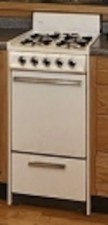
In order to keep the space from feeling crowded, I’m pondering which kitchen basics are critical. Here’s the process I’m using to pare down to fit the space:
–If it can be done by hand, with an existing appliance or with a simple utensil, I don’t need an appliance for it. Bye, bye toaster, electric can opener, mixer, rice cooker, food processor, blender, breakfast sandwich maker, juicer, and crock pot. Hello French press.
–If it’s for baking, but won’t fit in the oven – it’s out. I’m thinking one covered casserole dish, one cake pan, and two cookie sheets will cover my regular cooking habits. I can use silicone cupcake cups in the baking pan when I want to make cupcakes or muffins. As rarely as I make pie, disposable pie pans purchased when needed should suffice.
–If it’s for the top of the stove, I’m carefully examining how many I need and what size. I want a large pot for soup or chili, but I’ll rarely serve more than 4 people at a time. A 4 quart sauce pot should be adequate. In addition, I’ll want at least one more saucepan and at least one skillet. I’m thinking that I may start with one of each and then determine how often I feel limited before buying more. With just one skillet on hand, I’ll probably go with cast iron.
–Two mixing bowls that double as serving dishes, a whisk, a spatula, a slotted spoon, one large and one small sharp knife, an adjustable measuring spoon, a measuring cup with multiple markings, a pastry blender, two dishtowels, and a cutting board fill out my general cooking needs.
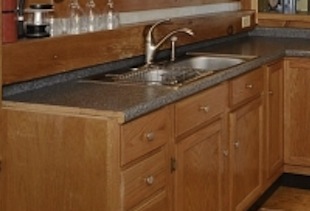
As I envision my cabinets already swiftly filling, I recognize that it is wise to limit my dishes, flatware, placemats, napkins (I use cloth), coffee mugs, and glassware to service for 4.
–I should have just enough room to store salt, pepper, garlic powder, cumin, chili powder, curry powder, vanilla, cinnamon, nutmeg, cloves, Italian seasoning, shortening, honey, olive oil spray, balsamic vinegar, wax paper, aluminum foil, and zip top bags.
Your specific baking utensil and pantry choices will be different than mine. If you host ice cream socials every week, an ice cream maker may be more important to you than a large chili pot. The specifics of stocking the kitchen are much less important than the process of determining what’s important to make you feel as though you have enough.
In our consumer driven culture, we’re much more likely to stuff our shelves, drawers, and pantry with things we rarely, or never, use than we are to take the time to know ourselves well enough to be selective. Examining our relationship to the things we purchase, how we spend our time, what we value, what we hold onto that’s no longer useful, and what makes us feel safe can be a great step on the path to contentment and peace.
Before my first European trip, a fellow traveler advised me to pack my bag, remove half of what I had packed, and then divide that in half to get to the travel essentials I could carry without assistance. It was great advice for travel, great advice for home, great advice for choosing activities, and great advice for choosing relationships.
There’s no doubt it’s also good advice for choosing the kitchen basics when you value the view more than the size of the room.