Pa-pa-paprika! My favorite spice right now is smoked pimetón. That feels a little odd because most of my cooking life I’ve only used paprika as a garnish on deviled eggs or potato salad. Now, I’m allowing it to star in lots of dishes.
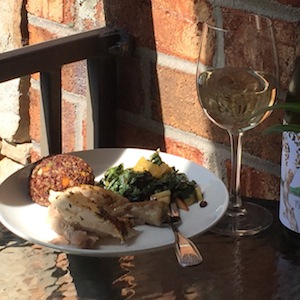
This trend began when I used the spice on some baked chicken legs a couple of weeks ago. The smokiness added that little something that makes you come back for another bite. Since then, I find myself repeatedly reaching for the tin of Pimetón de la Vera.

Made from dried and ground red peppers, paprika can be used to add color to a dish without overpowering other flavors. In the US, the peppers used for this spice are primarily grown in California and tend to have a mild flavor.
The paprika I’m using, Pimetón de la Vera, is the most common Spanish variety. It’s dried using wood which gives it a distinct smoky flavor. I’ve chosen a spicy (picante) version for a little kick, but Spanish paprika is also available in mild (dulce) and medium spice (agridulce). I’m loving the smokiness, but if that’s not your thing look for Pimetón de Murcia. It’s made with bola or ñora peppers that are sun or kiln dried.
Paprika most commonly uses peppers of the capsicum variety that were originally cultivated from wild peppers native to Central Mexico. Because of trade between the New World and Old World, they arrived in Spain in the 16th century. The peppers and resulting spice then made their way to Central Europe through the Balkans during the Ottoman conquests. By the 19th century, paprika had become quite popular in Hungary.
Hungarian paprika tends to be milder and sweeter than Spanish paprika and comes in several grades. Regional varieties in Hungary are not all bright red. Some lean toward muted orange or brown. Paprika is included in Hungarian goulash (gulyas) and paprika gravy (paprikash).
I’m intrigued by paprika gravy which is made by combining meat or chicken, broth, paprika and sour cream. That sounds yummy and may be on the menu for next week in the form of Chicken Paprikash!
There are so many versions of paprika that its flavor can’t be described with a simple word or two. In fact, you may want to taste what you have on hand before you include it in a dish to make sure its particular flavor is compatible with your dish.
And while it’s easy to end up wasting spices, it would be fun to experiment with multiple paprikas to determine which works best for what. It could be a good ingredient to include in a cooking challenge basket.
Add paprika to spice rubs, use it as a garnish, or sprinkle it in hot oil when you fry. While you’re spicing things up, you’ll be adding vitamin A. One half teaspoon of paprika provides 21% of the daily recommended value.
It’s easy for paprika to become one of those spices that are constantly overlooked or limited to a single use. That really doesn’t do this spice justice. Perhaps it’s time to move paprika to the front of the spice cabinet and let it have its day in the sun!