
A year-and-a-half into a surging pandemic it may feel like you’re living in a doomsday vault, but that’s not what this is about. In fact, it’s about a system that’s in place to ensure an ongoing food supply even if, at any point, it turns out we are living in a doomsday scenario.
Part of a system of 1700 gene banks across the world, the Global Seed Vault is often called the Doomsday Vault. Located on a remote island in the Svalbard archipelago halfway between Norway and the North Pole, the vault is managed and operated in a partnership between the Norwegian Ministry of Agriculture and Food, the Nordic Genetic Resource Centre (NordGen), and the Crop Trust. It serves as a backup for other gene banks.
This backup was designed to provide an extra layer of protection after other gene banks suffered losses. Its inventory is intended to serve plant breeders who develop new crop varieties. But it’s also to ensure a food supply in the event that all that crops in a region are destroyed by disaster.
Seeds enter the Global Seed Vault via donation. Nobel laureate and Kenyan environmental activist Wangari Maathai made the first deposit in 2008.
Once there, the seeds are stored in vacuum-packed silver packets at -18⁰C. If you’ve ever pulled last year’s seeds from under the sink and planted them in the garden, you know from the results that storage conditions matter.
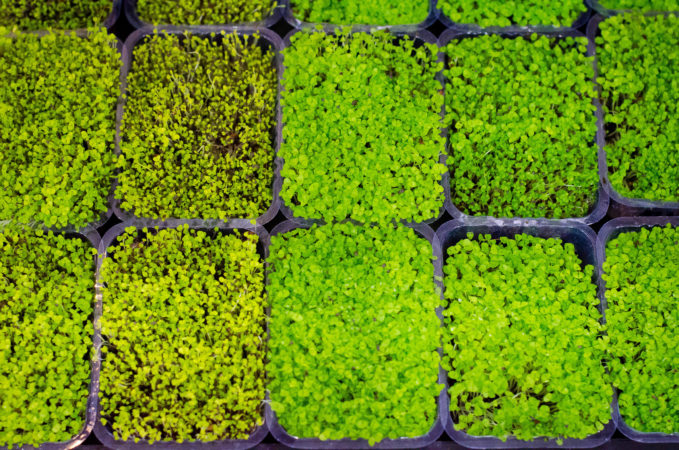
Beyond the remote Global Seed Vault, seeds are stored in seed banks like the Colorado Vault at Colorado State University. In the US, many seed gene banks are located at state land-grant university sites that contribute space and staff while run by an organization managed by the US Department of Agriculture called the National Plant Germplasm System (NPGS). NPGS is a collaborative effort between public and private sectors to safeguard the genetic diversity of agriculturally important plants.
Across the world, there are scientists and environmentalists who understand the importance of protecting and preserving a wide variety of viable seeds. They have created a system to help ensure that we can restart the world’s crops and develop plants more tolerant to changing environments.
In a doomsday scenario, they will be our heroes. But these forward thinkers are making sure the system is in place BEFORE we need it. Let’s see them as the heroes they are now!

